
Ramularia leaf spot of buttercup
Ramularia acris
Description
Symptoms
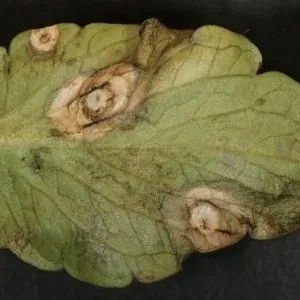
Initial symptoms include the appearance of small, circular or irregular spots on the leaves. These spots typically start as pale patches and eventually develop brown or dark borders with lighter centers.
A distinctive white or greyish powdery growth, which is the fungal sporulation, can be observed on the underside of the spots, especially under humid conditions. This is a key diagnostic feature of the disease.
As the infection advances, individual spots enlarge and coalesce, eventually covering large portions of the leaf surface. This leads to yellowing, necrosis, and premature death of the foliage.
In severe cases, the fungus may also affect the leaf petioles and flower stalks, causing them to wither and reducing the overall ornamental value and health of the buttercup plant.
The plant may appear stunted and less vigorous as the disease progresses, as the reduction in photosynthetic leaf area significantly hinders the plant's overall energy production.
Pathogen
The disease is caused by the fungus Ramularia acris, a mitosporic fungus belonging to the order Hyphales. This pathogen is a specialized parasite that primarily targets species within the genus Ranunculus.
The fungus produces masses of conidia (spores) that emerge through the stomata of the host plant. These conidia are responsible for the secondary spread of the infection during the growing season.
Ramularia acris survives the winter in the form of mycelium or sclerotia within infected plant debris. These residues serve as the primary source of inoculum when temperatures rise in the spring.
The spread of the fungus is facilitated by the release of conidia, which are easily disseminated by wind currents, splashing rain droplets, and contact with contaminated gardening tools or human activity.
Because the fungus is highly host-specific, it can effectively establish itself in buttercup populations, rapidly depleting the plant's resources by extracting nutrients through its hyphae in the leaf tissue.
Conditions for development
Ramularia leaf spot thrives in conditions characterized by high humidity and moderate temperatures. Moisture on the leaf surface is crucial for the germination of fungal spores.
Dense plantings restrict airflow and prevent leaves from drying quickly after rain or dew, which creates a highly favorable microclimate for the development of Ramularia acris.
Overhead irrigation, especially during warm periods, is a major risk factor, as it splashes spores onto healthy foliage and maintains the wet conditions necessary for infection.
Temperatures ranging from 15°C to 22°C (59°F to 72°F) are optimal for the pathogen. In such environments, the life cycle can be completed rapidly, leading to explosive outbreaks if not managed.
Shaded locations or areas with poor drainage often exacerbate the problem, as these sites tend to retain moisture longer, keeping the leaves in a susceptible state for longer periods.
Why it matters
The primary impact of the disease is the severe aesthetic decline of the buttercup plants. The unsightly spotting and subsequent browning of the leaves render them useless in garden displays.
Physiologically, the disease weakens the plant by reducing its ability to perform photosynthesis, which impacts the plant's capacity to produce flowers and store reserves in its roots or tubers.
Severe and chronic infections can lead to the death of the plant over time, particularly if the plant is stressed by other environmental factors or lack of nutrients.
The disease contributes to an increased inoculum load in the garden soil, making it increasingly difficult to grow healthy buttercups in the same area without significant intervention.
Additionally, infected plants become weaker and more susceptible to secondary pathogens and pests, which can further complicate the management of the garden bed.
Protection
Proper cultural management is the first line of defense. Ensuring adequate spacing between plants to allow for good air circulation is essential to keep foliage dry.
Sanitation practices are critical: all infected plant materials should be carefully removed and destroyed at the end of the season to eliminate potential sources of overwintering inoculum.
- Regular monitoring of the garden for the first signs of leaf spotting.
- Watering at the base of the plant to keep foliage dry.
- Maintaining soil fertility to help plants recover from light infections.
- Choosing healthy, disease-free planting material.
- Implementing crop rotation to prevent the buildup of soil-borne inoculum.
If chemical control is necessary, fungicides such as copper-based products or systemic triazoles can be effective. Always follow the label instructions and apply them preventatively during conditions favorable for fungal growth.
Repeated applications may be required if conditions remain wet, typically spaced 10 to 14 days apart, to provide consistent protection for new leaf growth throughout the season.
Discussion
No discussions yet — be the first.