
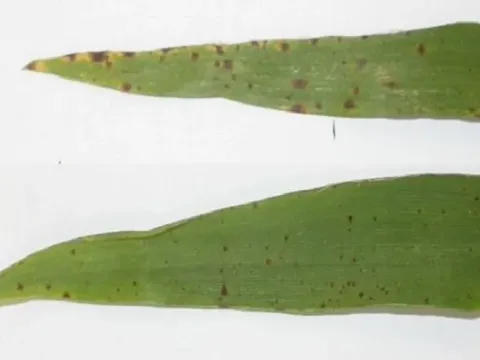
Ramularia leaf spot
Ramularia macrospora
The disease is caused by the deuteromycete fungus Ramularia macrospora. This pathogen is highly host-specific, primarily targeting plants within the Asteraceae family, particularly the Shasta Daisy.
What the section contains
Ramularia leaf spot
It is classified as a fungal leaf spot disease. The pathogen resides within the leaf tissues, where it establishes a mycelial network that eventually disrupts the plant's physiological functions.
The fungus reproduces through conidia, which are asexual spores formed on structures that emerge through the leaf stomata. These spores are easily disseminated by wind, rain splashes, and gardening tools.
The fungus is capable of overwintering as mycelium or sclerotia within fallen leaf debris. This survival strategy ensures the pathogen remains present in the soil from one season to the next.
Its biological cycle is finely tuned to environmental moisture, allowing it to remain dormant under adverse conditions and activate rapidly when favorable weather returns.
The primary symptoms appear as small, irregular spots on the lower foliage. Initially, these spots are light brown and often exhibit a darker, more defined margin as they mature.
A distinctive feature of this infection is the development of a white or grayish powdery growth on the underside of the leaves, directly corresponding to the spots on the top side.
As the disease progresses, the individual spots enlarge and merge, creating large necrotic patches. This leads to rapid leaf yellowing and eventual browning of the entire leaf structure.
Severe infestations cause premature defoliation and a noticeable decline in the plant's overall vigor. The plant may fail to produce healthy flower buds when the foliage is heavily compromised.
Early identification is crucial, as the white spores are sometimes mistaken for powdery mildew; however, the presence of distinct necrotic spots confirms a Ramularia infection.
High humidity and consistent moisture are the primary drivers of the disease. Prolonged periods of rainfall during the growing season create a perfect breeding ground for the pathogen.
Poor airflow, often caused by overcrowding or planting in sheltered areas with little ventilation, significantly exacerbates the spread. Stagnant air keeps foliage wet for longer periods.
The fungus thrives within a temperature range of 15–22 degrees Celsius. These moderate temperatures allow for the rapid germination of spores and subsequent colonization of leaf tissue.
Inadequate sanitation in the garden is a major contributor to the disease's persistence. Leaving infected leaves on the ground allows the fungus to survive throughout the winter.
Improper irrigation techniques, such as overhead watering that wets the leaves, can splash spores from the soil onto healthy plant foliage, initiating new infection cycles.
The main impact of the disease is the loss of photosynthetic leaf area, which weakens the plant significantly. This reduced energy production leads to stunted growth and poor overall health.
The aesthetic value of the daisies is severely diminished, making the plants unsuitable for landscape use. In commercial nursery settings, this can lead to total stock rejection.
Infected plants exhibit reduced hardiness and may struggle to survive winter dormancy. The stress induced by the fungal infection leaves the plant susceptible to secondary opportunistic pathogens.
The disease can become an endemic problem in a garden setting if left unmanaged. Once established, the high spore production ensures that the infection spreads to nearby healthy daisies.
Managing the disease requires ongoing labor and financial investment in chemical or biological control agents, increasing the overall cost of plant maintenance.
The foundation of effective control is stringent garden sanitation. All infected plant matter should be pruned and disposed of properly, ensuring no debris remains to host the fungus.
Improving air circulation is essential for prevention. This involves proper plant spacing and thinning out dense clusters to ensure foliage dries quickly after rain or irrigation.
Chemical control is often necessary during outbreaks. Fungicides containing copper or systemic treatments from the triazole group have proven effective in curbing the spread of the fungus.
Cultural practices such as crop rotation and avoiding overhead watering play a vital role in preventing infection. Keeping the foliage dry is a highly effective non-chemical preventative measure.
Using biological control agents, such as beneficial microbes or specific microbial antagonists, can help suppress the fungal population and promote plant resilience without chemical reliance.