
Quaternaria dissepta
Quaternaria dissepta
Description
Symptoms
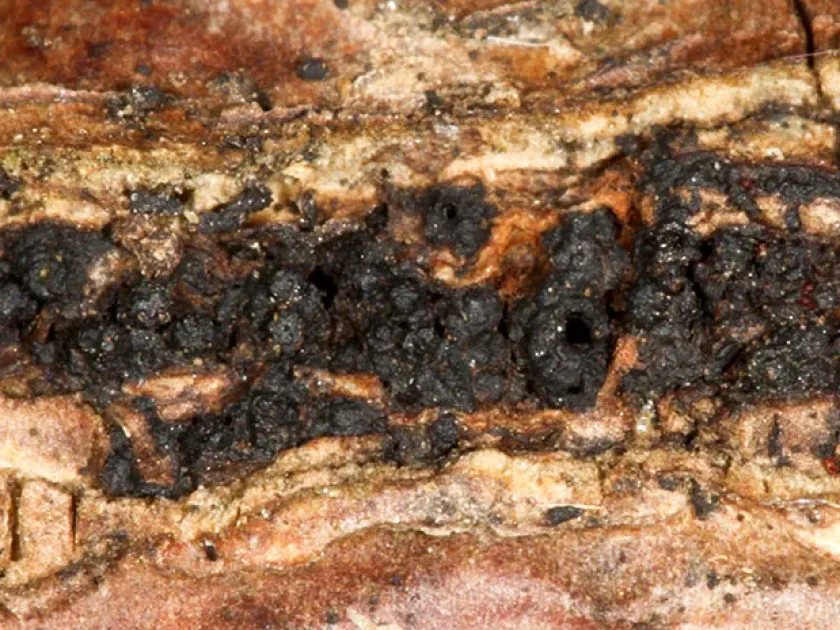
The most visible sign is the emergence of small, black, cushion-like structures (stromata) on the bark surface. These growths break through the bark, causing it to crack and display a blistered appearance.
Infected areas often show localized discoloration, appearing darker or reddish-brown compared to the healthy surrounding bark. This indicates tissue necrosis occurring within the cambium.
Branches infected by Quaternaria dissepta often exhibit premature wilting and drying. Leaves on these branches may yellow and drop long before the natural onset of autumn, signaling disrupted nutrient flow.
Upon closer inspection, the tissue beneath the affected bark often turns soft, spongy, or brittle, indicating that the fungal mycelium has deeply colonized the woody layers.
These symptoms are often accompanied by an overall loss of vigor in the tree, making it susceptible to secondary infections and damage from extreme weather conditions.
Pathogen
Quaternaria dissepta is an ascomycete fungus that primarily affects the bark and twigs of various deciduous trees. It acts as a saprophyte on dead tissue but can become a opportunistic pathogen under certain conditions.
The fungus develops stromata under the bark, which eventually rupture the epidermis to release spores. These reproductive structures, known as perithecia, are typical of the order Diaporthales and are essential for the fungus's life cycle.
It survives in the bark of infected branches, drawing nutrients from the host's cells while breaking down structural components like lignin and cellulose, effectively weakening the wood's integrity.
Spread occurs primarily through spores carried by wind and splashing water. These spores germinate when they settle in cracks or damaged areas of the bark, facilitating the infection of new host tissue.
Biologically, the pathogen is highly adapted to temperate climates, taking advantage of seasonal changes to produce its spores, which ensures its survival even through harsh winters.
Conditions for development
High humidity and consistent rainfall are the primary drivers for the development and spread of Quaternaria dissepta. Moisture allows the spores to germinate quickly upon landing on a suitable host.
Trees that have suffered physical damage, such as frost cracks, hail damage, or improper pruning cuts, are significantly more vulnerable. These wounds act as entry points for the pathogen.
Densely planted areas with poor air circulation are particularly prone to infection, as the lack of airflow keeps the bark surfaces damp for longer periods, favoring fungal growth.
Trees that are already under stress due to drought, nutritional deficiencies, or infestation by other pests have reduced internal defense mechanisms, making them ideal hosts for the fungus.
The fungus thrives during mild, damp springs and autumns, which coincide with the tree's growth cycles and the production of new vegetative tissue that the fungus can colonize.
Why it matters
The main harm caused by Quaternaria dissepta is the progressive dieback of branches. If the infection circles the branch, it effectively kills the distal parts of the limb by cutting off water and nutrient supply.
Persistent infection reduces the tree's overall photosynthetic capacity, which leads to stunted growth, reduced resilience, and, in severe cases, the gradual death of the entire tree.
From a forestry and landscaping perspective, the disease significantly lowers the quality of the wood and the aesthetic value of the trees, necessitating costly removal or remedial measures.
The degradation of bark integrity makes the tree susceptible to secondary decay fungi and insects, which can further accelerate the decomposition of the wood structure.
In forest nurseries, the presence of this fungus can lead to high seedling mortality rates if sanitation and preventive measures are not strictly implemented.
Protection
Sanitation is the most critical control method. Pruning and removing infected branches, preferably during dry weather, prevents the spread of spores to healthy parts of the tree.
Sterilizing pruning tools between cuts is essential to avoid transmitting the fungus mechanically. A solution of bleach or alcohol can be used for disinfection.
Applying copper-based fungicides can create a protective barrier on the bark, preventing spores from penetrating the surface and establishing a new infection site.
Maintaining high tree vigor through proper fertilization, adequate watering, and mulch management helps the tree build stronger defenses against fungal pathogens.
All removed infected material should be burned or disposed of far from the growing area to eliminate the source of inoculum and reduce the risk of future outbreaks.
Discussion
No discussions yet — be the first.