
Hollyhock rust
Puccinia malvacearum
The disease is caused by the basidiomycete fungus Puccinia malvacearum. It is a highly specialized parasite that exclusively affects members of the Malvaceae family, such as hollyhocks, mallows, and lavateras.
What the section contains
Hollyhock rust
Unlike other rust fungi, it is a microcyclic species, meaning it completes its life cycle without needing an alternate host. The fungus survives primarily through teliospores, which form in characteristic rust-colored pustules.
The mycelium grows within the leaf tissue, extracting nutrients and disrupting the plant's normal physiological functions. It can persist in the soil on infected plant debris or in the roots of perennial mallow plants.
Environmental conditions trigger the release of spores, which are easily disseminated by wind, splashing rain, or garden tools. This ability to spread rapidly allows the disease to overwhelm local gardens in a single season.
Because the fungus is obligate, it requires a living host to survive for long periods, yet its dormant spores are hardy enough to withstand winter conditions on decaying leaves.
The first signs of infection appear as small, pale yellow or green spots on the upper surface of the leaves. These spots are often subtle at first and can be easily overlooked by casual observers.
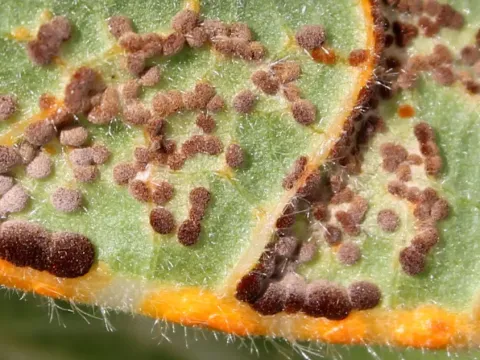
As the infection progresses, distinctive reddish-brown, raised pustules develop on the undersides of the leaves. These structures contain the fungal spores and are the most diagnostic feature of the disease.
Heavily infested plants show significant yellowing and wilting of the foliage. Eventually, the affected leaves turn brown, become brittle, and drop prematurely, leaving the stem bare.
Stems, petioles, and flower buds can also be colonized by the fungus, resulting in deformed growth and poor flower development. In severe cases, the entire plant may wither and die.
The pustules often merge together to cover large areas of the leaf surface. When brushed against, they release a dusty, rust-colored powder, which is a classic symptom of this fungal pathogen.
The development of hollyhock rust is favored by mild, wet weather. Temperatures between 15°C and 22°C (60°F–72°F) provide the optimal environment for spore germination and infection.
High relative humidity, prolonged periods of leaf wetness, and regular rainfall are essential for the fungus to spread effectively throughout the foliage of the plant.
Poor air circulation, often caused by planting too closely or in crowded garden beds, creates a stagnant microclimate that traps moisture and facilitates the rapid colonization of the fungus.
Shaded areas or locations with poor light exposure keep the foliage wet for longer periods after irrigation or rain, significantly increasing the risk of a severe rust outbreak.
The disease is typically most problematic in mid-to-late summer, when the combination of warming temperatures and high humidity creates a perfect storm for the rapid multiplication of the pathogen.
The primary impact of the disease is the destruction of the plant's photosynthetic capacity. As the leaf area is consumed by rust pustules, the plant's ability to produce energy is severely limited.
This nutrient deficiency leads to stunted growth and poor flower production, which is a major concern for ornamental gardeners who rely on the aesthetic value of these plants.
Chronic infection weakens the root system, making the plants less resilient to drought, extreme heat, or harsh winter conditions. This often results in the premature death of perennial species.
The presence of the disease in a garden creates a persistent reservoir of inoculum. If not managed properly, it will return year after year, forcing gardeners to abandon the cultivation of susceptible species.
Commercially, nurseries that grow hollyhocks face economic losses as infected stock becomes unsalable and must be destroyed to prevent the spread of the disease to healthy plants.
Cultural control is the most effective first line of defense. Gardeners should ensure adequate spacing between plants to improve airflow and minimize the time leaves remain wet.
Sanitation is critical; all infected plant parts should be removed and destroyed immediately. In the fall, it is essential to clean up and remove all dead plant debris to reduce the overwintering inoculum.
- Applying copper-based fungicides or systemic products early in the season to protect new growth.
- Removing and disposing of the first few infected leaves to slow down the progression of the disease.
- Avoiding overhead irrigation to prevent spreading spores via splashing water.
Systemic fungicides containing triazoles or strobilurins can provide effective control if applied at the first sign of infection. Repeated applications may be necessary throughout the growing season.
Maintaining plant health through balanced fertilization and proper watering supports the plant's natural defense mechanisms, making it more resistant to the initial stages of fungal invasion.