
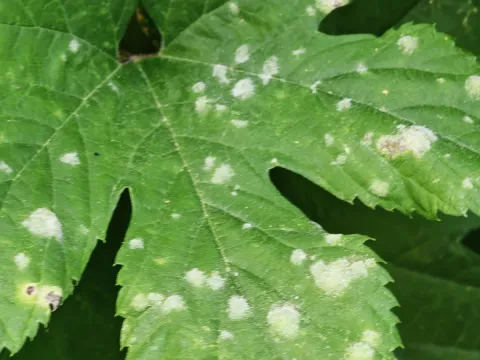
Hop Powdery Mildew
Podosphaera macularis
The causative agent of this disease is the obligate parasite Podosphaera macularis, a fungus belonging to the Erysiphaceae family. It is highly host-specific, infecting the common hop plant (Humulus lupulus).
What the section contains
Hop Powdery Mildew
The pathogen thrives on the surface of plant tissues, producing a mycelial network that uses haustoria to penetrate epidermal cells. These structures siphon nutrients from the host, causing physiological stress.
Asexual reproduction occurs through the production of conidia, which are wind-dispersed spores. This allows the disease to spread rapidly throughout a hop yard during the growing season.
The fungus overwinters primarily as mycelium within dormant buds or as cleistothecia (sexual fruiting bodies) on fallen leaves and diseased plant debris left in the field.
Due to its rapid life cycle and efficient spore dissemination, Podosphaera macularis can transition from initial infection to widespread outbreak within a very short period under favourable conditions.
The hallmark symptom is the appearance of white, powdery, fungal colonies on the undersides of leaves, which eventually spread to the upper surfaces, petioles, and stems.
As the disease progresses, these patches become denser and may turn grayish or brownish as the fungus develops its dark, spherical fruiting bodies known as cleistothecia.
Affected plant parts exhibit distortion, leaf curling, and premature necrosis. If the infection reaches the hop cones, it causes severe deformation, discoloration, and drying of the bracts.
Cones infected by powdery mildew often develop a distinct "rusty" or brown appearance, losing their lupulin content and aroma, which renders them useless for the brewing industry.
Severe infestations lead to defoliation, stunted lateral branch development, and an overall reduction in the plant's photosynthetic capacity, resulting in lower yields.
Optimal development of the fungus occurs in moderately warm temperatures, typically ranging from 18 to 25 degrees Celsius, though it can survive in a wider thermal range.
High humidity, frequent night fogs, and dew are critical factors that facilitate spore germination and mycelial colonization, making mornings a peak time for new infections.
Dense canopies and poor air circulation within the hop yard create a sheltered microclimate that traps moisture and shields the fungus from drying winds.
Excessive nitrogen fertilization encourages the production of succulent, rapidly growing tissue with thin cell walls, which is significantly more susceptible to penetration by the pathogen.
Variable weather with alternating cool nights and warm, humid days often triggers intensive sporulation and accelerates the progression of the epidemic across the field.
Hop powdery mildew causes substantial direct losses by reducing the weight of harvested cones and destroying the quality of the lupulin essential for brewing.
The disease depletes the plant's energy reserves by forcing it to sustain the fungal parasite, which impacts the plant's overall health and ability to store nutrients in the rhizome for next year.
Weakened hop plants become significantly more susceptible to winter injury and other secondary pathogens, leading to reduced field longevity and potential crop failure.
The costs associated with repeated fungicide applications significantly increase the economic burden on the grower, reducing the overall profitability of the hop enterprise.
If left unmanaged, the cumulative impact of the disease can result in total crop loss, particularly in highly susceptible commercial hop cultivars.
The primary strategy for managing powdery mildew involves the use of resistant or tolerant hop varieties, which is the most sustainable approach for long-term production.
Good agricultural practices are essential, including the removal and destruction of crop residues at the end of the season to eliminate potential sources of overwintering inoculum.
Maintaining proper plant spacing and conducting timely canopy management (such as stripping lower leaves) improves airflow and reduces the humidity levels that the fungus requires.
Chemical control programs often employ sulfur-based products, strobilurins, or triazoles. It is crucial to follow label rates and rotate chemical classes to prevent the development of resistant fungal strains.
- Frequent scouting of hop yards for early signs of fungal colonies.
- Proper calibration of spray equipment to ensure thorough canopy coverage.
- Balanced nutrient management to avoid excessive succulent growth.
- Implementing an integrated pest management (IPM) approach to minimize chemical use.