
Honey fungus
Armillariella
Description
Symptoms
Early symptoms include yellowing and thinning of the foliage, followed by a noticeable decline in the growth of new shoots.
A diagnostic sign is the presence of creamy white mycelial mats located between the bark and the wood at the root collar area.
Dark, bootlace-like rhizomorphs can often be found creeping along the surface of roots or deep within the soil near the base of the plant.
Trees affected by the fungus may show a dark, watery exudate or resin flow at the base of the stem due to tissue stress.
In autumn, clumps of honey-colored mushrooms appear at the base of the dying plant, signaling an advanced stage of decay in the wood.
Pathogen
Honey fungus is caused by species of the genus Armillaria, primarily Armillaria mellea, which are aggressive soil-borne fungal pathogens.
The fungus survives as a saprophyte on decaying wood, stumps, and root systems, transitioning to a parasitic state when it contacts live plant tissues.
The primary mechanism of spread is through the growth of rhizomorphs, dark, root-like structures that travel through the soil seeking new hosts.
It infects the cambium layer of roots and the base of the stem, effectively disrupting the flow of water and nutrients to the canopy.
Under favorable conditions, the pathogen produces characteristic mushroom clusters that release spores, though its main survival and spread occur vegetatively.
Conditions for development
The fungus thrives in moist, poorly drained soil, which provides the ideal humidity for the rapid extension of rhizomorphs.
Weakened trees, whether due to drought, frost injury, or nutrient deficiencies, are significantly more susceptible to infection by the pathogen.
Overcrowded plantings and dense root systems facilitate the rapid spread of the mycelium from one host to the next.
Large amounts of woody debris, such as buried stumps or timber remnants, serve as critical reservoirs for the fungal inoculum.
Lack of proper horticultural maintenance, including damage to roots during tillage, creates entry points for the fungus to colonize the tree.
Why it matters
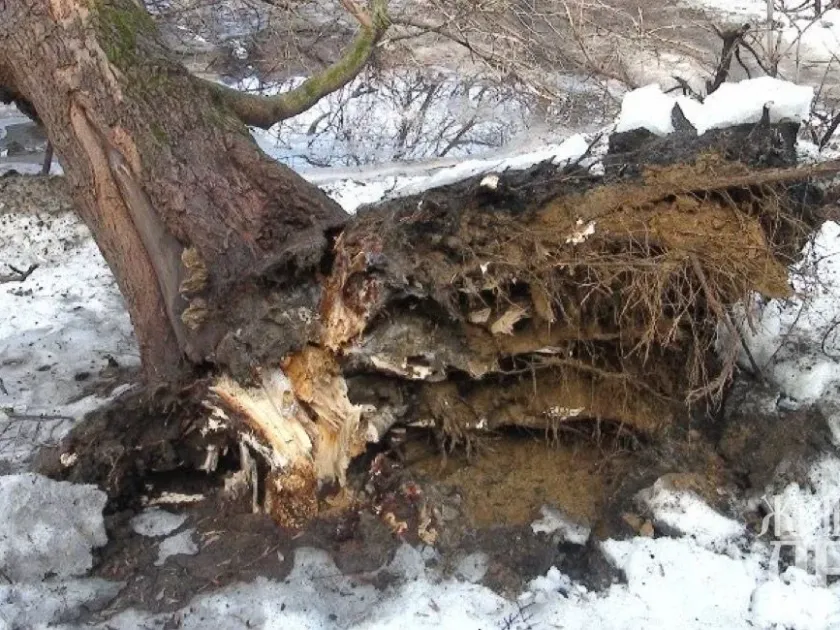
Honey fungus causes severe root and butt rot, leading to the gradual or sudden death of affected trees and shrubs.
The destruction of the root system makes the tree unstable, increasing the danger of uprooting or stem failure in heavy winds.
The infection is often systemic and extremely difficult to eradicate once it has established itself within the root zone of a garden.
Affected plants suffer from a total collapse of physiological functions as the vascular system is progressively destroyed.
Economic damage is substantial, particularly in orchard management, as it necessitates total removal of plants and extensive soil remediation efforts.
Protection
The most effective control measure involves the complete removal of infected plants, including as much of the root system as possible.
Stump grinding and the physical removal of all decaying wood are essential to eliminate the food source that sustains the fungus.
Installing physical barriers, such as deep plastic or metal trenches, can help limit the spread of rhizomorphs into adjacent, healthy areas.
Maintaining high plant vigor through balanced fertilization and proper irrigation is key to increasing resistance to fungal attacks.
- Avoid planting susceptible species in previously infected soil.
- Regularly inspect the base of trees for signs of mycelial mats.
- Prune dead or diseased branches to reduce physiological stress.
- Consider solarizing the soil if infection is localized.
Discussion
No discussions yet — be the first.