
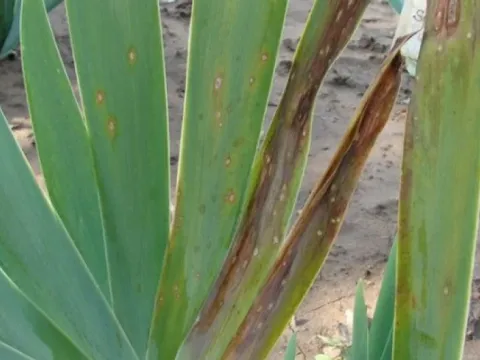
Iris rust
Puccinia iridis
The disease is caused by the obligate fungal pathogen Puccinia iridis, which exclusively targets various species and cultivars of irises.
What the section contains
Iris rust
The fungus develops its mycelium within the leaf tissues, eventually breaking through the epidermis to release its spores into the surrounding environment.
Its life cycle involves the production of urediniospores and teliospores, which ensure the pathogen's survival and propagation throughout the growing season.
As a biotroph, the fungus relies on the living tissues of the host plant, systematically depleting its nutritional reserves and health.
The spores can remain dormant in soil or plant debris, waiting for optimal moisture and temperature conditions to initiate a new infection cycle.
Initial symptoms present as small, pale yellow spots on the leaves, which gradually develop into distinct rust-colored or cinnamon-brown pustules.
These pustules are clusters of fungal spores that rupture the surface of the leaf, creating a rough, powdery appearance.
As the infection progresses, the spots tend to merge, covering larger areas of the foliage and causing the leaf tissue to lose its green color.
By late autumn, the pustules may turn black, indicating the formation of teliospores, which are specialized structures for surviving cold winters.
Severe infestations lead to the browning and wilting of leaves starting from the tips, significantly reducing the vigor and beauty of the plant.
Iris rust thrives in environments characterized by high humidity, prolonged dampness, and moderate temperatures between 15 and 22 degrees Celsius.
Crowded plantings with poor air circulation create a microclimate that prevents foliage from drying out, which is perfect for spore germination.
Frequent rainfall, heavy morning dews, and overhead irrigation are major contributors to the rapid spread of the disease within an iris bed.
Plants that are weakened by excessive nitrogen fertilization are generally more susceptible to fungal entry due to softer tissue structure.
Inadequate spacing and lack of sanitation in the garden make it very easy for the pathogen to jump from infected debris to healthy new growth.
The primary impact of the disease is the destruction of photosynthetic tissue, which stunts the plant's growth and limits energy storage.
Repeated yearly infections can cause the rhizomes to weaken significantly, leading to reduced flower production and poor winter survival rates.
The aesthetic value of the garden is compromised, as the rust-covered foliage becomes unsightly and the plants lose their structural integrity.
Weakened irises are also more prone to other secondary pathogens and environmental stresses like drought or heat, which they would otherwise resist.
Unchecked infestations can lead to long-term decline of the iris collection, eventually requiring the total removal of the affected stock.
Sanitation is the first line of defense: remove and destroy all infected iris foliage after the growing season to eliminate wintering spore sources.
Ensure proper plant spacing and avoid damp, poorly drained soil to minimize the humidity levels around the foliage.
Apply preventive or curative fungicides containing copper, triazoles, or strobilurins when conditions for rust development are detected.
- Maintain good garden hygiene by pruning affected leaves.
- Water at the base of the plant to keep the leaves dry.
- Improve air circulation to prevent stagnant, humid air.
Incorporate balanced fertilizers with higher potassium levels to help build stronger, more resilient plant cells.
If the infection persists year after year, consider relocating the iris patch to a sunnier, better-ventilated area to break the infection cycle.