
Irpex rosettiformis
Irpex rosettiformis
Description
Symptoms
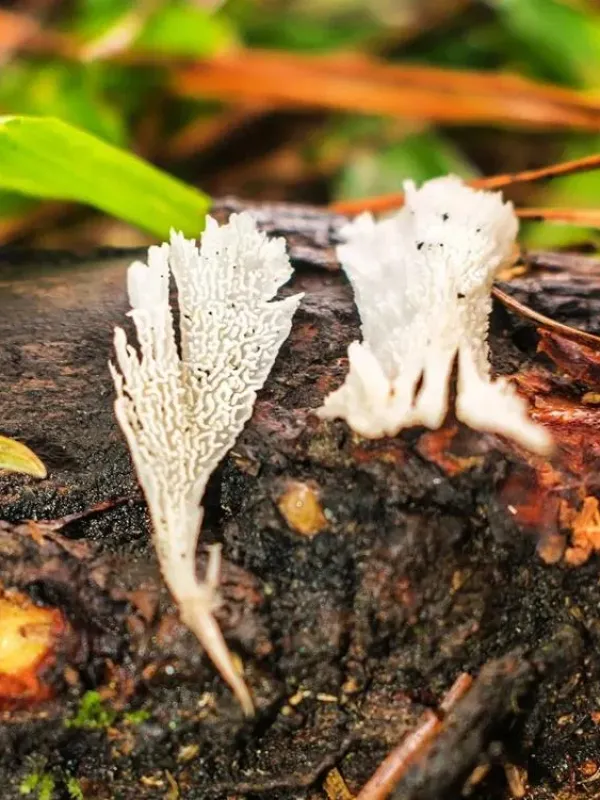
The most visible indicator of infection is the emergence of fruit bodies on the bark. These typically exhibit a rosette-like or fan-like shape and often grow in dense, overlapping clusters.
The fruit bodies are usually cream to pale-ochre in color. The underside features a characteristic dentate or spine-like hymenophore, which serves as a definitive diagnostic feature for identification.
In the early stages of infestation, the wood loses its density, becoming fibrous and brittle. Affected areas often develop a bleached appearance due to the selective degradation of lignin by the fungal enzymes.
As the disease progresses, the bark begins to separate from the cambium, and deep, longitudinal cracks appear, revealing the presence of white fungal mats within the decaying wood.
The mass appearance of fruiting bodies on the trunk is often a sign of advanced internal rot, indicating that the fungus has already deeply colonized the structural heartwood of the tree.
Pathogen
Irpex rosettiformis is a wood-decay fungus belonging to the Polyporaceae family of Basidiomycota. In plant pathology, it acts as a facultative parasite, shifting from saprotrophic feeding on dead organic matter to active colonization of living tree tissues.
This fungus is an agent of white rot in woody plants. Its mycelium penetrates the xylem, secreting specific enzymes that degrade lignin and cellulose, leading to the gradual structural breakdown of the tree's internal support system.
Reproduction is primarily through basidiospores that are dispersed by wind currents. Upon landing on open wounds or damaged bark, the spores germinate, eventually developing into a mycelial network that spreads throughout the trunk.
The biology of this pathogen is highly adapted to exploit weakened trees. In forest and orchard ecosystems, it functions as a primary decomposer, accelerating the breakdown of fallen branches and rotting timber.
The fungus is remarkably resistant to environmental stressors, allowing it to remain viable within infected wood for several years, ensuring its persistence in the environment until the host is fully consumed.
Conditions for development
Development of Irpex rosettiformis is highly dependent on wood moisture content. Optimal conditions for spore germination occur at high ambient humidity and moderate temperatures between +18 and +25 degrees Celsius.
Mechanical injuries represent the primary entry point for the pathogen. Damage caused by pruning, winter frost cracks, sunscald, or insect boring holes provide the necessary access for spores to initiate infection.
Overcrowded plantations with poor air circulation create a microclimate that promotes both spore germination and the successful development of new fruiting bodies on adjacent trees.
The proximity of infected stumps, dead branches, or accumulated logging residues significantly raises the inoculum load, increasing the risk of infection for surrounding healthy specimens.
Trees stressed by nutrient deficiencies, prolonged drought, or poor soil conditions have lower natural immunity, making them more susceptible to colonization by this opportunistic pathogen.
Why it matters
The primary damage caused by this fungus is the rapid loss of mechanical structural integrity in the tree trunk and main scaffold branches, which can lead to structural failure.
In fruit orchards, the infection interferes with the tree's vascular system, causing branch dieback and significantly reducing fruit production and overall tree vigor.
Severely infected trees are at high risk of windthrow or stem breakage during storms, presenting a safety hazard to both the orchard and surrounding property.
Because the fungus can act as an opportunistic pathogen, it creates long-term decline in tree health, eventually necessitating the complete removal and destruction of the infected tree.
The economic impact is twofold: loss of tree productivity and the high cost associated with the removal and safe disposal of infected woody material to prevent further spread.
Protection
Effective management begins with rigorous sanitary pruning practices. All pruning tools must be sanitized with alcohol or appropriate disinfectants between every cut to prevent cross-contamination.
Fresh pruning wounds larger than 2-3 cm should be protected with a wound dressing or natural tree paint to create a physical barrier against spore infiltration.
Sanitation is critical; all deadwood, rotting stumps, and infested tree parts should be promptly removed and burned or deep-buried to eliminate local sources of fungal spores.
Maintaining optimal tree vigor through balanced fertilization and proper irrigation helps bolster the tree's natural defense mechanisms against wood-decay fungi.
- Routine visual inspection of trunks for fruiting bodies.
- Prompt removal and destruction of infected wood.
- Fall trunk whitewashing with lime-based mixtures containing fungicides.
- Promotion of canopy airflow to reduce moisture accumulation.
Discussion
No discussions yet — be the first.