
Irpex lacteus
Irpex lacteus
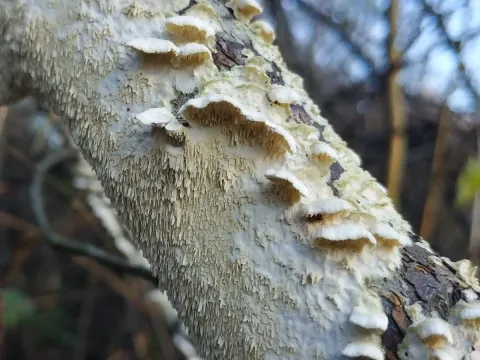
Irpex lacteus is a wood-decay fungus belonging to the Basidiomycota division. It functions primarily as a saprotroph but frequently acts as a facultative parasite, attacking weakened or injured woody plants.
What the section contains
Irpex lacteus
This fungus is a classic agent of white rot, producing specialized enzymes that break down lignin and cellulose within the wood structure. This biochemical process leaves the timber soft and structurally compromised.
The basidiocarps, or fruit bodies, are often resupinate to reflexed in shape. Their most distinctive feature is the hydnoid or tooth-like hymenophore, which gives the fungus a rough, bristly appearance.
Young fruit bodies are snow-white, hence the specific epithet lacteus. As they mature, they may fade to a creamy or brownish color, though the edges typically remain white and velvety.
Spores are dispersed through the air and can colonize any exposed wood. Once inside, the mycelium spreads rapidly, utilizing the vascular system to colonize deeper layers of the xylem.
The most visible symptom is the presence of white, tooth-like fruit bodies growing in clusters or tiers on the bark of infected branches or trunks. These are usually found on dead or dying parts of the tree.
Removing the bark reveals thick mats of white mycelium. In the advanced stages, the heartwood becomes light-colored and spongy, losing its natural density and structural integrity.
A diagnostic characteristic is the presence of narrow, dark zones within the decaying wood, which act as boundaries for the fungal growth. These dark lines are common in white rot infections.
The tree's canopy often reflects the internal damage: foliage may become sparse, chlorotic, or drop prematurely. Progressive decline is observed as the tree loses its ability to transport nutrients.
Structural failure is a common late-stage symptom. Infected trees become prone to breaking during storms or under heavy fruit loads due to the brittle nature of the decayed wood.
Irpex lacteus thrives in high-humidity environments. Periods of prolonged rainfall or locations with poor air circulation are highly conducive to the growth and reproduction of this pathogen.
Open wounds are essential for the initial infection. These points of entry include pruning cuts, frost cracks, sunscalds, or damage caused by borers and other mechanical stressors.
Trees already suffering from stress factors, such as drought, nutrient deficiency, or root diseases, are significantly more susceptible to infection by this fungus compared to healthy specimens.
The presence of woody debris, such as stumps or fallen logs in the vicinity of the orchard, creates a reservoir for the fungus, ensuring a constant supply of spores throughout the growing season.
Temperatures ranging from 15 to 25 degrees Celsius are ideal for the mycelial development of Irpex lacteus. However, the fungus is known for its ability to persist under various environmental conditions.
The primary damage caused by Irpex lacteus is the systemic decay of the tree's internal woody structures. This leads to reduced nutrient uptake and eventually the death of the tree.
In orchards, this disease is highly detrimental because it spreads from tree to tree if sanitary measures are ignored. It significantly shortens the lifespan of fruit-bearing trees.
The infection reduces the overall winter hardiness of the host plant. The compromised wood cannot withstand low temperatures, leading to widespread frost damage in areas that would otherwise be resistant.
Economic losses occur due to the need for premature removal of orchards and the costs associated with the containment of the infection within the plot.
In addition to timber destruction, fruit yield is negatively affected. Infected trees produce poor-quality crops and are at risk of falling, which can damage surrounding structures or equipment.
Sanitation is the most effective management strategy. All infected wood must be pruned back to healthy tissue and removed from the site to prevent further spore production.
Proper wound management is crucial. All large pruning cuts should be sealed with appropriate wound dressings to prevent the entry of fungal spores into the fresh tissue.
Disinfecting pruning tools between every single tree is mandatory to prevent the mechanical transmission of the fungus across the orchard.
Maintaining tree vigor through balanced fertilization and proper irrigation helps the tree's natural defenses, allowing it to compartmentalize potential infections more effectively.
- Conduct pruning during dry weather to ensure rapid healing of cuts.
- Remove all dead stumps and branches from the orchard area.
- Use fungicides as a preventative measure on pruning sites.
- Regularly monitor the bark for white, tooth-like fungal growth.
- Ensure adequate orchard spacing to promote airflow and lower humidity.