
Irpex
Irpex
The disease is caused by the fungus Irpex lacteus, a member of the Agaricomycetes class. It is a known white-rot fungus that aggressively decomposes lignin and cellulose within woody tissues.
What the section contains
Irpex
Biologically, it acts as a saprotroph that can opportunistically function as a weak parasite, infecting weakened or damaged woody plants. The fungal spores spread via wind or insects to settle on fresh wounds or bark cracks.
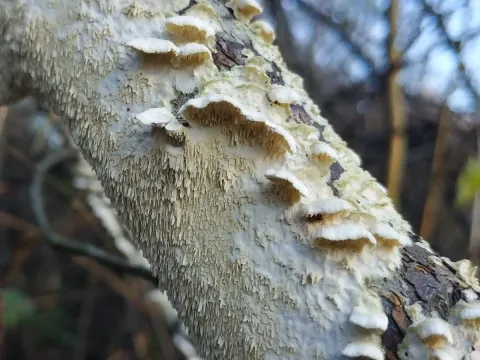
The fruiting body is characterized by a distinctive tooth-like (hydnoid) hymenophore, which eventually turns creamy-white. The mycelium penetrates deeply into the heartwood, establishing an extensive network of hyphae.
Microscopic analysis reveals hyphae with clamp connections, a key feature that helps distinguish this pathogen from other wood-decaying species.
In agronomy, Irpex is categorized as a secondary pathogen, significantly accelerating the degradation of tree structures already stressed by environment or age.
The most visible symptom is the appearance of spiny or tooth-like fruiting bodies on the bark surface. These structures often merge into clusters, covering significant portions of the trunk or larger branches.
Internally, the wood becomes bleached and brittle as the fungus consumes the lignin, leaving behind a white, fibrous mass. This condition leads to a loss of mechanical structural integrity.
External bark often exhibits cracking or peeling, exposing the decomposing interior. In advanced stages, the tree may show necrotic zones around the areas colonized by the fungus.
Branch dieback and premature foliage drop are common, as the fungus obstructs nutrient and water transport systems within the affected branches.
The characteristic "toothed" look of the fungal surface is a definitive diagnostic marker for identifying an Irpex infection in the field.
High humidity and moderate temperatures create the optimal environment for Irpex development. It spreads most rapidly during damp spring and autumn periods.
Trees under stress from drought, waterlogging, or cold injury are the most susceptible to infection, as their natural defense systems are compromised.
Dense planting configurations that limit air circulation create a stagnant microclimate, which keeps bark damp and provides ideal conditions for spore germination.
Open wounds, pruning scars, and frost cracks serve as the primary entry points for the pathogen to access the nutrient-rich inner wood.
Persistent moisture on the trunk surface is a critical success factor for the fungus, as it ensures the mycelium can colonize new tissues quickly after infection.
The primary danger posed by Irpex is the internal structural degradation of the wood, which severely reduces the tree's resistance to wind-throw and mechanical failure.
Infected trees suffer from reduced productivity and overall vitality, often leading to irreversible decline and eventually death of the affected specimens.
Because Irpex has a wide host range, including various fruit and ornamental species, it poses a significant management challenge in mixed orchards or forest stands.
The rapid internal decay caused by this fungus often makes chemical treatment ineffective once the disease is well-established, necessitating the removal of the tree.
Furthermore, infected trees act as significant spore sources, increasing the risk of transmission to neighboring healthy trees in the vicinity.
Strict sanitation is the most effective control method: all heavily infected limbs or entire trees should be removed and destroyed (burned) to eliminate the source of inoculum.
All mechanical damage, pruning cuts, and cracks must be treated immediately with copper-based fungicides and sealed with wound paint to prevent spore penetration.
Maintaining good orchard hygiene through proper pruning and canopy thinning ensures adequate aeration, which helps keep the trunk surface dry and less hospitable to fungi.
Springtime applications of copper fungicides can help create a protective barrier on the bark, preventing spore germination on potential entry points.
Regular monitoring for the presence of fruiting bodies allows for early detection, giving the gardener a better chance to intervene before the infection reaches a critical stage.