
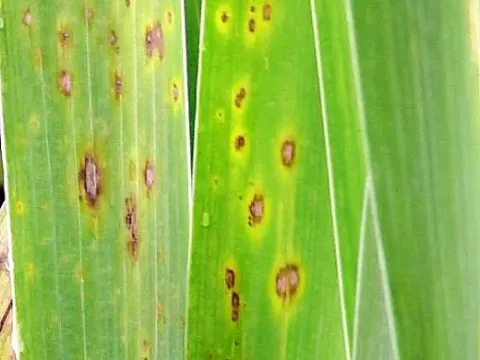
Iris Septoria Leaf Spot
Septoria iridis
The causative agent of this disease is the fungus Septoria iridis. It is a parasitic fungus that specifically targets iris species, causing leaf necrosis and weakening the host plant.
What the section contains
Iris Septoria Leaf Spot
The fungus survives the winter primarily in infected plant debris, such as fallen leaves, where it forms pycnidia. These structures contain spores that remain viable during the dormant season.
In spring, when temperatures rise and moisture is available, the pycnidia release conidia. These spores are spread by splashing rain, irrigation, or wind to healthy leaf tissues.
Upon landing on a suitable host, the spores germinate and penetrate the leaf surface through stomata. The fungal mycelium then grows within the leaf tissue, extracting nutrients and causing cell death.
The life cycle of the pathogen is highly dependent on environmental humidity, which allows the fungus to propagate rapidly throughout the growing season.
The initial symptoms appear as small, circular or elongated spots on the leaves. These spots are typically gray or yellow-brown and are often surrounded by a distinct dark brown or reddish margin.
As the infection progresses, the lesions expand and may merge, resulting in large, irregular necrotic areas. In the center of these spots, tiny black specks, known as pycnidia, become visible.
Affected leaves begin to yellow from the tips downward and eventually turn brown and shrivel. This significant loss of leaf area severely impairs the plant's photosynthetic capacity.
The disease usually starts at the base of the plant on older, lower leaves before spreading upwards. Severe infections can lead to the total collapse of the foliage.
- Presence of grayish-brown leaf spots.
- Small black pycnidia visible within the lesions.
- Gradual yellowing and necrosis of foliage.
- Loss of plant vigor and aesthetic appeal.
- Premature dieback of the iris plant.
Septoria leaf spot thrives in wet and humid conditions. High humidity, frequent rainfall, and heavy dew are the primary drivers for spore germination and infection spread.
Crowded plantings significantly increase the risk of disease as poor airflow prevents leaves from drying out quickly after rain, providing an ideal environment for the fungus.
The optimal temperature range for the development of the disease is between 15°C and 25°C. Within these temperatures, the fungus completes its reproductive cycle quickly.
Plants located in shaded areas are more susceptible because the lack of sunlight keeps the foliage moist for longer periods compared to plants in full sun.
Over-fertilization, especially with nitrogen, encourages lush, soft growth that is more easily penetrated by the fungal hyphae, making the plants more vulnerable to attack.
The primary damage is caused by the reduction of green leaf surface area, which leads to a decrease in energy production. This prevents the rhizome from storing enough nutrients for the following year.
Weakened plants exhibit reduced flowering, producing smaller, fewer, or distorted blooms. In some cases, chronic infection can cause the plant to stop blooming entirely.
The disease significantly lowers the plant's cold hardiness. Plants that have been weakened by Septoria are much more likely to suffer winter injury or die during severe frosts.
Constant infection cycles lead to the degradation of the iris stock. Over time, this can result in a loss of valuable cultivars if management practices are not implemented.
Economically, iris growers face losses due to poor plant quality and the inability to sell infected stock, which requires additional costs for chemical control and labor.
Sanitation is the most effective management strategy. Gardeners should remove and destroy all infected foliage in the autumn to eliminate the primary sources of overwintering spores.
Proper spacing of iris plants is essential to ensure adequate airflow, which helps keep the foliage dry and makes the environment less hospitable to the fungus.
Fungicidal sprays containing copper, mancozeb, or systemic triazoles can be used to control the disease. Applications should begin early in the season if the disease has been a problem before.
When watering, always direct the water to the base of the plant. Avoid wetting the leaves, as water droplets are the main mechanism for spore dispersal from leaf to leaf.
If the disease becomes severe, consider rotating the planting site to a new area where irises have not been grown for several years, which helps break the pathogen's life cycle.