
Oat crown rust
Puccinia coronata
The causative agent of this disease is the fungus Puccinia coronata, an obligate parasite. It is a heteroecious fungus that requires two different hosts to complete its life cycle.
What the section contains
Oat crown rust
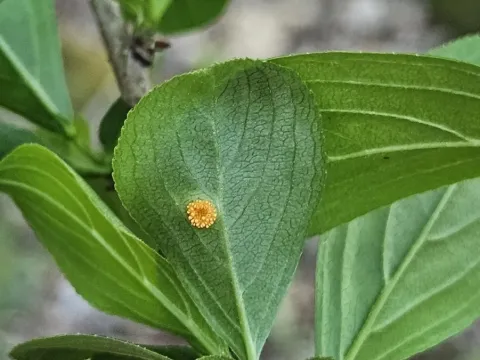
Buckthorn (Rhamnus species) acts as the alternate host. In spring, the fungus produces aecia on buckthorn leaves, which then spread the spores to oat fields by wind.
Once on the oat plant, the fungus reproduces via urediniospores. These spores are capable of multiple cycles of infection, leading to rapid spread across the entire crop during the season.
At the end of the growing cycle, the fungus produces teliospores on the oat stems. These spores are distinguished by their crown-like appendages, which serve as the basis for the name of the species.
Puccinia coronata is highly adaptable and genetically diverse, frequently evolving into new races that can bypass the resistance bred into many modern oat varieties.
The primary symptom is the appearance of bright orange, powdery pustules known as uredinia. These are typically scattered across the leaf blades of the oat plant.
As the infection progresses, the pustules rupture the leaf epidermis, releasing millions of spores. This process causes the leaves to turn yellow, wither, and eventually dry up.
Under severe infection conditions, the fungus can also colonize the leaf sheaths and stems, severely stressing the plant and limiting its photosynthetic capacity.
In the late stages of development, black, elongated pustules (telia) appear on the plant surface. These indicate the transition to the dormant phase of the fungal life cycle.
Visually, an infected field may appear discolored, and a person walking through the crop will often notice an orange, dusty residue on their clothes from the spores.
Crown rust thrives in warm, humid weather. Periods of frequent rainfall, heavy dew, or fog are critical for spore germination and successful infection of the host plants.
Temperatures between +18 and +22 degrees Celsius are considered optimal for the pathogen. These conditions allow for a short incubation period, often just over a week.
The presence of buckthorn shrubs near oat fields is a primary risk factor, as these plants harbor the initial inoculum that triggers the epidemic in the spring.
Dense crop stands create a microclimate with high humidity and limited airflow, which provides an ideal environment for the rapid colonization of the fungus.
High nitrogen fertilization can exacerbate the disease, as it stimulates lush, succulent growth that is more susceptible to the penetration of fungal hyphae.
Oat crown rust is considered a highly destructive disease, potentially causing yield losses of up to 50% in severe epidemic years. It significantly impacts both grain quantity and quality.
The disease disrupts nutrient transport and water uptake, leading to shriveled grains. The test weight of the grain is greatly reduced, which lowers its market value.
Infected crops show decreased levels of starch and protein content in the grain, which diminishes the nutritional value for both animal feed and human consumption.
Weakened plants are more prone to lodging and secondary infections, which further complicates harvesting and leads to additional field losses.
Economically, the presence of the disease necessitates the use of fungicides, increasing production costs and reducing the overall profitability of the oat farming operation.
The most effective long-term strategy is the planting of resistant or tolerant oat varieties. Breeding programs consistently work to incorporate new resistance genes against dominant races.
Farmers should focus on spatial isolation from buckthorn populations. Eliminating these shrubs in the vicinity of production fields helps break the fungal life cycle.
Good agronomic practices, such as choosing appropriate sowing times and effective weed control, reduce the initial inoculum pressure on the young oat plants.
If infection thresholds are met, fungicide applications using triazoles or strobilurins are effective. Timing is critical, usually at the early boot or heading stages.
- Balanced fertilizer programs avoiding excessive nitrogen.
- Deep plowing to bury crop residues where spores might survive.
- Frequent field scouting to detect early onset of rust symptoms.