
Ochrolechia
Ochrolechia
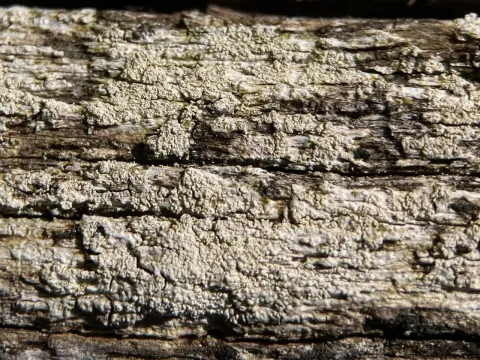
Ochrolechia is a genus of crustose lichens frequently observed on the bark of older or stressed fruit trees. Visually, they appear as tight, crust-like patches that adhere firmly to the trunk and branches, often presenting in shades of white, yellow, or grey.
What the section contains
Ochrolechia
A primary sign of infestation is the appearance of distinct patches that gradually merge to cover significant areas of the tree's surface. The texture of the lichen is typically granular or bumpy, contrasting sharply with the smoother appearance of healthy bark.
Unlike parasitic fungi, Ochrolechia does not penetrate deep into the woody tissue, yet its presence often indicates that the tree is under stress or lacks proper maintenance. In areas of heavy infestation, the underlying bark may appear brittle or exhibit peeling scales.
Identifying Ochrolechia early is crucial, as the lichen can often blend in with the natural color of the bark, making it difficult to detect during the initial stages of colonization. As the colony grows, the visual impact on the tree becomes more pronounced.
It is important to differentiate this lichen from other biological growths, as its presence is often a indicator of high humidity and poor crown ventilation in the orchard environment. Its colonization pattern is usually localized on the most mature parts of the tree.
Ochrolechia is not a true plant pathogen in the traditional sense, as it is a symbiotic organism consisting of a fungus and an alga. From an agronomic perspective, it is classified as an epiphyte, meaning it uses the tree only as a physical substrate.
The lichen does not feed on the tree's sap or nutrients. Instead, its fungal component gathers minerals and moisture directly from the atmosphere and dust particles deposited on the bark, living independently of the tree's internal physiological processes.
Reproduction occurs via both spores and vegetative structures known as soredia or isidia. These are easily dispersed by wind and rain, allowing the lichen to spread rapidly to adjacent trees when environmental conditions remain humid and favorable.
A biological hallmark of this genus is its remarkable resilience. Ochrolechia is highly capable of surviving harsh weather conditions by entering a state of dormancy, only to resume its growth and colonizing activity once moisture becomes available again.
Despite not being a parasite, the lichen's structure forms a thick, complex layer on the bark surface. This layer creates a specific micro-environment that serves as a shelter for various insects and other microorganisms, some of which may be harmful to the tree.
The development of Ochrolechia is primarily driven by high ambient humidity. Orchards situated in low-lying areas or near water bodies, where fog and dampness are frequent, provide an ideal environment for the lichen to thrive on tree trunks.
Poor orchard management, specifically the lack of crown pruning, is a major contributing factor. When the canopy is overly dense, air circulation is significantly reduced, keeping the bark moist and creating perfect conditions for lichen proliferation.
The age and condition of the tree are also critical factors. Mature trees with rough, fissured bark provide the best anchorage points for Ochrolechia. The natural crevices in aging bark are much easier for the lichen to colonize compared to smooth, young wood.
Insufficient sunlight, especially within the inner sections of the tree canopy, encourages the growth of this lichen. Ochrolechia thrives in shaded areas where moisture persists longer, preventing the bark from drying out sufficiently during the day.
Weakened trees, suffering from nutritional deficiencies or other underlying health issues, are far more susceptible to colonization. A compromised tree lacks the vigor required to maintain its bark health, making it an easy target for epiphytic growth.
The primary concern regarding Ochrolechia is that it provides a protected habitat for various orchard pests. The dense layer of lichen acts as a shield for scale insects, mites, and spores of pathogenic fungi that cause serious bark diseases like cankers.
The presence of a thick lichen cover interferes with the bark's natural ability to perform gas exchange. This restriction can hamper the tree's respiration, potentially reducing its overall vitality and physiological efficiency during the growing season.
Heavy colonization forces the tree to expend valuable energy on repairing or shedding bark layers rather than allocating those resources to fruit production. This results in a gradual decline in the tree's yield and general health over multiple seasons.
Over time, the areas covered by the lichen can become prone to cracking and structural weakness. This creates entry points for secondary infections, which can penetrate deeper into the woody tissue and lead to the decline of major scaffold branches.
Persistent, untreated infestations eventually lead to the premature aging of the tree. By reducing the vigor of the bark and protecting other pathogens, Ochrolechia effectively lowers the long-term productive lifespan of the fruit tree.
Mechanical removal is the most effective initial control measure. During the dormant season, orchardists should use stiff brushes or specialized scrapers to gently remove the lichen crust from the trunk and scaffold branches, taking care not to damage the underlying bark.
Following the mechanical cleaning, it is highly recommended to apply a 3-5% solution of iron sulfate (ferrous sulfate). This treatment disinfects the area, killing any remaining spores and providing a minor boost to the bark's resilience against fungal infection.
Pruning is essential for long-term prevention. By thinning out the canopy and ensuring proper air circulation, the humidity levels around the trunk are kept low, making the environment hostile for the lichen to re-establish its colonies.
Whitewashing trunks with lime is a traditional and highly effective preventive measure. The alkaline environment created by the lime prevents the lichen from attaching to the bark and effectively inhibits the growth of new colonies.
Maintaining overall tree health through appropriate fertilization and irrigation ensures the tree remains vigorous. A healthy, rapidly growing tree with smooth bark is far less likely to be colonized by lichens than a stressed or neglected one.