
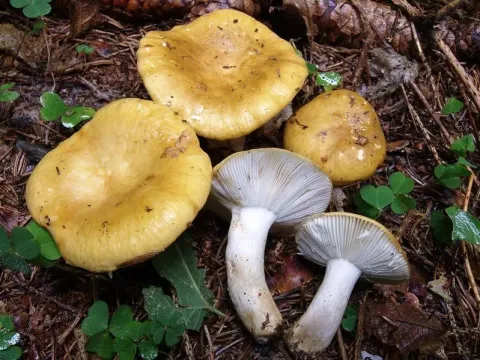
Ocher brittlegill
Russula ochroleuca
The ocher brittlegill (Russula ochroleuca) is a mushroom species from the Russulaceae family, primarily recognized for its symbiotic role in forest ecosystems.
What the section contains
Ocher brittlegill
It is not a plant pathogen or a disease of crops; it forms an ectomycorrhizal association specifically with forest trees, mainly conifers and some hardwoods.
In the context of agronomy, this organism does not interact with agricultural crops, as it lacks the physiological mechanisms to parasitize them.
The fungus functions by trading mineral nutrients and water from the soil for carbohydrates provided by the host tree roots.
There are no documented cases where this species causes harm to cultivated plants, making it irrelevant to field phytopathology.
The fruiting body is characterized by an ocher-yellow cap which becomes slimy or tacky under wet weather conditions.
The gills are initially white and may develop a pale greyish tinge as the mushroom matures, which is a key identifying trait.
The stipe is firm, white, and often displays a slight greyish shade at the base, distinguishing it from other similar Russula species.
There are no visible symptoms of disease on crops, such as leaf spots, wilting, or root rotting associated with this fungus.
Mycelial presence in the soil does not cause any structural or physiological damage to agricultural vegetation.
The growth of this fungus is dependent on acidic or slightly acidic soils with a substantial amount of organic debris.
High humidity and consistent moisture levels in the forest litter layer are crucial for the development of fruiting bodies.
The fungus requires the presence of compatible tree hosts, typically found in temperate forest environments, to sustain its lifecycle.
Intensively managed agricultural lands, characterized by frequent tillage and the absence of forest canopy, do not support the survival of this fungus.
Shaded areas with minimal human disturbance provide the optimal ecological conditions for its colonization.
Russula ochroleuca causes no economic or agronomic damage, as it does not target or affect agricultural products.
It does not compete with crops for essential soil nutrients, nor does it release any toxic secondary metabolites into the soil environment.
The species does not act as a vector for viruses, bacteria, or other harmful pathogens that might infect field crops.
Its presence is considered ecologically neutral in agricultural settings, posing no threat to harvest yields or plant health.
Therefore, no quarantine or containment procedures are required for this species in farming practices.
As this mushroom is not a plant pathogen, no chemical or biological control agents are required or recommended.
If its presence is undesirable in domestic gardens, managing soil drainage to reduce excess moisture can discourage fungal growth.
Adjusting soil pH through liming is an effective method to make the environment less favorable for acid-loving fungi like the ocher brittlegill.
Regular maintenance of the area, such as removing excess leaf litter, naturally reduces the organic substrate required for the mycelium to thrive.
Standard agricultural practices are sufficient to prevent the colonization of any woodland-associated fungi in cultivation zones.