
Oat septoria
Neospermospora avenae
The causal agent of oat septoria is the fungus Neospermospora avenae (formerly known as Septoria avenae). This pathogen belongs to the ascomycetes class and specifically targets small grain cereals.
What the section contains
Oat septoria
The fungus survives the winter on infected crop residues and in the soil as mycelium and pycnidia. During the growing season, conidia are produced and spread by wind and rain splash to healthy plant parts.
High moisture and moderate temperatures are the most critical factors for the pathogen's survival and subsequent infection of the new crop.
The pathogen utilizes both sexual and asexual reproduction cycles, which helps it to remain resilient and adapt to different climatic conditions across various regions.
The fungus is capable of infecting oats at all growth stages, making continuous field observation essential for effective disease management throughout the season.
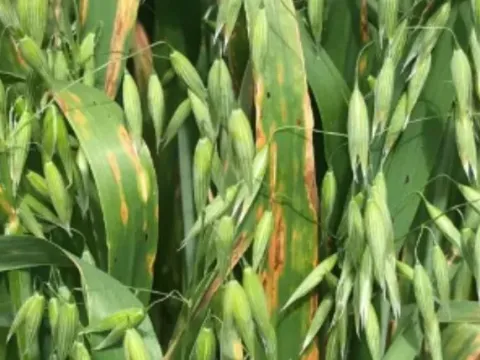
Initial symptoms manifest as small, light-brown or yellowish spots on the lower leaves, which gradually elongate into larger blotches confined by leaf veins.
A definitive diagnostic sign is the formation of tiny, black, pepper-like structures called pycnidia within the necrotic lesions, which clearly distinguishes it from other leaf spots.
As the disease progresses, these lesions merge, covering large areas of the leaf blade, which eventually leads to chlorosis and premature leaf death.
The infection can spread to leaf sheaths, stems, and the panicle, significantly affecting the plant's ability to fill the grain properly during development.
On stems, symptoms often appear as dark-brown streaks, which compromise the mechanical stability of the plant and may lead to lodging before the harvest.
High relative humidity (exceeding 85%) and frequent rainfall are the primary drivers of disease outbreaks, as they provide the moisture required for spore germination.
The fungus thrives within a temperature range of 15°C to 22°C, which is the optimal window for mycelial growth and rapid spread within the field.
Dense crop stands create a stagnant microclimate at the canopy level, lacking proper air circulation, which creates an ideal environment for the pathogen.
Excessive application of nitrogen fertilizers results in rapid, succulent growth with thinner cell walls, making plants significantly more susceptible to fungal penetration.
Poor crop rotation practices, where oats are planted repeatedly in the same field, lead to a massive buildup of fungal inoculum in the soil over time.
Oat septoria is highly damaging as it directly reduces the photosynthetic surface area of the plant, which is vital for grain filling and yield accumulation.
The disease causes a reduction in the thousand-kernel weight and overall grain filling, leading to shriveled grains that have lower nutritional and market value.
Severe infections on the panicle negatively affect the final yield and can reduce the quality of seeds for the next planting season.
Stem weakening caused by the fungus not only increases the risk of lodging but also complicates harvesting procedures and increases storage losses.
- Significant reduction in grain yield (often 10–30%).
- Reduced protein and nutritional content of the straw and grain.
- Increased cleaning and drying costs post-harvest.
- Lower grain grade and overall marketability of the produce.
Implementing a proper crop rotation strategy is the most effective preventative measure to break the infection cycle of Neospermospora avenae.
Deep plowing of field residues helps to bury infected plant material, encouraging decomposition and reducing the amount of inoculum available for the next season.
Treating seeds with appropriate fungicides before planting provides a critical layer of protection for seedlings against early-season soil-borne infection.
Foliar fungicide application during the booting or early heading stage can be crucial in halting the spread of the disease when weather conditions favor infection.
Choosing resistant or tolerant oat varieties is the most sustainable long-term approach to mitigating the damage caused by septoria in commercial farming.