
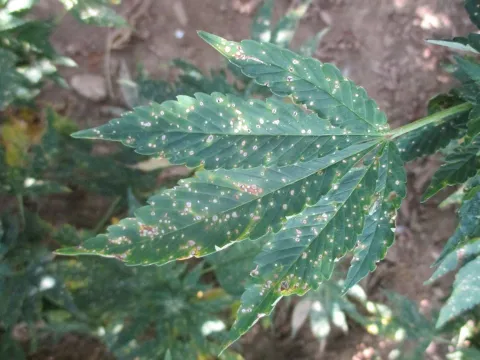
Hemp downy mildew
Pseudoperonospora cannabina
The causative agent of this disease is Pseudoperonospora cannabina, an oomycete pathogen specifically adapted to infect hemp plants (Cannabis sativa).
What the section contains
Hemp downy mildew
The pathogen completes its life cycle by producing sporangia that release motile zoospores, which require a film of moisture on the leaf surface to germinate and penetrate the host tissue.
Mycelial growth occurs in the intercellular spaces of the plant, drawing nutrients from host cells and eventually leading to the chlorosis and necrosis of infected areas.
The fungus survives during unfavorable conditions or off-seasons as oospores within crop debris or soil, serving as the primary source of infection for new plantings.
Environmental dispersal is primarily achieved through windborne sporangia or rain splashes, facilitating the rapid spread of the disease within and between fields.
The first symptoms appear as pale, yellowish chlorotic spots on the upper leaf surface, which are often angular and delimited by the leaf veins.
A distinctive grayish-violet fuzzy growth appears on the underside of the leaves in the corresponding spot areas, representing the sporulation of the fungus.
As the disease progresses, these chlorotic areas turn necrotic, changing to a brown or dark color, which leads to the shriveling and eventual shedding of leaves.
In cases of severe infestation, stems may show symptoms of stunting or deformation, significantly disrupting the plant's structural and vascular development.
If the infection reaches the inflorescences, it can lead to decay and significantly reduced seed yield, affecting the overall quality and vitality of the seeds.
High relative humidity, typically exceeding 80%, is the primary environmental factor that triggers and sustains the development of downy mildew.
The optimal temperature for pathogen proliferation ranges between 18 and 22 degrees Celsius, conditions that are often prevalent during the early stages of crop growth.
Overcrowded plantings and poor field ventilation create a microclimate that traps moisture on foliage, providing perfect conditions for zoospore infection.
Morning dews, fog, or frequent rainfall events ensure that leaves remain wet for extended periods, allowing the pathogen to successfully complete its infection cycle.
Improper field drainage or poor site selection can exacerbate the prevalence of the disease by keeping soil and lower canopy humidity levels unnecessarily high.
The primary impact of the disease is a drastic reduction in biomass and photosynthetic efficiency, which directly translates to lower fiber yields in industrial hemp.
Downy mildew degrades fiber quality, making stalks brittle and reducing the efficiency of the decortication process during industrial hemp harvesting.
In seed production crops, the disease leads to decreased yield and lower seed quality, as the pathogen compromises the plant's ability to allocate energy to its seeds.
Widespread leaf loss puts the crop under severe physiological stress, making it more vulnerable to secondary infections by opportunist bacteria or other fungal pests.
Economically, downy mildew results in reduced market value of the crop and increased operational costs due to the need for fungicide applications and loss of harvest.
Implementing a strict crop rotation schedule, avoiding hemp cultivation on the same land for at least three to four years, is a critical preventative measure.
Sanitation practices, including the deep incorporation or removal of crop residue, effectively reduce the initial inoculum load in the field for subsequent seasons.
Maintaining proper plant density and spacing ensures better air circulation, allowing the foliage to dry faster and reducing the likelihood of infection.
Selecting hemp varieties that exhibit natural field resistance or tolerance can significantly mitigate the risk of severe disease outbreaks without needing chemicals.
- Application of approved fungicides, particularly those with copper-based or systemic modes of action, upon the first sign of symptoms.
- Balanced nutrient management to strengthen the plant's natural immune system and overall vigor.
- Regular scouting of fields, especially during periods of prolonged wet weather or high humidity.