
Hemp powdery mildew
Erysiphe radulescui
Description
Symptoms
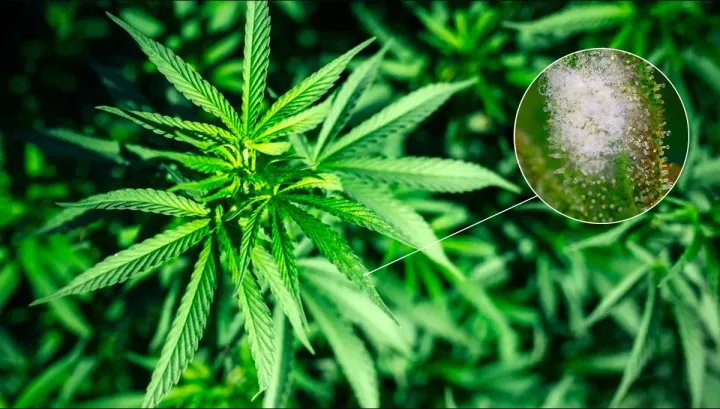
The earliest sign of infection is the appearance of small, white, flour-like spots on the upper leaf surfaces. These spots are composed of the fungus's growing mycelial network and surface spores.
As the infection progresses, these individual white patches expand and merge, eventually covering the entire surface of leaves, petioles, and sometimes even the main stems of the hemp plant.
Infected leaves often lose their vibrant green color, becoming chlorotic and stunted. If left untreated, the leaves will eventually turn brown, dry out, and drop prematurely, severely reducing the plant's photosynthetic capacity.
In later stages, particularly in high humidity, the mycelium can become denser, and small black specks may appear within the white patches, indicating the formation of sexual fruiting structures.
When the infection spreads to the flowers (buds), it can destroy the harvestable product, rendering it unusable due to the fungal contamination and the degradation of cannabinoids and terpenes.
Pathogen
The causative agent of hemp powdery mildew is the fungus Erysiphe radulescui. It is an obligate parasite, meaning it requires living host tissue to complete its life cycle and derive nutrients through specialized structures called haustoria.
This fungus belongs to the Erysiphales order. It primarily develops on the surface of plant parts, forming a dense web of white mycelium that eventually gives rise to asexual reproductive structures known as conidia.
The conidia are microscopic spores that are easily detached and transported by air currents, allowing the disease to spread rapidly across entire fields or within indoor growing facilities if conditions are right.
Under specific environmental triggers, the fungus may produce cleistothecia—durable, dark-colored fruiting bodies that help the pathogen survive harsh winters on plant debris or in the soil.
Erysiphe radulescui is highly host-specific to hemp (Cannabis sativa), which makes integrated pest management and crop rotation highly effective tools for limiting its long-term presence in a given area.
Conditions for development
Powdery mildew thrives in moderate temperatures, typically between 18°C and 25°C. While it can survive at various temperatures, it is most prolific in these optimal ranges and slows down in extreme heat above 30°C.
High relative humidity is a critical factor for germination and spore production. Frequent dew, fog, or improper air circulation in indoor settings creates a perfect microclimate for the fungus to flourish.
Densely planted crops create a stagnant microclimate within the canopy, where trapped humidity levels allow the disease to move from the bottom leaves to the top of the plant with ease.
Poor ventilation and limited light penetration are major contributors to outbreaks. Plants that are already stressed by poor nutrient management or environmental fluctuations are more susceptible to infection.
The presence of old plant material or soil debris infected from the previous season can act as the primary inoculum source, initiating the cycle of infection as soon as weather conditions align.
Why it matters
The primary harm caused by hemp powdery mildew is a significant reduction in overall yield. By hindering photosynthesis, the fungus directly impacts the plant's ability to produce biomass and develop robust stalks.
For industrial hemp, the fungal colonization of the stalk degrades the fiber quality, making it more brittle and reducing its commercial value for textiles or composite materials.
In seed production, the infection of flowering parts can lead to seed abortion or the development of low-quality, poorly germinating seeds, which affects the genetic viability of future plantings.
The disease also compromises the plant's systemic health, making it more prone to secondary infections by other opportunistic pathogens or infestations by various agricultural pests.
In severe cases, the entire harvest can be lost to fungal growth, leading to massive economic impacts for growers who must discard contaminated or downgraded batches of hemp.
Protection
The most effective strategy is to cultivate hemp varieties that have been bred for resistance or tolerance to Erysiphe radulescui. Genetic resistance is the cornerstone of a sustainable disease management plan.
Implementing rigorous crop rotation and ensuring the deep incorporation of harvest residues into the soil helps to eliminate the primary sources of overwintering inoculum for the next cycle.
Good cultural practices such as maintaining proper plant spacing are essential. This promotes airflow throughout the canopy, which keeps humidity levels low and prevents the spores from successfully colonizing the leaves.
In cases where an outbreak occurs, growers may need to use approved fungicides or bio-fungicides to control the spread. Timing the application before the infection becomes systemic is crucial for effective results.
Regular monitoring of the field or greenhouse allows for the early detection of symptoms. Removing and destroying individual infected plants can help stop the localized spread of the disease to the rest of the crop.
Discussion
No discussions yet — be the first.