
Hendersonia needle cast
Hendersonia acicola
Description
Symptoms
The primary symptom of this disease is the development of small chlorotic spots on the needles. As the fungus consumes the tissue, these spots turn brown or grayish-brown.
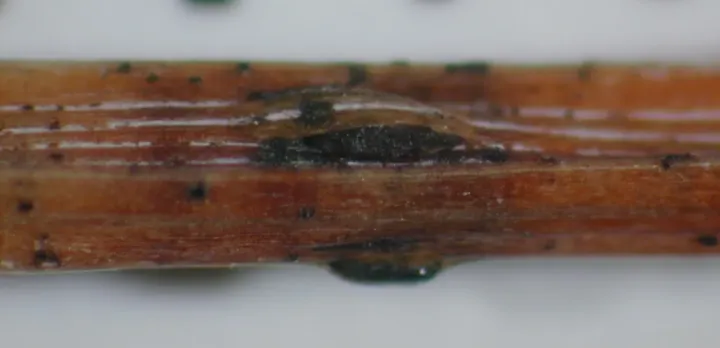
Infected needles undergo premature yellowing and browning. A hallmark of the infection is the presence of tiny, black, pimple-like pycnidia on the surface of the discolored needles.
Heavily infected needles tend to drop off the tree prematurely. This process often starts from the lower branches, leaving the plant looking sparse and losing its natural fullness.
The pathogen can affect current-year needles as well as older ones. In severe cases, the entire crown of the tree can appear blighted and unhealthy during the growing season.
Distinguishing Hendersonia acicola from other needle cast diseases often requires identifying the specific pattern and timing of pycnidia formation on the needles.
Pathogen
The disease is caused by the fungus Hendersonia acicola, an ascomycete that specializes in infecting the needles of various conifer species. It disrupts the host's normal metabolism by colonizing internal tissues.
The pathogen survives the winter in fallen needles or on infected branches that remain on the tree. During moist periods, the fungus produces spores (conidia) in small, dark fruiting bodies called pycnidia.
Spores are disseminated by wind and water splashes to healthy needle tissue. Once they land on the needles, they germinate and penetrate through stomata or directly into the epidermis.
After penetration, the mycelium spreads within the needle tissue, eventually killing cells. This leads to the characteristic symptoms visible to the naked eye as the disease progresses.
The biology of Hendersonia acicola makes it a persistent pathogen, as its ability to produce spores over a long season allows it to infect new growth throughout the year.
Conditions for development
High humidity and moderate temperatures are the most critical factors for the development of Hendersonia needle cast. These conditions provide the environment necessary for spore germination.
Densely planted areas or trees with poor canopy ventilation are at higher risk. When moisture remains on the needles for extended periods, the infection rate increases significantly.
Rainy weather throughout the spring and early summer acts as a catalyst for the spread of spores. Water droplets facilitate the movement of the pathogen from the ground to the lower foliage.
Stressed or nutrient-deficient trees are more susceptible to infection. Poor site selection or improper maintenance can weaken the tree's natural defenses, allowing the fungus to take hold more easily.
Maintaining a clean area under the trees by removing fallen debris is essential. This reduces the primary inoculum source that triggers the disease cycle in the following season.
Why it matters
The primary harm is the significant reduction in the aesthetic value of ornamental conifers. Continuous needle loss can make trees look unhealthy, stunted, and unattractive.
As needles are lost, the tree's photosynthetic capacity decreases. This leads to stunted growth, reduced vigor, and a decline in overall tree health over several years.
Chronic infections weaken the tree's immune system, making it more vulnerable to opportunistic pests, such as bark beetles or other wood-boring insects, which can be lethal.
In commercial nurseries, this disease can result in huge financial losses. Affected seedlings or saplings are often unmarketable due to their poor appearance and health status.
If left untreated, the disease can eventually contribute to the death of the tree, especially in young or sensitive species that have limited capacity for rapid recovery.
Protection
Management starts with good sanitation practices. Pruning out infected branches and regularly removing all fallen needles from beneath the trees will significantly lower the fungal pressure.
Providing proper spacing during planting is vital to ensure adequate air circulation. This helps dry out the foliage quickly, inhibiting the germination of fungal spores.
Chemical control involves the timely application of fungicides. Copper-based products or systemic fungicides are most effective when applied as a preventative measure.
The first application should occur in early spring before the buds break. Depending on the infection severity and rainfall, follow-up sprays may be necessary every two weeks.
Boosting the tree's vigor through proper fertilization and watering is recommended. A healthy, well-nourished tree has a much better chance of resisting Hendersonia acicola infections.
Discussion
No discussions yet — be the first.