
Pseudochattonella
Pseudochattonella
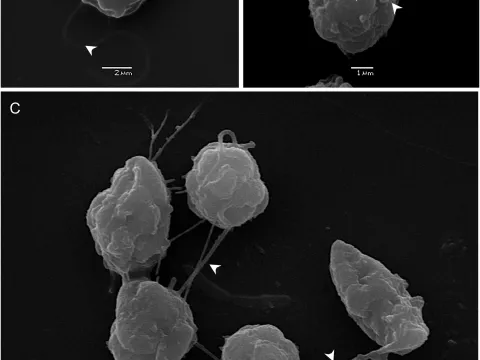
Pseudochattonella is a genus of unicellular golden-brown algae belonging to the class Dictyochophyceae. These organisms are planktonic and can thrive in diverse marine environments.
What the section contains
Pseudochattonella
In the context of aquaculture, this organism is considered a potent harmful agent. It is not a plant pathogen in the traditional sense but a significant threat to aquatic livestock, particularly in salmon farming.
The biology of this organism involves rapid division under favorable environmental conditions. It is known to be ichthyotoxic, meaning it produces chemical substances that are specifically harmful to fish.
These algae cells interact with the gill tissue of fish, causing severe physical damage. The production of specific toxins makes them a major concern for marine biologists and farm operators.
Molecular identification is the standard procedure to distinguish Pseudochattonella species from other harmless plankton, ensuring accurate monitoring and early response.
The proliferation of Pseudochattonella is highly dependent on seawater temperature. Blooms typically occur during seasonal transitions, specifically when temperatures range from 5°C to 12°C.
Nutrient availability is a critical factor. High concentrations of nitrogen and phosphorus in the water column act as fertilizers, fueling the explosive growth of the algal population.
Water column stability is essential for the accumulation of these organisms. When there is limited vertical mixing, the algae concentrate at the surface, maximizing their exposure to sunlight.
Hydrological factors, such as coastal currents, play a major role in transporting these algal blooms into specific areas, often leading to sudden outbreaks in previously unaffected bays.
Environmental changes, including heavy rainfall and increased terrestrial runoff, often provide the necessary nutrient influx to trigger an outbreak in coastal fish farming sites.
The most noticeable sign of a bloom is the discoloration of the water. Depending on the cell density, the water may appear turbid with a brownish or yellowish tint.
Fish behavior serves as an early warning system. Affected fish exhibit lethargy, swim near the surface, and show signs of difficulty in breathing, often gulping air at the surface.
Gill examination reveals clear pathological signs: the gills become coated with excessive mucus, appear pale or swollen, and show signs of tissue necrosis and cellular degradation.
Large-scale mortality events in fish cages are the most drastic indicator of a major bloom. The loss of fish population can happen within a matter of hours once toxicity reaches a threshold.
In addition to mortality, reduced feeding activity and poor growth rates are common signs indicating that fish are under stress due to the presence of these algae.
The primary harm caused by Pseudochattonella is the destruction of gill epithelia due to potent ichthyotoxins. This leads to asphyxiation and rapid death of the fish.
For the aquaculture industry, the impact is devastating. Sudden mass mortality events result in the loss of entire harvests and massive financial instability for the companies involved.
Even when mortality is not immediate, the stress induced by the toxins leaves the surviving fish immunocompromised, making them highly susceptible to secondary infections.
The ecological impact involves the disruption of the local food web, as the algae and their associated toxins affect various marine organisms beyond just the farmed fish.
Economic losses extend to the cleanup and management of the affected site, as well as the long-term impact on the reputation and marketability of the farming region.
Effective management relies on a robust monitoring program. Using microscopy and genetic sequencing to monitor water samples helps predict blooms before they reach fish cages.
Mitigation strategies include the use of deep-water harvesting or submerging cages to avoid surface-level blooms, as the algae density is often significantly lower at greater depths.
Enhanced aeration systems help maintain oxygen levels and provide a buffer for fish suffering from impaired gill function during bloom periods.
Innovative site selection and the use of physical barriers or curtains are being tested to prevent the entry of dense algal mats into the pens.
- Frequent environmental monitoring and early warning systems
- Deployment of submersible cage technology
- Reduced feeding and handling of fish during bloom alerts