
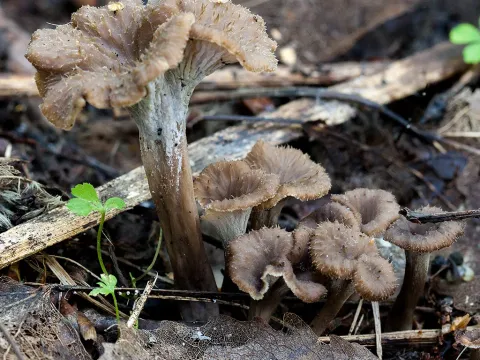
Pseudocraterellus
Pseudocraterellus
The genus Pseudocraterellus belongs to the Cantharellaceae family. While many species are known as saprotrophs, some can act as opportunistic pathogens that compromise the health of weakened plants.
What the section contains
Pseudocraterellus
The infection is caused by mycelial structures that infiltrate the root system or damaged bark, initiating the colonization of living plant tissues.
This condition is classified as a mycotic root rot, where the fungus can persist in the soil for extended periods as sclerotia or dormant mycelium, waiting for suitable hosts.
The fungus exploits organic matter from the host, utilizing specific enzymes to degrade cellulose and lignin, which leads to the structural decay of the plant's core systems.
Biological propagation is carried out through basidiospores, which are easily disseminated by wind or irrigation runoff, facilitating the spread of the disease within a garden or orchard.
Early symptoms include a general decline in plant vigor, characterized by premature yellowing of leaves and a visible loss of turgor in the younger shoots.
Distinctive trumpet-shaped or funnel-shaped fruit bodies appear near the base of the stem, often clustered together, indicating significant underlying root damage.
The bark at the base may darken, and beneath it, a white or creamy mycelial mat can be observed, often accompanied by a distinct, earthy fungal scent.
Root system analysis often reveals the necrosis and disintegration of fine feeder roots, preventing the plant from absorbing necessary water and nutrients.
As the infection advances, the wood within the lower stem loses its density and integrity, which may eventually lead to the structural failure or death of the tree.
Development of this fungal pathogen is heavily favored by high soil moisture content and poor drainage, which prevent the root zone from oxygenating properly.
Temperatures ranging from +15°C to +22°C are optimal for mycelial growth and enzymatic activity, making spring and autumn seasons high-risk periods.
Physical injuries to the root system or trunk, caused by pests or maintenance machinery, provide easy entry points for spores to colonize healthy tissue.
Compacted soil conditions and poor ventilation in dense planting layouts exacerbate humidity levels near the ground, promoting fungal proliferation.
Plant stress, whether caused by poor soil fertility or environmental fluctuations, lowers the natural defense mechanisms of the host, facilitating easier fungal invasion.
The primary damage occurs due to the obstruction of vascular tissues, which inhibits the translocation of water and essential minerals to the foliage.
This pathogen is particularly dangerous due to its rapid localized spread, which can destroy entire patches of garden plantings if not managed promptly.
Metabolic toxins released by the fungus during its growth phase suppress the plant's immune system, leading to systemic necrosis and accelerated decay.
Infected plants suffer from chronic deficiency symptoms, making them highly susceptible to secondary attacks by other pests or opportunistic diseases.
Economic losses in commercial nurseries are often severe, as entire stocks of seedlings can become unmarketable due to systemic root damage caused by the fungus.
Prevention starts with improving site drainage and ensuring that plants are not subjected to waterlogged conditions, which inhibit healthy root development.
Strict sanitary measures should be followed, including the immediate removal and destruction of any infected plant material and fruit bodies discovered near the site.
Copper-based fungicides or systemic chemical treatments can be applied to manage the infection, especially when symptoms are identified at an early stage.
Strengthening the plant's vitality through balanced fertilization and the application of growth stimulants is essential for maintaining natural resistance.
Disinfecting all gardening tools between uses is a critical practice to prevent the accidental transmission of spores from contaminated areas to healthy plants.