
Pseudochattonella verruculosa
Pseudochattonella verruculosa
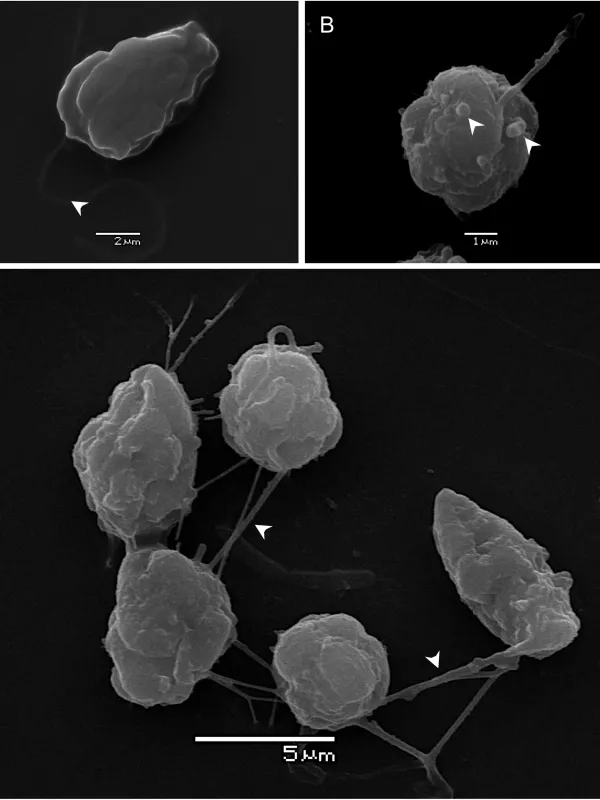
Description
Pathogen
The causative agent is Pseudochattonella verruculosa, a microscopic single-celled alga belonging to the class Dictyochophyceae. It is a natural component of marine phytoplankton capable of rapid population growth.
This flagellated microalga is recognized as a potentially toxic species. Its cells possess a unique morphology, including internal silicified skeletal structures, which are key diagnostic features for laboratory identification.
Under normal marine conditions, this organism exists as a minor part of the plankton community. However, specific ecological triggers can cause it to become a dominant species, leading to harmful environmental phenomena.
Genetic research confirms its status as a species of significant environmental concern. Monitoring programs often rely on the morphological identification of P. verruculosa to assess water quality in coastal areas.
The taxonomy of this organism has been subject to various revisions, reflecting the scientific complexity involved in studying it as a major contributor to fish farm productivity losses.
Conditions for development
Mass blooms of Pseudochattonella verruculosa are largely dictated by sea surface temperature. The most intensive growth occurs during periods of moderate temperature, typically seen in spring or autumn in northern latitudes.
Availability of nutrients, particularly nitrogen and phosphorus, is a critical driver. Eutrophication due to human activity significantly elevates the risk of explosive growth for this algal species.
Water column dynamics and stratification are crucial for maintaining cells in the euphotic zone, where they undergo photosynthesis and rapid reproduction under optimal lighting conditions.
Heavy rainfall events, which facilitate nutrient runoff from coastal lands, are frequently associated with the onset of blooms in sheltered bays and fjords where these algae thrive.
Stable water conditions, lacking significant mixing or turbulence, facilitate the concentration of cells into dense patches, turning a routine plankton event into a severe ecological threat.
Why it matters
The primary threat posed by Pseudochattonella verruculosa is its significant ichthyotoxicity. During bloom events, the algae release chemical compounds that cause severe damage to the gill tissue of fish.
Contact with these toxins impairs the respiratory function of gills, leading to mass mortality in cage-based aquaculture operations. This results in devastating economic losses for the industry.
Beyond direct toxicity, massive algal blooms can lead to nocturnal oxygen depletion. The resulting hypoxia adds secondary stress to aquatic life, further increasing mortality rates in fish pens.
The damage also involves ecosystem disruption, as the algae outcompete beneficial phytoplankton species and degrade benthic habitats through the accumulation of organic matter after cell death.
- Mass mortality of farmed fish stocks.
- Severe economic impact on aquaculture businesses.
- Degradation of coastal water quality.
- Prolonged recovery times for local marine biota.
Protection
The core management strategy is continuous phytoplankton monitoring in aquaculture zones. Early detection of P. verruculosa growth is essential for implementing preventive measures before fish mortality occurs.
When high cell densities are detected, farm managers often stop feeding operations to reduce the metabolic oxygen demand and physiological strain on the fish, which aids survival under toxic stress.
Technical mitigation strategies include the use of aeration systems or deep-water intake pipes, which allow farms to supply water with lower concentrations of algae to fish pens during bloom events.
Preventive efforts focus on regulating nutrient runoff near farm sites to minimize eutrophication, thereby creating a less favorable environment for rapid algal development.
In emergency situations, cage skirts or protective barriers may be deployed to isolate fish stocks, or pens may be towed to safer water areas where Pseudochattonella densities remain within safe limits.
Discussion
No discussions yet — be the first.