
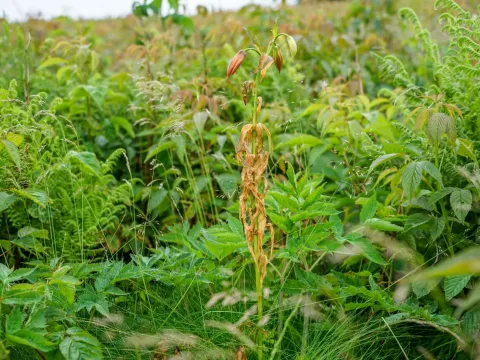
Pseudocercosporella eyespot
Pseudocercosporella inconspicua
The causative agent of this disease is the fungus Pseudocercosporella inconspicua, a specialized pathogen affecting specific plant hosts.
What the section contains
Pseudocercosporella eyespot
The fungus is capable of surviving for long periods in the soil, residing on crop debris in the form of mycelium or resting structures.
The life cycle of the pathogen is highly dependent on humidity levels, which trigger the production of conidia necessary for infection spread.
Fungal penetration into plant tissues typically occurs through natural openings like stomata or through mechanical injuries on the leaf surface.
Secondary infections throughout the growing season are driven by new generations of spores dispersed by wind currents and rain splashes.
Initial symptoms present as diffuse chlorotic spots on leaves, which gradually darken to a greyish-brown coloration over time.
Over the infected areas, a faint growth may appear, indicating the active sporulation phase of the pathogenic fungus.
As the infection progresses, the central parts of the spots may dry out and necrose, leading to premature leaf senescence and shed.
Unlike other foliar diseases, symptoms of Pseudocercosporella inconspicua often lack a distinct, sharp border around the lesions.
Severe infestations can lead to leaf deformation and overall stunting of the plant, hindering its developmental trajectory.
The disease thrives in environments with prolonged high relative humidity, especially during overcast and rainy periods.
The optimal temperature range for the development of fungal mycelium is between 15 and 22 degrees Celsius.
Dense crop stands with poor air circulation create an ideal microclimate for infection accumulation and rapid spread across the field.
Large amounts of crop residues left on the soil surface provide a consistent reservoir for the pathogen to persist between seasons.
Persistent dew or morning fog that prevents foliage from drying out significantly increases the risk of a widespread outbreak.
The primary impact of this disease is the disruption of photosynthesis, which leads to reduced biomass accumulation and overall plant vigor.
Infected crops often experience significant yield losses as plants struggle to allocate sufficient energy to reproductive organs.
Diseased plants show decreased tolerance to environmental stressors, making them more vulnerable to drought or extreme cold temperatures.
The overall quality of the harvested product is compromised, reducing its commercial value and suitability for further processing.
The necessity for additional fungicide treatments increases production costs, negatively impacting the farm's overall profitability.
Implementing a strict crop rotation schedule is essential to break the infection cycle and prevent pathogen build-up in the soil.
Deep tillage and the timely destruction of crop debris are effective strategies to reduce the primary inoculum load.
Systemic fungicides are recommended for application at the onset of symptoms to halt the spread of the fungal infection.
Choosing resistant cultivars and maintaining optimal plant spacing can significantly reduce the environment's suitability for the fungus.
Regular field scouting and monitoring allow for the early detection of infection hot-spots, enabling targeted and localized control measures.