
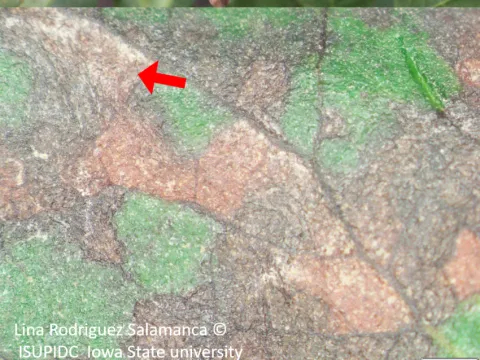
Guava pseudocercospora leaf spot
Pseudocercospora zambiensis
The disease is caused by the fungus Pseudocercospora zambiensis. It is an ascomycete fungus that specifically targets guava trees and related plant species.
What the section contains
Guava pseudocercospora leaf spot
The pathogen establishes itself in the leaf tissue, where it spreads through mycelial growth, eventually breaking down host cell structures to extract nutrients.
Propagation of the fungus occurs through the production of conidia, which serve as the primary inoculum for spreading the infection to healthy leaves.
This pathogen is highly adapted to tropical and subtropical environments where moisture and heat remain consistent throughout the year.
While often confused with other leaf spot fungi, molecular identification confirms the presence of P. zambiensis in infected guava plantations worldwide.
The infection manifests as small necrotic spots on the leaves, which start as chlorotic specks and gradually expand into distinct lesions.
These spots often develop angular shapes, as their growth is physically constrained by the small veins of the guava leaf.
The center of the lesions typically turns greyish-brown as the tissue dies, often surrounded by a darker border indicating active pathogen expansion.
Under humid conditions, the underside of the leaf shows an olive-grey fungal growth, which is a key diagnostic feature of this specific disease.
Advanced stages of the infection cause significant leaf yellowing, leading to premature leaf drop and potential defoliation of the lower branches.
High relative humidity is the most critical environmental factor required for the successful infection and spread of Pseudocercospora zambiensis.
Optimal temperatures for fungal sporulation and infection usually range between 22°C and 28°C, which covers the typical growing seasons for guava.
Prolonged leaf wetness, caused by heavy rainfall or persistent morning dew, allows the conidia to germinate and penetrate the leaf surface.
Poor orchard hygiene, such as leaving infected leaf litter beneath the trees, ensures a constant source of inoculum for the next crop cycle.
Dense canopy growth, which prevents air movement and reduces light penetration, creates the humid microclimate favored by the fungus.
The economic impact is primarily driven by extensive defoliation, which severely reduces the tree's overall photosynthetic efficiency.
Reduced photosynthesis limits the energy available for fruit development, resulting in smaller fruit size and lower overall crop yields.
Continuous infection cycles weaken the tree's vigor, making it more susceptible to secondary infestations by pests or other environmental stressors.
In severe cases, the tree may lose so much foliage that it struggles to recover, significantly shortening its productive lifespan.
Farmers face financial losses not only from yield reduction but also from the increased operational costs of frequent chemical disease management.
Cultural control practices include proper pruning to improve air circulation and sunlight exposure throughout the tree canopy.
Strict sanitation measures, such as the removal and destruction of fallen leaves, are vital to break the life cycle of the pathogen.
Where feasible, planting resistant or tolerant guava cultivars is the most sustainable approach to long-term disease management.
Protective fungicide applications, particularly copper-based sprays, are effective when applied preventively before the onset of the rainy season.
Monitoring the orchard for early symptoms allows for timely intervention, reducing the need for intensive chemical use later in the season.