
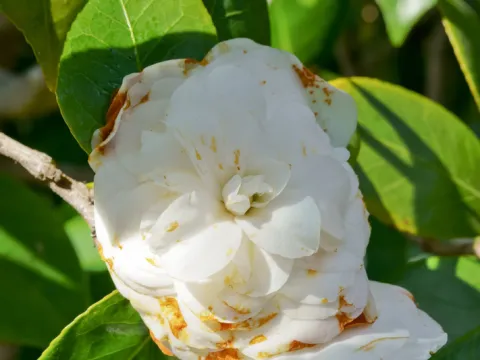
Guignardia leaf spot of camellia
Guignardia camelliae
The disease is caused by the ascomycete fungus Guignardia camelliae, which acts as a specialized pathogen of various camellia species.
What the section contains
Guignardia leaf spot of camellia
The fungus produces fruiting bodies known as pycnidia or perithecia within the leaf tissues, which serve as the primary reservoir for infectious spores.
It thrives in moist environments, relying on water splash or air currents to distribute its conidia to healthy foliage during the growing season.
The life cycle of the pathogen involves the colonization of the leaf epidermis, where it secretes enzymes that break down host cells to acquire nutrients.
Over time, the fungus persists as mycelium in plant debris, ready to initiate a new infection cycle when environmental conditions become favorable again.
The initial symptoms present as small, circular, reddish-brown spots on the leaves, often surrounded by a darker or purplish margin.
As the infection progresses, these spots expand into large necrotic areas, which can eventually cover a significant portion of the leaf surface.
Close inspection of the necrotic areas reveals tiny black dots; these are the reproductive structures of the fungus breaking through the leaf cuticle.
Affected leaves tend to yellow prematurely and drop, resulting in thin, unsightly canopies and reduced aesthetic value of the ornamental shrub.
In severe cases, twig dieback can occur as the fungus interferes with the plant's ability to maintain healthy vascular transport in affected branches.
High relative humidity and prolonged periods of leaf wetness are the primary environmental drivers for the rapid spread of Guignardia leaf spot.
Moderate temperatures, typically ranging from 15°C to 22°C, provide the ideal metabolic window for fungal spore germination and mycelial growth.
Poor air circulation within the shrub canopy, often resulting from dense planting or lack of pruning, keeps humidity levels high and favors infection.
Splashing water from irrigation systems, especially if directed over the foliage, serves as a major vector for transporting spores within the plant.
Plants under stress from improper soil moisture, inadequate lighting, or poor nutritional status show a higher susceptibility to the fungal pathogen.
The primary impact of the disease is the severe loss of ornamental appeal, as defoliation leaves the shrub looking sparse and unhealthy.
Reduced photosynthetic leaf area impairs the overall energy production of the plant, leading to stunted growth and reduced flower bud formation.
Weakened plants are significantly more vulnerable to secondary infections and environmental stressors like drought, heat, or frost damage.
Commercial nurseries often face heavy economic losses due to the disease, as infected stock is frequently deemed unfit for sale and must be destroyed.
If left unmanaged, the cumulative damage can lead to chronic decline and the eventual death of younger, less resilient camellia specimens.
Sanitation is paramount; all fallen leaves and infected plant parts should be removed promptly and destroyed to reduce the local inoculum density.
Modify irrigation practices to target the root zone only, ensuring the foliage remains dry as much as possible to discourage spore germination.
Applying protective fungicides containing copper or other systemic anti-fungal agents during the early spring can effectively prevent infection spikes.
Implement proper pruning techniques to increase canopy airflow and ensure light reaches all parts of the plant, creating an unfavorable microclimate for fungi.
- Disinfect gardening tools regularly to prevent spreading the pathogen between plants.
- Improve soil drainage to manage overall plant health and resilience.
- Monitor the garden regularly to identify and treat early stages of infection.