
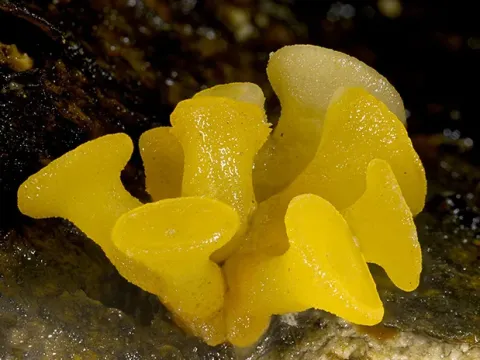
Guepiniopsis buccina
Guepiniopsis buccina
Guepiniopsis buccina belongs to the Basidiomycota division, specifically the Dacrymycetes class. It is a wood-decaying fungus that follows a saprotrophic lifestyle.
What the section contains
Guepiniopsis buccina
Biologically, this species is characterized by gelatinous fruit bodies. It has evolved to break down complex organic polymers found in woody debris.
The fungal mycelium actively penetrates the wood pores, using its enzymatic machinery to decompose lignin and cellulose, allowing it to colonize dead tissues.
Reproduction occurs through spores that are released into the environment, dispersed by air currents or raindrops, facilitating rapid colony expansion.
The fungus thrives in high-humidity substrates, as its fruit bodies are sensitive to rapid desiccation when environmental water levels drop.
The primary visual indication of this fungus is the presence of bright yellow or orange, cup-shaped or tubular fruit bodies attached to the bark or wood surface.
These fruit bodies typically grow in clusters, adhering closely to the affected wood. In dry conditions, they may shrink and become almost invisible to the naked eye.
Infected wood gradually develops a looser structure and changes color, often turning darker or grey due to advanced decay processes.
In the early stages of colonization, signs may be hidden beneath dead bark layers, making visual diagnosis in orchards or forests quite challenging.
Careful examination can reveal thin, light-colored mycelial patches penetrating deep into micro-cracks on the plant bark.
The development of Guepiniopsis buccina depends directly on the presence of weakened or dead wood, which serves as the primary nutritional source.
High relative humidity is a critical factor favoring the active growth of fungal fruit bodies, especially during spring and autumn seasons.
This fungus is most frequently found in shaded, poorly ventilated areas where moisture is retained on bark surfaces for extended periods.
Moderate climate temperature ranges are optimal for the growth of this species, leading to mass outbreaks during prolonged rainy spells.
The lack of routine sanitary pruning and the presence of rotting stumps on the plot provide an ideal base for spore dissemination.
The main danger is that the fungus accelerates wood degradation, leading to structural rot that significantly reduces the strength of tree trunks and branches.
While often classified as a secondary pathogen, its activity significantly weakens the plant's immune system, creating entry points for other diseases.
Plantations affected by this species lose their aesthetic and economic value, which is particularly critical for ornamental gardening and forestry.
In cases of widespread infection, the fungus contributes to the rapid decomposition of woody litter; while natural in forests, it can lead to the loss of valuable trees in gardens.
The damaged bark areas lose their protective function, rendering the tree highly susceptible to harsh cold weather and wood-boring insect pests.
The primary defense strategy is regular garden sanitation, which involves the removal of all diseased and dead wood from the property.
Ensuring high-quality pruning is essential: all cuts should be smooth and promptly treated with wound sealants or specialized fungicidal pastes.
Improving crown aeration through proper formative pruning reduces internal tree humidity, creating unfavorable conditions for fungal spore growth.
If infection clusters are detected, mechanical cleaning of the affected areas down to healthy tissue is recommended, followed by disinfection with copper-based products.
- Regular monitoring of tree bark.
- Timely disposal of woody debris.
- Maintaining overall tree health and resistance.