
Pestalotiopsis
Pestalotiopsis funerea
The disease is caused by the fungus Pestalotiopsis funerea, a widespread ascomycete that acts as a opportunistic pathogen. It primarily colonizes stressed or damaged plant tissues.
What the section contains
Pestalotiopsis
The fungus produces small, black, cushion-like structures known as acervuli on the surface of needles and stems. These structures release masses of spores that facilitate the spread of the disease.
The conidia (spores) possess distinct appendages, which allow them to be easily dispersed by splashing rain, wind, and garden tools, ensuring the pathogen can quickly colonize neighboring plants.
A broad range of coniferous species is susceptible to the pathogen, with arborvitae, junipers, cypresses, and yews being the most frequent victims of this infection.
Pestalotiopsis overwinter as mycelia within infected needles and twigs. This allows the pathogen to remain in the landscape, posing a persistent threat during the subsequent growing season.
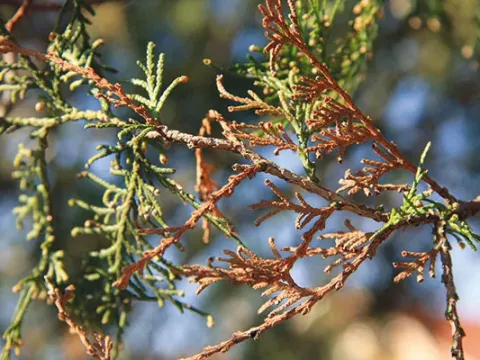
The earliest symptom is the discoloration of needles, which turn yellow, then brown or reddish-brown. This browning typically starts at the tips of the shoots and gradually moves inward.
The infected needles become brittle and dry, eventually falling off the branch. This leads to sparse foliage and the loss of the plant's overall aesthetic value.
Characteristic signs include tiny, black pimple-like fruiting bodies scattered on the surface of the discolored needles or the bark of infected twigs.
In cases of severe infection, branches may show distinct zones of necrosis, where the transition between dead and healthy tissue is visible but not always sharp.
If the infection reaches the main stem or trunk, it can result in girdling lesions that cause the death of entire branches or the collapse of the whole plant.
Warm and humid environments are essential for the development and spread of Pestalotiopsis. Frequent rain, heavy fog, and dew provide the moisture needed for spore germination.
Poor air circulation within dense plantings creates microclimates where humidity remains high, drastically increasing the likelihood of an outbreak.
Plants that are weakened due to improper watering, nutrient deficiencies, or drought stress are significantly more susceptible to successful colonization by the fungus.
Physical injuries, such as those caused by hail, frost, improper pruning, or insect feeding, act as entry points for the pathogen to enter the plant's vascular system.
High-density nursery environments where foliage remains wet for extended periods are particularly prone to rapid fungal transmission and disease epidemics.
Pestalotiopsis causes severe needle blight, which disfigures ornamental conifers and often leads to the death of the lower canopy.
The loss of photosynthetic tissue weakens the plant's metabolism, leaving it vulnerable to secondary pests like bark beetles and other opportunistic diseases.
In landscaping and forestry, this disease can cause significant economic losses, requiring the removal and replacement of mature, high-value specimens.
Because the disease often develops slowly, it can be overlooked during the early stages, making control efforts more difficult and costly once the symptoms become obvious.
Repeated fungal attacks can render conifers incapable of recovery, leading to stunted growth and eventual decline of the entire garden composition.
Sanitation is the most critical management strategy. All infected needles and branches must be pruned and removed from the site to reduce the fungal spore load.
Disinfecting pruning tools with a 70% alcohol solution or a bleach-water mix between cuts is essential to prevent the mechanical spread of the fungus.
Preventative applications of copper-based fungicides can create a protective barrier on the foliage, limiting the success of spore germination during rainy weather.
For active infections, systemic fungicides containing active ingredients like thiophanate-methyl or mancozeb may be used to suppress fungal activity and promote plant recovery.
Improving the cultural environment—by ensuring proper spacing, providing balanced fertilization, and avoiding overhead irrigation—is key to long-term disease prevention.