
Biscogniauxia
Biscogniauxia
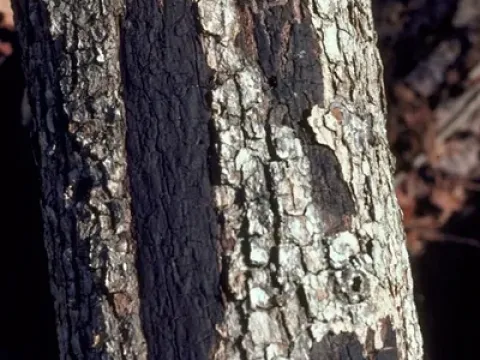
The primary symptom of this disease is the development of characteristic fungal stroma on the bark surface. These appear as black, carbon-like, crusty formations that adhere tightly to the trunks and branches of affected trees.
What the section contains
Biscogniauxia
As the pathogen develops, the bark in the infected areas begins to crack, die, and eventually slough off. The exposed underlying wood is often covered with a dark, powdery coating of spores, which is a hallmark of this infection.
In the advanced stages of the disease, the infection penetrates deeply into the cambium layer, severely disrupting the nutrient flow throughout the crown. This often leads to progressive dieback, starting from the canopy downwards.
Leaves on infected branches may turn yellow prematurely, wither, and drop, resulting in a thin and sickly crown. The overall stress caused by the fungus makes the tree highly susceptible to secondary infestations by wood-boring insects.
A distinctive visual sign is the persistent "charcoal-like" appearance of the bark even after the decay process has advanced. This visual cue helps foresters identify and map out infected areas during early-stage surveys.
The disease is caused by ascomycete fungi belonging to the genus Biscogniauxia. The most significant and widespread species affecting hardwood trees is Biscogniauxia nummularia, which is responsible for extensive bark necrosis.
This fungus acts as a facultative parasite, primarily attacking trees that are already physiologically stressed. Spores are highly mobile and are disseminated over long distances by wind, air currents, and rain splashes.
The life cycle involves the formation of fruiting bodies that produce ascospores. These spores are incredibly resilient and can survive for extended periods within infected debris or leaf litter, waiting for environmental triggers.
Pathogen entry typically occurs through mechanical wounds, pruning cuts, or frost cracks. Once inside, the fungal mycelium colonizes the cambium and sapwood, eventually spreading throughout the structural tissues of the host.
The fungus secretes specialized enzymes capable of degrading lignin and cellulose. This enzymatic activity softens the wood structure and compromises the tree's mechanical integrity, leading to an increased risk of stem failure.
The primary factor triggering a Biscogniauxia outbreak is tree physiological stress. Drought, extreme temperature fluctuations, and poor site conditions significantly reduce the host's natural defensive response.
High humidity and moderate temperatures provide the perfect conditions for spore germination and rapid colonization. These conditions often coincide with the active growing season, when trees are most vulnerable.
Dense, poorly managed forest stands lack adequate airflow, which creates a stagnant, humid microclimate. This environment is highly conducive to the rapid spread of spores from infected trees to nearby healthy neighbors.
Mechanical damage to the trunk, whether caused by machinery during forestry operations or by wildlife, serves as an entry point for the fungus. These wounds allow the pathogen to bypass the tree's natural bark defenses.
Repeated drought cycles weaken the tree's turgor pressure, hindering its ability to compartmentalize the infection. In such weakened states, the fungus can proliferate unchecked, potentially reaching epidemic levels in sensitive forests.
Biscogniauxia causes severe damage to various hardwood species, including beech, oak, and hornbeam. The infection results in branch dieback and, if left untreated, the eventual mortality of the entire tree.
The disease causes significant degradation of wood quality. As the fungus consumes structural fibers, the timber becomes unusable for industrial purposes, leading to substantial economic losses for forest owners.
Mortality caused by bark necrosis disrupts forest structure and biodiversity. Ecosystems lose their ability to provide critical services, such as soil stabilization and water regulation, leading to long-term ecological impact.
Management of the disease is extremely difficult due to the wind-dispersed nature of the spores. In large-scale forest landscapes, controlling the spread of the pathogen is often impossible, turning it into a chronic issue.
Infected trees present a serious safety hazard to humans. As the wood decays, the risk of sudden stem or branch breakage increases, which is particularly dangerous in public parks, recreation areas, and along roadsides.
Effective management requires rigorous sanitary practices, such as the prompt identification and removal of infected trees. Eliminating the source of spores is essential to limiting the spread of the pathogen.
Promoting tree health through appropriate silvicultural practices, including proper thinning and maintenance, helps keep trees vigorous. Stronger, healthier trees are better able to resist or tolerate infection.
Sanitation of forestry tools is critical. Pruning shears and saws should be disinfected between trees to prevent the mechanical transfer of spores from infected specimens to healthy plants.
In urban landscapes or gardens, treat minor bark wounds with protective dressings or fungicides to prevent opportunistic fungal infection. Early intervention can sometimes save an infected tree if the damage is localized.
Encouraging mixed-species forests is a recommended strategy to reduce the overall density of susceptible hosts. This diversification helps disrupt the chain of transmission and slows down the advancement of the disease.