
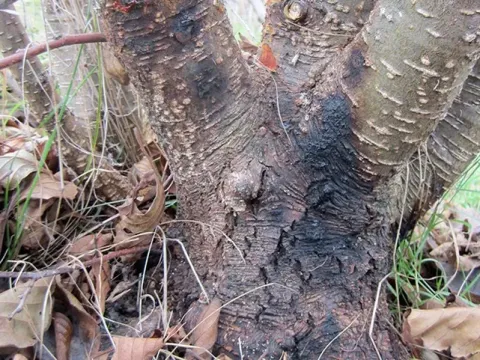
Alder phytophthora
Phytophthora uniformis
The causative agent of the disease is the oomycete Phytophthora uniformis, a pathogen highly specialized in infecting alder trees. This organism is classified as an oomycete, which behaves similarly to fungi but possesses distinct biological characteristics.
What the section contains
Alder phytophthora
The pathogen primarily resides in the soil and the root zone of the host tree. It produces mobile zoospores that utilize moisture to migrate through the soil and locate the root systems of healthy alders.
P. uniformis has a complex life cycle, producing survival structures such as chlamydospores and oospores. These structures allow the pathogen to remain viable in the soil for extended periods, even in the absence of a host.
The infection process involves the penetration of the mycelium into the root tissues, where it secretes enzymes to break down plant cells. This destroys the vascular system, preventing the tree from transporting water.
Genetic studies have identified P. uniformis as a significant threat to riverine ecosystems, often appearing in conjunction with other Phytophthora species that contribute to alder decline.
The most noticeable signs of alder phytophthora include reduced leaf size and premature yellowing of the foliage during the growing season. The tree's crown gradually becomes thinner as the infection progresses.
Necrotic lesions often develop on the lower trunk, near the soil surface or the root collar. These lesions can be accompanied by the secretion of dark, tar-like sap or liquid leaking from the bark.
Upon removing the bark at the site of a lesion, a sharp boundary between healthy white wood and infected reddish-brown necrotic tissue is revealed. This discoloration is a hallmark of the pathogen's activity.
The root system becomes severely compromised, with fine feeder roots decaying first. This systemic decay prevents the tree from effectively absorbing nutrients and water, eventually leading to starvation.
Advanced stages of the disease manifest as crown dieback, where branches wither and die sequentially. Over time, the entire tree loses vitality and eventually succumbs to the pathogen.
Water saturation of the soil is the primary driver for the development and spread of Phytophthora uniformis. Riparian zones and floodplains are particularly high-risk environments for this disease.
Moderate temperatures combined with high soil moisture facilitate the active production and dispersal of zoospores. Wet spring and summer seasons are critical periods for new infections.
Flood events act as a major vector for the pathogen, as zoospores are easily carried downstream by moving water, infecting downstream alder populations along riverbanks.
Human activities, such as logging or recreational use in infested areas, facilitate the transport of contaminated soil on machinery or footwear, spreading the pathogen to healthy stands.
Environmental stress factors, such as drought followed by flooding, can lower the tree's immune response, making it more susceptible to successful colonization by the oomycete.
Alder phytophthora causes significant ecological damage by wiping out alder stands, which are crucial for stabilizing riverbanks and maintaining riparian biodiversity.
The disease leads to major economic losses in the forestry sector, as it renders stands unharvestable and necessitates costly management and removal efforts.
The loss of alder trees disrupts local ecosystems, affecting bird nesting sites and the aquatic organisms that rely on the shaded, stable environments provided by the trees.
Due to the pathogen's ability to remain hidden in the soil, the disease is often widespread before the visible signs of crown dieback appear, making containment extremely difficult.
The lack of widely effective natural resistance in native alder populations makes this pathogen a persistent threat to the long-term viability of alder forests in affected regions.
Preventative measures are the most effective way to manage the disease. Restricting access to infested areas and cleaning machinery after working in riparian zones can significantly reduce spread.
Regular monitoring of forest health is essential to identify early symptoms. Infected trees should be removed and destroyed appropriately to minimize the pathogen load in the area.
Research into breeding and selecting resistant alder genotypes is ongoing and holds promise for future reforestation efforts in areas where the pathogen is endemic.
In nurseries, it is critical to use sterilized growing media and implement strict hygiene protocols to ensure that planting material is free from Phytophthora species.
- Monitor tree trunks for signs of bleeding cankers.
- Sanitize tools and equipment to prevent cross-contamination.
- Avoid replanting alder in sites with known infestation history.
- Implement drainage improvements in nursery and young plantation sites.
- Educate stakeholders about the risks of transporting contaminated soil.