
Alder leaf blister
Taphrina tosquinetii
Description
Symptoms
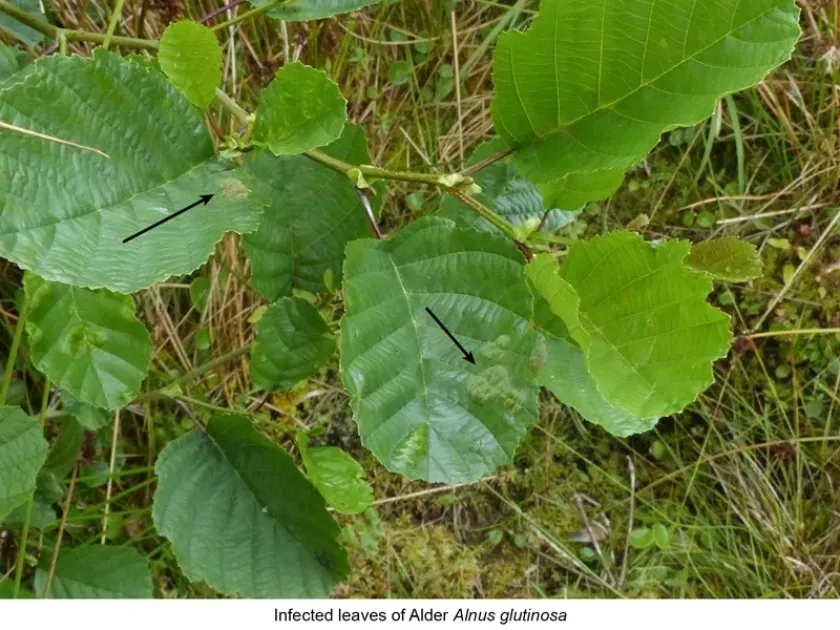
The characteristic sign of the disease is the development of large, wrinkled blisters that gradually cover the entire surface of the leaf blade.
Affected leaves show severe deformation and thickening, becoming curled and brittle compared to healthy, flat leaves.
The color of these blisters typically transitions from pale green or yellowish to reddish-brown as the infection progresses throughout the season.
Underneath the deformed leaf areas, a fine, whitish or grayish bloom appears, which consists of the fruiting bodies of the fungus.
In cases of severe infestation, the leaves may wither and drop early in the summer, which significantly impacts the overall health of the alder tree.
Pathogen
The causative agent of this disease is the ascomycete fungus Taphrina tosquinetii, which is a highly specialized pathogen infecting various alder species.
The fungus overwinters as mycelium within the dormant buds and the scales of young shoots, emerging as the tree begins its seasonal growth.
During the spring, when sap flow commences and buds break, the fungus infects the newly developing tissues of the leaves.
The pathogen interferes with the hormonal balance of the host plant, triggering cellular hypertrophy and abnormal multiplication of leaf cells.
During its cycle, the fungus produces an asci layer on the leaf surface, which releases ascospores to disseminate the infection via wind and rain splashes.
Conditions for development
Taphrina tosquinetii thrives in cool and humid spring weather, which coincides perfectly with the bud-break phenology of alder trees.
High relative humidity and prolonged precipitation are essential for the germination of ascospores on the surface of young, susceptible leaves.
Overcrowded plantations or dense stands with poor airflow create a microclimate that prevents the rapid drying of leaves, facilitating infection.
Proximity to previously infected trees serves as a significant inoculum source, increasing the risk for neighboring healthy vegetation.
Temperature fluctuations during the early growing season can stress the tree, making it more susceptible to the fungal invasion of its tissues.
Why it matters
The disease causes major physiological stress to young alder saplings, significantly stunting their growth and slowing down biomass accumulation.
Premature defoliation reduces the photosynthetic efficiency of the tree, potentially leading to weakened resistance against winter frosts and drought.
In landscaping and ornamental forestry, the aesthetic value of the trees is ruined due to the widespread leaf distortion and early leaf drop.
Persistent yearly infections can result in the dieback of branches and make the tree more prone to secondary wood-boring pests and other pathogens.
Overall vitality declines over time, and if left untreated in intensive nurseries, the disease can lead to significant economic losses.
Protection
Sanitary pruning and the immediate removal of affected branches are crucial to reducing the amount of inoculum present in the tree canopy.
Collecting and disposing of fallen leaf litter at the end of the season prevents the fungus from surviving the winter in organic debris.
Preventative chemical control, specifically using copper-based fungicides, is most effective when applied before the buds open in the spring.
Maintaining adequate spacing between trees in plantations improves air circulation, which helps keep the foliage dry and prevents fungal growth.
Early-season monitoring of leaf development allows for the prompt identification of disease outbreaks, enabling localized intervention before widespread spread.
Discussion
No discussions yet — be the first.