
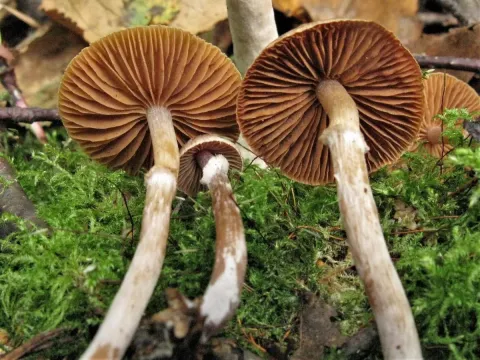
Alder webcap
Cortinarius alnetorum
Alder webcap (Latin: Cortinarius alnetorum) is a species of fungus in the Cortinariaceae family. It is crucial to note that this fungus is not a plant pathogen, but rather a beneficial mycorrhizal partner for alder trees.
What the section contains
Alder webcap
The fungus establishes a mutualistic association with the root system of alders. Through this symbiotic relationship, the tree receives essential nutrients and water, while the fungus benefits from sugars produced by the tree during photosynthesis.
In terms of forest management, the presence of Cortinarius alnetorum is considered a positive indicator of a healthy, biologically active soil environment in riparian and swampy forest areas.
Morphologically, it is recognized by its yellowish-brown cap and the distinctive cortina (a cobweb-like veil) visible in young specimens, which protects the gills until they mature.
Since it does not cause disease, it does not require control measures. In professional forestry, it is protected as an essential component of the forest's underground ecological network.
The development of Cortinarius alnetorum depends heavily on specific environmental variables, primarily the presence of its host trees, the Alnus species.
The fungus thrives in wet, high-humidity environments, such as alder carrs and floodplain forests, where the water table is consistently high during the growing season.
Nutrient-rich, damp soils covered with leaf litter provide the necessary substrate for the fungal mycelium to flourish. Soil aeration and temperature fluctuations significantly influence the timing of fruiting bodies.
The species is typically active from late summer through autumn. Extreme weather events, such as prolonged droughts or severe frosts, inhibit its development and can lead to a decline in the number of fruiting bodies produced annually.
Environmental stability is the key factor. Unlike pathogens that might spread in stressful conditions, this mycorrhizal fungus retreats if the natural forest habitat is significantly altered by drainage or industrial pollution.