
Phytophthora root rot of Douglas-fir
Phytophthora pseudotsugae
The disease is caused by the oomycete Phytophthora pseudotsugae, a pathogenic organism that primarily attacks the root system of conifers.
What the section contains
Phytophthora root rot of Douglas-fir
This pathogen belongs to the class Oomycetes and relies on water for the movement of its motile zoospores.
The organism's biology includes the production of dormant spores (oospores) that can persist in the soil for several years.
The life cycle of the pathogen is closely correlated with temperature regimes and soil moisture levels in nursery environments.
Genetic specialization makes this species a significant and highly specific threat to certain coniferous hosts.
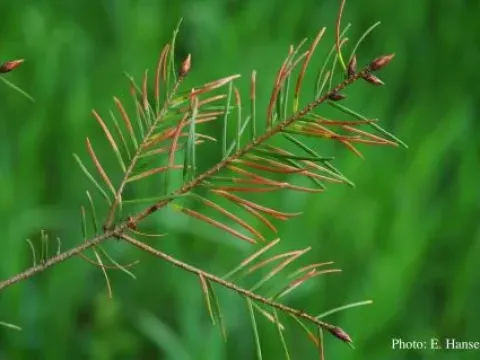
The primary symptom is chlorosis and gradual yellowing of the needles, which typically starts in the lower crown.
Stunted growth of seedlings and young trees is observed, eventually leading to premature decline and death.
Examination of the root system reveals decay of fine feeder roots and the presence of dark necrotic lesions on larger roots.
Root tissues often turn brown or reddish-brown, accompanied by a foul odor due to colonization by secondary opportunistic microbes.
In advanced stages, the destruction of the root cortex leads to rapid wilting and collapse of the entire tree.
Infection is favored by excessive soil moisture, commonly caused by poor drainage or high rainfall levels.
The pathogen thrives in moderate temperature ranges, particularly when soil moisture becomes stagnant in the root zone.
Spread often occurs through contaminated irrigation water, infested soil, or movement of machinery between nursery plots.
Heavy, clay-rich soils provide an ideal habitat for the accumulation and activation of Phytophthora pseudotsugae spores.
Poor nursery management, including high planting density and lack of sanitation, accelerates the spread of the disease.
Phytophthora root rot causes severe economic losses in forest nurseries by killing young seedlings and transplants.
Compromised root systems leave the trees highly susceptible to environmental stress, including drought or winter injury.
Infected stands often lose their aesthetic value and become unfit for reforestation or landscaping purposes.
The ability of the pathogen to survive in the soil long-term makes it difficult to reuse infested nursery beds for susceptible hosts.
Indirect losses are significant, as they require the destruction of entire batches of nursery stock to prevent further outbreaks.
The most critical control measure is the use of disease-free planting material and pasteurized potting media.
Implementing strict irrigation management and ensuring adequate drainage is essential to avoid waterlogged conditions.
Regular sanitation of tools, equipment, and footwear is recommended to prevent the accidental introduction of the pathogen.
Upon detection, infected trees and the surrounding soil should be promptly removed and disposed of to eliminate the inoculum source.
Fungicides such as fosetyl-aluminum or mefenoxam may be used as part of an integrated disease management strategy to suppress the pathogen.