
Phytophthora root rot of oak
Phytophthora quercina
Description
Symptoms
The initial signs of infection are often subtle, presenting as a general lack of vigor and slower-than-normal shoot growth throughout the canopy.
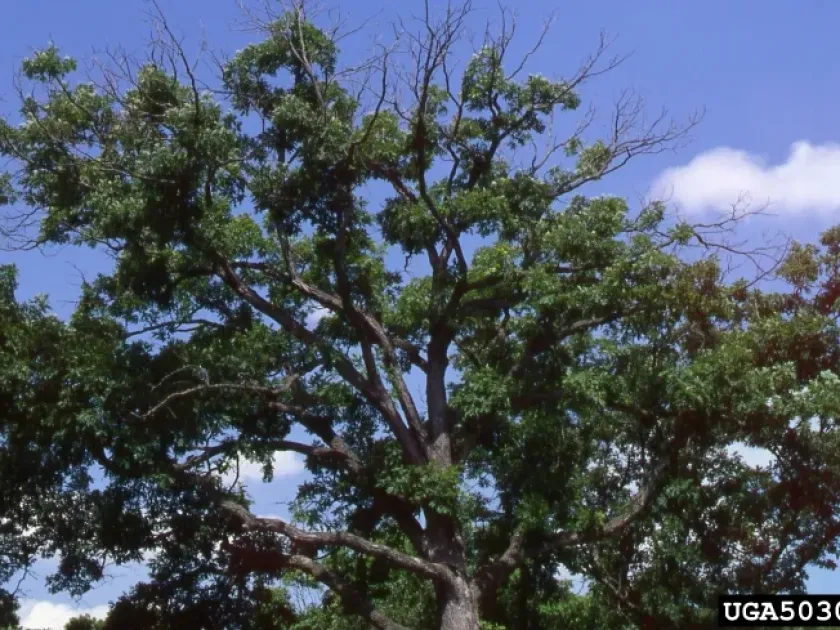
As the root damage progresses, the tree exhibits symptoms such as thinning of the crown, premature leaf chlorosis, and dieback of small twigs, often starting from the top.
A diagnostic sign can sometimes be found at the base of the stem, where small patches of dead, necrotic bark may be present due to the extension of root decay.
Infected trees often fail to recover from seasonal stressors, displaying a stunted appearance compared to healthy neighboring trees.
- Thinning of the leaf canopy
- Dieback of twigs and small branches
- Necrotic lesions at the root collar
- Reduced growth rate and vigor
Pathogen
The disease is caused by the soil-borne oomycete Phytophthora quercina. This microscopic pathogen is specifically adapted to infect the roots of oak species.
It predominantly attacks the fine, nutrient-absorbing root hairs, which leads to a gradual reduction in the tree's ability to take up water and vital minerals.
Unlike many other generalist pathogens, this species shows a high degree of host specificity toward the genus Quercus, significantly affecting both seedlings and mature trees.
The pathogen persists in the soil through thick-walled survival structures, allowing it to survive adverse environmental conditions for many years.
Dissemination typically occurs through contaminated nursery soil, movement of infected seedlings, and transport of the pathogen via groundwater or surface runoff.
Conditions for development
Development of the disease is heavily reliant on high soil moisture levels, which are necessary for the mobility of the pathogen's zoospores.
Extended periods of heavy rainfall, combined with poor soil drainage, create the optimal conditions for the infection cycle to initiate and spread.
Environmental stressors such as drought, extreme temperatures, or soil compaction weaken the natural defense mechanisms of oak trees, making them susceptible.
Sites with heavy clay soils that are prone to waterlogging are at the highest risk for severe Phytophthora quercina infestations.
Poor site management, including damage to root systems during forestry operations, can provide easy entry points for the pathogen.
Why it matters
The pathogen is a significant driver of oak decline, leading to reduced growth, canopy thinning, and in severe cases, the eventual death of the tree.
By compromising the root system, the disease makes trees structurally unstable, creating long-term risks for windthrow and falling branches.
The reduction in overall tree health makes infected stands highly susceptible to secondary attacks from opportunistic wood-boring insects.
The economic impact includes the loss of timber value and the high costs associated with managing infected forest areas and potential stand replacements.
Environmental consequences include the degradation of ecosystem services and the disruption of local forest structures that depend on healthy oak populations.
Protection
Prevention starts at the nursery level, where strict phytosanitary standards must be maintained to ensure all planting stock is pathogen-free.
Proper site selection is crucial; planting oaks in areas with good drainage and avoiding waterlogged soil significantly reduces infection risk.
In high-value areas, professional management may involve the use of phosphite-based fungicides, which can stimulate the host's innate resistance.
Silvicultural practices that maintain tree vigor, such as appropriate thinning and site preparation, help trees withstand environmental stressors.
Early detection through regular monitoring of forest stands allows for the implementation of quarantine measures, effectively curbing the spread of the pathogen.
Discussion
No discussions yet — be the first.