
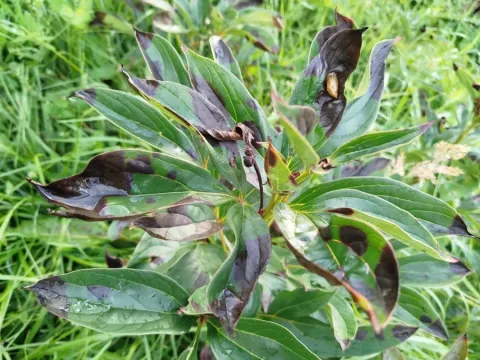
Peony Phytophthora blight
Phytophthora paeoniae
The disease is caused by the oomycete Phytophthora paeoniae. This organism is not a true fungus but belongs to the Oomycota phylum, which are water molds known for their ability to spread rapidly in saturated soil environments.
What the section contains
Peony Phytophthora blight
This pathogen acts as a specialized parasite that targets peony plants exclusively. It survives in the soil and on infected plant debris, waiting for optimal conditions to initiate a new infection cycle.
The lifecycle involves the production of motile zoospores that can swim through thin films of water in the soil to reach plant roots. Once contact is made, the pathogen enters the root system or the base of the stems, where it begins to colonize plant tissues.
Once inside the plant, it disrupts the vascular system, effectively cutting off the supply of water and nutrients to the upper parts of the peony. This internal damage is often the cause of the sudden wilting observed by gardeners.
The pathogen is highly persistent, capable of forming thick-walled resting spores that can survive for years, even in the absence of a host plant. This makes the long-term management of infested sites particularly challenging.
The most characteristic sign is the sudden wilting of young shoots during the growing season. The affected stems become soft, brown, and watery at the base, losing their ability to support the weight of the leaves.
If you carefully dig up an affected peony, you will notice extensive root rot. The root tissue appears dark, mushy, and has a distinctively foul or musty odor compared to the healthy, firm roots of a thriving plant.
Leaves on infected shoots may develop large, brown, irregular spots that spread rapidly. Eventually, the entire stem may collapse and turn yellow, leading to the total death of that particular growth portion of the plant.
Under high humidity, a white, mold-like mycelial growth may appear on the necrotic stems. This growth is packed with spores, which are easily disseminated by wind or splashing water, threatening nearby healthy plants.
In many cases, flower buds on infected stems will fail to develop or will turn black and wither before they have a chance to bloom. This is a severe blow to the plant's seasonal aesthetic appeal.
The development of this disease is heavily dependent on soil moisture. Poorly drained soil or areas subject to standing water after spring snowmelt or heavy rainfall provide the perfect environment for the pathogen to thrive.
High humidity and mild temperatures ranging from 15 to 22 degrees Celsius significantly accelerate the spread of Phytophthora. During these conditions, the pathogen can move from the soil to the plant tissues in just a few days.
Cultural factors such as planting too deeply or crowding plants can create microclimates with poor air circulation, which further promotes infection. Excessive nitrogen fertilization, which leads to soft and vulnerable growth, can also increase susceptibility.
Soil structure is a major determinant; heavy clay soils that do not allow for efficient drainage are hotbeds for this disease. Conversely, well-drained, sandy loam soils offer much better protection for the plants.
The disease is frequently introduced to new garden beds through contaminated nursery stock. If a plant comes from an infested nursery, it can introduce the pathogen into the garden soil, leading to an outbreak later on.
Phytophthora blight is considered one of the most destructive diseases for peony growers. A mature, well-established plant can be completely destroyed within one or two seasons, making it a catastrophic problem for private gardens.
The harm is compounded by the pathogen's longevity in the soil. Once the disease is present, the area becomes off-limits for new peony plantings for at least 5 to 7 years, requiring strict quarantine measures in the garden.
Economic losses in commercial nurseries are high, as entire stocks can be lost in a short period. The cost of labor to remove and replace soil is also significant for professional landscape projects.
The disease does not just kill the plant; it limits the garden’s potential, as the gardener loses the years of growth and maturity that went into the peony. It also forces the gardener to rethink the entire design of the site.
In addition, if left unchecked, the pathogen can spread to other areas of the garden through water runoff, potentially putting other susceptible plant species at risk if the specific Phytophthora strain has a broader host range.
Prevention is the primary method of control. Always buy high-quality, certified disease-free peony roots. Before planting, it is good practice to soak the rhizomes in a systemic fungicide to ensure they are free of dormant pathogens.
Once a plant shows signs of blight, immediate removal is necessary. The plant and the surrounding soil must be disposed of carefully—preferably by burning—to prevent the further spread of spores.
Applying copper-based fungicides early in the spring as soon as the shoots break the soil surface can provide a protective barrier. Regular monitoring is essential to catch the disease in its very early stages.
Improve the soil drainage by adding organic matter or using raised beds. Ensure that plants are spaced adequately to allow for maximum air circulation around the foliage and stems to keep the base of the plant dry.
- Use only clean, healthy planting stock.
- Avoid overhead watering during the growing season.
- Disinfect all pruning tools with a bleach solution or alcohol.
- Improve soil structure through adequate drainage.