
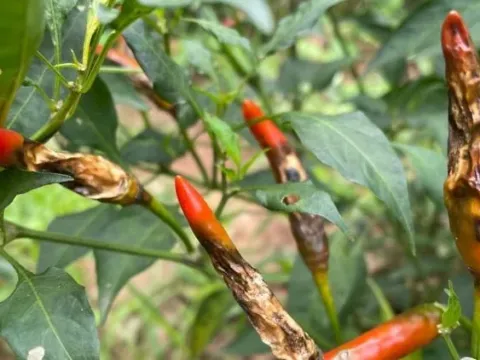
Pepper Anthracnose
Colletotrichum piperis
The causative agent of the disease is the fungus Colletotrichum piperis, which belongs to the class of deuteromycetes. The pathogen persists in the soil, on plant debris, and can be transmitted via infected seeds.
What the section contains
Pepper Anthracnose
The infection primarily affects Solanaceous crops, with peppers being among the most susceptible species. The fungus spreads via conidia, which are dispersed by wind, rain splashes, and insects.
The biology of the pathogen is characterized by the formation of specific fruiting bodies called acervuli. Within these, a large number of spores are formed, ensuring rapid secondary infection of healthy tissues during the growing season.
The life cycle of the pathogen is closely linked to environmental humidity. Under favorable conditions, the fungus germinates and penetrates the plant epidermis through micro-cracks or natural openings.
The fungus is capable of remaining viable under adverse conditions within dry plant debris. This makes the soil and plant waste the primary sources of initial infection in new growing seasons.
The first signs of the disease appear as small, water-soaked brown spots on ripening fruits. Over time, these spots enlarge, taking on a circular or angular shape.
In the center of the affected areas, one can often observe concentric circles formed by fungal sporulation. These may have a pink or dark-colored coating, consisting of a mass of conidia.
When stems and leaves are affected, dark brown spots with margins are observed. In the early stages, these may appear as small necrotic points, which gradually merge into large lesion zones.
Under high humidity conditions, the affected areas soften, leading to tissue decay of the fruit. Fruits lose their commercial appeal and become unsuitable for storage and processing.
In cases of severe infection, premature shedding of leaves and blossoms occurs. The plant stops growing, and both photosynthetic intensity and overall crop productivity decline.
The main factor driving the disease development is high relative humidity. Prolonged rains, heavy fog, and night dew create an ideal environment for spore germination.
The optimal temperature for active infection spread ranges from +20°C to +28°C. Under these conditions, the incubation period of the fungus is shortened to just a few days.
Dense plantings with poor ventilation contribute to moisture retention on the leaves. This significantly increases the risk of the pathogen spreading rapidly throughout the greenhouse or field.
Poor aeration in protected cultivation is a critical risk factor. High temperatures combined with high humidity inside the greenhouse trigger disease outbreaks.
Failing to rotate crops and planting Solanaceous vegetables in the same spot for more than three years promotes the accumulation of infection in the soil.
Anthracnose causes significant economic loss, as it directly attacks the marketable part of the crop: the fruits. Damaged fruits lose their flavor and structural integrity.
When fruits are affected during the ripening stage, they decay rapidly while still on the plant. This forces producers to discard a significant portion of the harvest during sorting.
The disease can be transmitted during transport and storage if infected samples contaminate the packing. This leads to mass spoilage of produce in warehouses.
The general weakening of the plant leads to a decrease in immunity, making it susceptible to other opportunistic pathogens. Ultimately, the plant may perish before completing its fruiting cycle.
The infection significantly complicates agricultural management, requiring additional expenses for fungicide treatments and adjustments to irrigation schedules.
The primary control method is the use of healthy, treated seed material. This prevents the pathogen from being introduced to the site at the start of the season.
Crop rotation is an essential requirement. It is recommended to alternate peppers with non-Solanaceous crops to help clear the soil of fungal spores.
- Regular removal and destruction of plant debris.
- Controlling humidity levels in greenhouses via improved ventilation.
- Application of preventive copper-based fungicide treatments.
- Cultivation of resistant pepper varieties and hybrids.
- Balanced plant nutrition with potassium and phosphorus to strengthen immunity.
If symptoms appear, immediate treatment with systemic fungicides is necessary. Chemical products must be used in accordance with the regulations indicated on the label.
Maintaining the cleanliness of gardening tools is crucial. Disinfecting tools after working with infected plants prevents the mechanical transfer of the infection to healthy bushes.