
Pepper anthracnose
Colletotrichum scovillei
Description
Symptoms
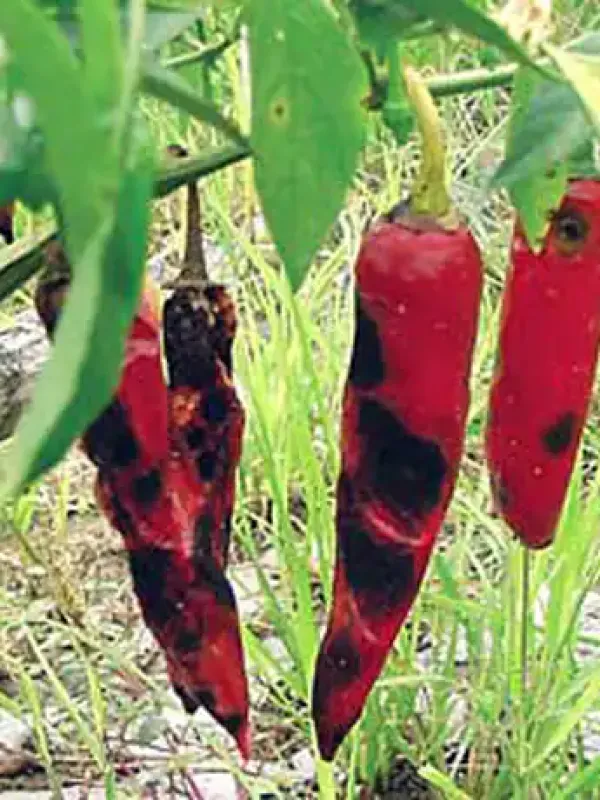
The most characteristic symptom of pepper anthracnose is the development of sunken, circular, dark-colored lesions on the ripening fruit.
These lesions often develop concentric rings, where thousands of fungal spores are produced, frequently appearing as pink or orange masses under moist conditions.
Leaves and stems may also exhibit irregular necrotic spots with light centers and dark margins, which can lead to leaf drop or plant wilting in severe cases.
As the disease progresses, the infected fruit tissue becomes soft and watery, eventually leading to complete decay of the entire fruit.
In many cases, the infection remains asymptomatic during early stages, manifesting visibly only as the pepper fruits approach full maturity.
Pathogen
The disease is caused by the fungus Colletotrichum scovillei, which is a highly specialized pathogen affecting various Capsicum species.
This pathogen persists in infested crop residues, soil, and on seeds, making it a persistent threat in both greenhouse and field environments.
The fungus produces conidia in structures called acervuli, which rely on water splash or high humidity to spread from infected to healthy plant parts.
It employs a sophisticated infection strategy involving the formation of appressoria, structures that generate pressure to penetrate the host cuticle directly.
The biological cycle of this fungus is closely linked to temperature and moisture, with optimal conditions allowing it to complete its cycle in just a few days.
Conditions for development
Warm temperatures ranging from 20 to 30 degrees Celsius are ideal for the rapid mycelial growth of Colletotrichum scovillei.
High relative humidity levels exceeding 85 percent create the necessary conditions for spore germination and colonization of host tissue.
Extended periods of leaf wetness, often caused by overhead irrigation, rain, or condensation in tunnels, act as primary catalysts for outbreaks.
Poor aeration in dense plant canopies creates stagnant microclimates that promote fungal activity and prevent the foliage from drying out.
The disease is most prevalent during wet seasons or in environments where the management of environmental parameters is insufficient.
Why it matters
Anthracnose is one of the most destructive diseases in pepper cultivation, frequently causing total loss of harvest in highly susceptible varieties.
It significantly impacts the aesthetic and market value of the crop, as infected fruits become unsightly and rot during storage or transport.
Severe infestations weaken the plant, reducing its metabolic efficiency and limiting the number of fruits that can reach commercial size.
The rapid spread of the pathogen in post-harvest conditions can lead to massive losses even after the produce has been harvested and packed.
Producers often face increased operational costs due to the need for repeated fungicide applications and the disposal of spoiled crops.
Protection
Successful management of pepper anthracnose requires an integrated approach starting with the use of certified, disease-free seeds or transplants.
Sanitation practices are critical, including the thorough removal and destruction of crop debris after harvest to reduce the local inoculum load.
- Implementing a strict crop rotation schedule, avoiding solanaceous crops for at least 3 years.
- Using drip irrigation to keep the plant canopy dry and reduce moisture on fruit surfaces.
- Improving greenhouse ventilation to lower humidity and prevent condensation.
- Applying preventive fungicide treatments, particularly during flowering and fruit development stages.
Monitoring fields closely allows for the early removal of infected plants, which can effectively slow down the spread of the pathogen.
Choosing resistant or tolerant hybrids is a long-term strategic investment that significantly decreases the dependency on chemical control methods.
Discussion
No discussions yet — be the first.