
Phytoplasmas
Phytoplasmas
Phytoplasmas are specialized, cell wall-less bacteria belonging to the class Mollicutes. They are obligate parasites that colonize the phloem tissue of their host plants, disrupting the transport of nutrients and sugars throughout the plant vascular system.
What the section contains
Phytoplasmas
Unlike many other pathogens, phytoplasmas cannot be cultured in artificial media, which poses a significant challenge for diagnosis. Identification is typically performed using advanced molecular techniques like PCR to detect specific DNA sequences.
These pathogens are transmitted by sap-sucking insects, most notably leafhoppers, psyllids, and planthoppers. Once an insect ingests the phytoplasma from an infected plant, the pathogen multiplies within the insect's body before being transmitted to healthy plants.
The host range of phytoplasmas is exceptionally broad, encompassing hundreds of plant species including legumes like soybean, vegetables, and fruit trees. This makes them a pervasive threat across diverse agricultural sectors globally.
Because they reside within the phloem sieve tubes, phytoplasmas effectively manipulate the host's physiological processes, leading to profound systemic changes that manifest as various growth disorders.
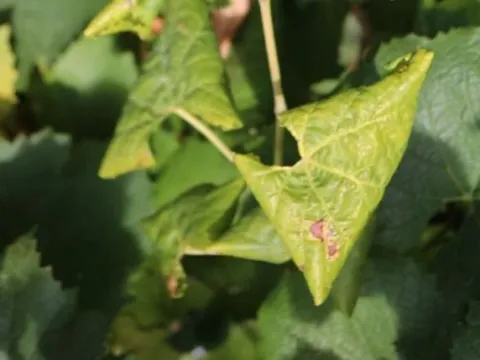
Typical symptoms of phytoplasma infection include yellowing (chlorosis) of leaves, which often progresses to reddening or purpling. Growth is frequently stunted, with internodes becoming shortened, giving the plant a bushy appearance.
A hallmark of the disease is the proliferation of auxiliary buds, resulting in a condition known as witches' broom. This happens when the normal apical dominance is broken, causing the plant to grow a dense, shrub-like mass of shoots.
Flowers are often severely affected, exhibiting virescence (turning green) or phyllody (developing into leaf-like structures instead of petals). These distorted flowers are usually sterile, leading to a total loss of seed or fruit production.
For crops like soybean, phytoplasma infection leads to premature leaf senescence, reduced pod set, and seeds that are shriveled or underdeveloped. The overall vigor of the plant declines significantly as the infection progresses.
- General chlorosis and reddening of foliage.
- Severe stunting and shortening of internodes.
- Formation of dense "witches' brooms" due to lateral bud proliferation.
- Flower deformation, including virescence and phyllody.
- Failure of fruit or seed development.
The spread of phytoplasma diseases is strictly dependent on the population dynamics of insect vectors. Warm, dry weather conditions usually favor the breeding and migration of leafhoppers, leading to higher infection rates in crops.
Weed hosts serve as essential reservoirs for phytoplasmas. During the off-season, these perennial weeds maintain the pathogen population, providing a source of inoculum that insects can transmit to newly planted crops in the spring.
High planting density can facilitate the movement of insect vectors between plants, accelerating the spread of the disease within a field. Proper spacing and field management are critical in mitigating the impact of these pathogens.
Environmental factors also influence the replication rate of the phytoplasma within the plant host. Moderate to warm temperatures are generally optimal for the pathogen to cause severe systemic symptoms quickly.
The presence of wild reservoirs in adjacent landscapes significantly increases the risk of primary infection. Landscapes with diverse weed species are more likely to harbor both the vectors and the phytoplasma itself.
Phytoplasmas cause devastating economic losses by rendering crops unproductive. Because the infection is systemic, it cannot be cured, often requiring the total destruction of infected plants to prevent further spread.
In soybeans, phytoplasmas reduce the yield and quality of the grain, affecting oil content and viability. This can lead to significant financial distress for growers who rely on high-quality seed production.
The disruption of nutrient transport leads to the accumulation of starch in leaves and prevents the proper development of fruits. Infected vegetables often show poor flavor, shelf life, and marketability, making them unfit for sale.
Phytoplasmas act as a systemic stressor, weakening the host's immune response. This makes infected plants more susceptible to secondary fungal or bacterial pathogens, complicating the overall disease management strategy.
International trade can be hindered due to the quarantine status of several phytoplasma-associated diseases. The presence of these pathogens on a farm can lead to strict regulations on movement and export of agricultural goods.
Management strategies focus heavily on cultural practices, specifically the removal of weed reservoirs around fields. Eliminating these plants reduces the primary source of the inoculum for insect vectors.
Insecticide application is the primary chemical approach to controlling vectors like leafhoppers. Applications must be timed to coincide with peak migration periods to prevent the initiation of the infection cycle.
Using certified, disease-free planting material is the most effective way to prevent the introduction of phytoplasmas into new areas. For vegetatively propagated crops, meristem tissue culture is vital for cleaning out systemic pathogens.
Breeding and planting resistant or tolerant cultivars is the best long-term solution. Research is ongoing to identify genetic markers that provide resistance to either the insect vector or the phytoplasma colonization process.
Implementing spatial isolation by distancing new fields from older, potentially infected perennial crops helps to limit the influx of viruliferous insects. Monitoring populations with yellow sticky traps is a practical tool for informed decision-making.