
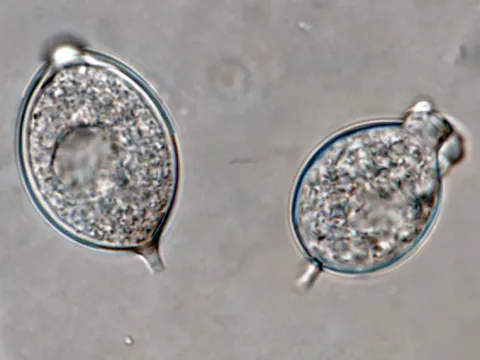
Phytophthora macrochlamydospora root rot
Phytophthora macrochlamydospora
The disease is caused by Phytophthora macrochlamydospora, an oomycete known for its destructive impact on plant root systems.
What the section contains
Phytophthora macrochlamydospora root rot
The organism is characterized by the production of large chlamydospores, which enable it to persist in the soil for extended periods.
Like other Phytophthora species, it propagates via zoospores that swim through water films to infect new hosts.
This pathogen effectively colonizes the roots, leading to cellular damage and the destruction of the plant's vascular integrity.
Its survival strategy is highly adapted to changing environmental conditions, making it a persistent threat in agricultural soils.
The primary factor for disease development is high soil moisture and poor drainage, providing the necessary environment for zoospore mobility.
Warmer temperatures (typically 15-25°C) significantly enhance the metabolic rate and reproductive capacity of the pathogen.
Over-irrigation in greenhouses or heavy rainfall in open fields creates a dangerous aquatic environment for infection spread.
Compacted, heavy soils that retain water are significantly more prone to outbreaks than well-aerated or sandy soils.
Contaminated equipment, soil debris, or irrigation water serves as the main vectors for introducing the pathogen into clean areas.
Infection manifests as stunted growth, leaf chlorosis, and general wilting, as the plant cannot absorb sufficient water and nutrients.
The roots become discolored, necrotic, and soft, eventually decaying completely if environmental conditions remain favorable for the fungus.
Widespread death of seedlings and mature plants occurs when the infection goes unchecked, leading to total yield loss.
The pathogen significantly impacts the physiological health of the crop, making it difficult for plants to recover once necrosis sets in.
Financial losses for commercial growers include both product loss and the high costs associated with aggressive soil sterilization.
Integrated Pest Management (IPM) is crucial, focusing on soil sanitation and the use of pathogen-free growing media.
Systemic fungicides targeting oomycetes provide the most reliable chemical control when applied at the first signs of symptoms.
Improving soil structure and installing adequate drainage systems are essential preventative steps against water-dependent pathogens.
Crop rotation remains a highly effective strategy to break the life cycle of the pathogen and reduce soil inoculum levels.
The application of beneficial microorganisms, such as certain strains of Trichoderma, can help suppress the growth of the pathogen.