
Phytophthora needle blight
Phytophthora pluvialis
Phytophthora needle blight is caused by the oomycete Phytophthora pluvialis. This pathogen is known for its destructive impact on various species of conifers across different continents.
What the section contains
Phytophthora needle blight
The organism belongs to the class Oomycetes and relies heavily on moisture for its survival, infection, and dispersal mechanisms in the forest canopy.
It forms motile zoospores that swim through water films on needle surfaces to locate infection sites and penetrate the plant host's tissues.
Genetic research indicates that this pathogen has significant variability, allowing it to adapt to different environmental conditions and host types.
It remains one of the most critical threats to sustainable forestry, requiring robust biosecurity protocols to prevent further spread between regions.
The disease is characterized by the appearance of chlorotic spots on the needles, which eventually transition into necrotic, brown-red lesions.
Infected needles typically drop prematurely, leading to sparse foliage that drastically reduces the tree's ability to perform photosynthesis.
Branch dieback is a common symptom in severely affected trees, starting from the lower parts of the canopy and moving upwards over time.
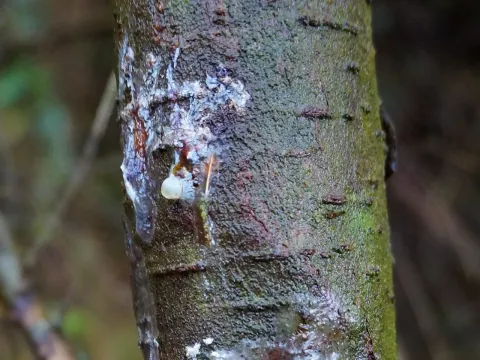
Resin bleeding from the bark of stems and branches is a frequent host response, often observed at the sites of active lesions.
- Needle discoloration and browning.
- Necrotic lesions on stems and branches.
- Resin exudation from infected areas.
- Premature needle cast and foliage loss.
High moisture levels, including heavy rainfall and fog, are essential for the successful germination and spread of Phytophthora pluvialis zoospores.
Splashing rain acts as a primary vector, carrying the pathogen from the upper canopy down to lower branches and neighbouring plants.
The pathogen thrives in moderate temperature ranges, which allows it to maintain consistent activity throughout the wet seasons in many regions.
Densely planted areas with poor air circulation create stagnant, humid microclimates that significantly accelerate disease development.
Mechanical injuries, such as those caused by wind, insects, or pruning equipment, serve as infection points that the pathogen exploits efficiently.
The primary economic impact of this disease is the reduction in growth rates and timber quality in infected forest plantations.
Young plantations are particularly vulnerable, with heavy infestations potentially leading to complete stand failure and significant reforestation costs.
Chronic infection weakens the overall health of the trees, making them susceptible to secondary attacks by bark beetles and other pests.
Landscape trees and ornamental conifers suffer severe aesthetic degradation, reducing their value and potentially requiring removal.
By altering forest structure, the disease can negatively affect local ecosystem stability and biodiversity in regions where susceptible species dominate.
Strict biosecurity measures, including the testing and quarantine of nursery stock, are the first line of defense against the introduction of the pathogen.
Silvicultural management, such as thinning stands to increase airflow and sunlight penetration, is crucial for reducing canopy humidity.
Sanitation practices involving the removal and destruction of infected needles and branches help decrease the inoculum load in the environment.
Targeted application of systemic fungicides, such as phosphonate-based products, can provide effective protection for high-value trees or in nursery settings.
Continuous monitoring and early detection programs enable forest managers to contain outbreaks before they spread to larger, vulnerable populations.