
Phytophthora multivora
Phytophthora multivora
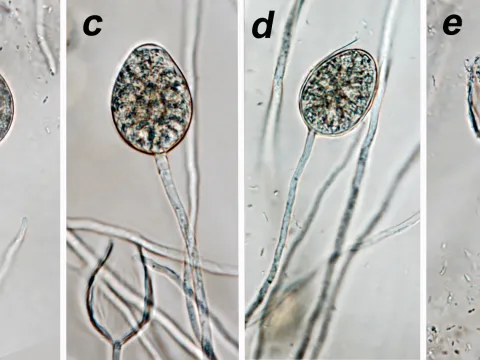
The disease is caused by the oomycete Phytophthora multivora, which belongs to the Peronosporaceae family. This pathogen is a highly aggressive soil-borne organism with a broad host range.
What the section contains
Phytophthora multivora
The microorganism can survive in the soil for extended periods in the form of oospores, which are highly resistant to adverse environmental conditions. During the growing season, it produces zoospores that move freely in soil moisture.
The pathogen's biology allows it to infect the root system by penetrating tissues through young root hairs and microscopic injuries. Its rapid colonization rate makes it particularly devastating to woody species.
Although described relatively recently, this species has been confirmed as a significant threat in various forest and garden ecosystems globally. Research into its population genetics is ongoing.
The pathogen's genetic diversity enables it to adapt quickly to new environmental conditions, complicating the development of resistant plant varieties.
Key symptoms include wilting foliage and a noticeable decline in growth rate. Trees often exhibit chlorosis, where leaves turn yellow and drop prematurely.
The root system shows necrosis of the bark, and fine feeder roots are often destroyed. Peeling back the bark at the root collar reveals a distinct margin between healthy and necrotic tissue.
In advanced stages, cankers or exudates may appear on the trunk, which dry out over time to form dark patches. Affected areas are frequently colonized by secondary pathogens.
Symptoms often develop gradually over several seasons, making early diagnosis difficult. Sometimes the canopy may appear relatively healthy while the root system is severely compromised.
- Yellowing and premature leaf drop
- Stunted growth and thinning canopy
- Necrosis of the cambium and root bark
- Formation of lesions on the root collar
- Rapid mortality of young seedlings
Phytophthora multivora thrives in waterlogged soil conditions. Excessive irrigation or poor drainage after rainfall creates an ideal environment for zoospore movement.
The optimal temperature range for the pathogen's activity is moderate, though it maintains viability even in cooler soil conditions.
Soil compaction and poor aeration promote the rapid spread of infection within the root zone. Heavy clay soils are frequently identified as chronic reservoirs for the disease.
The infection is spread through infested nursery stock, contaminated soil-working tools, and transportation of infected soil. Animals and insects can also vector the oospores over significant distances.
Plant stress, including nutrient deficiency or physical damage, significantly increases susceptibility to infection and exacerbates the severity of the disease.
The primary damage occurs in the root system, which deprives the plant of water and mineral uptake. This inevitably leads to canopy decline and overall plant collapse.
Widespread infection leads to tree mortality in forests, orchards, and urban landscapes. Young plantings are particularly vulnerable and may perish within one or two seasons.
Economic losses arise from the destruction of valuable nursery stock and the costs associated with sanitation and removal. Infested sites may remain unsuitable for planting susceptible hosts.
The pathogen negatively impacts the aesthetic value of parks and gardens, leading to significant landscape degradation. Restoration of these areas requires substantial investment.
Loss of root integrity renders trees unstable, creating hazardous conditions in public areas due to the increased risk of windthrow.
The cornerstone of management is strict adherence to phytosanitary protocols. Using only disease-free nursery stock, verified through rigorous quarantine testing, is essential.
Cultural practices include improving soil drainage to prevent water accumulation. It is crucial to manage irrigation carefully and avoid overwatering the root zone.
Application of phosphite-based fungicides can help suppress infection by boosting the plant's immune response. Chemical treatments are most effective when applied in the early stages of disease.
Regular monitoring of plant health allows for the early detection of symptoms. Affected specimens should be removed along with their root balls to prevent further spore dissemination.
Cleaning and disinfecting tools after working with infected plants is a mandatory procedure to limit the spread of the pathogen throughout the property.