
Phytophthora niederhauseri
Phytophthora niederhauseri
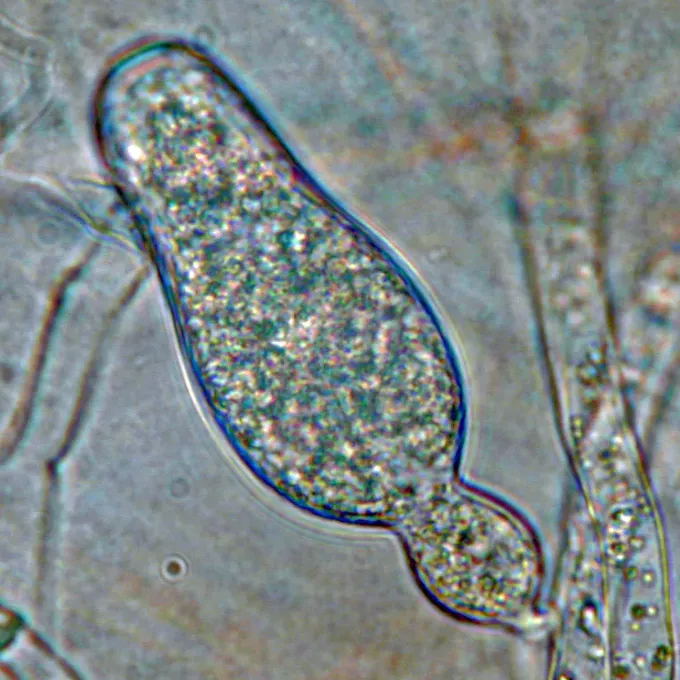
Description
Symptoms
The first symptoms of Phytophthora niederhauseri infection are often subtle, presenting as wilting or drooping of the foliage despite adequate moisture levels. This decline suggests that the root system is no longer functioning properly.
Upon closer inspection of the root system, lesions or necrotic patches of brown or black discoloration appear. The roots often become soft, mushy, and eventually decay, leading to the loss of the entire subterranean system.
As the infection progresses, symptoms become visible on the stems, often manifesting as dark, sunken cankers at the soil line. These stem lesions can girdle the plant, cutting off the transport of water and nutrients to the canopy.
Leaves may show progressive chlorosis (yellowing), starting from the bottom of the plant and moving upwards. This reflects the severity of the root loss and the plant's overall inability to meet its transpiration demands.
In high-humidity conditions, a white, mycelial growth may appear on the surface of infected tissues. However, diagnostic confirmation typically requires the isolation of the pathogen in a lab or molecular testing of root tissues.
Pathogen
Phytophthora niederhauseri is a highly virulent oomycete pathogen known for causing significant damage to various plant species. As an oomycete, it is distinct from true fungi and belongs to a group of pathogens that thrive in wet environments.
The pathogen spreads primarily through infested water, soil, and infected plant material. It produces motile zoospores that swim through water films to reach and infect host roots, making irrigation water a major transmission route in greenhouse systems.
This pathogen has a broad host range, affecting both herbaceous plants and woody shrubs. Its ability to infect many different families makes it a major concern in nurseries where a high diversity of plants is grown in close proximity.
Phytophthora niederhauseri forms resistant structures called oospores, which allow it to survive for extended periods in the soil. These structures can withstand adverse environmental conditions, complicating disease eradication efforts.
Once established in a growing medium or soil, the pathogen actively colonizes the vascular tissues of the roots. This process disrupts the plant's nutrient and water uptake, eventually leading to the systemic collapse of the plant.
Conditions for development
Excessive moisture is the most significant factor facilitating the spread and development of Phytophthora niederhauseri. Saturated soils or stagnant water in pots provide the necessary medium for zoospore swimming and colonization.
The pathogen thrives in moderate temperature ranges, typically between 18°C and 25°C. During these conditions, the metabolic activity of the pathogen increases, leading to rapid infection cycles and potentially explosive outbreaks.
Cultural practices such as overwatering and poor drainage management are primary drivers of infection. Furthermore, the use of contaminated tools or equipment can easily spread the pathogen from infested areas to healthy crops.
Planting density plays a crucial role in disease dissemination; overcrowded conditions limit airflow and increase humidity, which in turn favors the survival and spread of the pathogen spores between containers.
The presence of organic matter and previous crop residues in the growing substrate can serve as a reservoir for the pathogen. Therefore, failure to sterilize media or reuse of infected pots significantly increases the risk of recurrence.
Why it matters
The damage caused by Phytophthora niederhauseri is severe because it destroys the plant's foundation: the root system. Once roots are extensively damaged, recovery is rarely possible, leading to total plant loss.
In a commercial greenhouse, an outbreak can lead to massive economic losses due to the need to discard entire batches of plants. The pathogen can infiltrate irrigation systems, putting the entire facility at risk.
Plants that survive an initial infection often exhibit chronic stunting, reduced growth, and poor vigor. This makes them less marketable and more susceptible to secondary infections by other fungi or bacteria.
The persistence of the pathogen in soil means that land or growing structures remain infested for long periods. This necessitates costly interventions, including substrate replacement, soil sterilization, or even abandoning the production area.
Because the pathogen is often well-established in the roots before aerial symptoms appear, it is difficult to detect at an early stage. This late detection often renders therapeutic treatments ineffective.
Protection
Preventative measures are the most effective way to manage this disease. This includes sourcing healthy, certified plant material and implementing strict quarantine procedures for any new additions to the collection or nursery.
Optimizing irrigation practices is essential; use well-drained, high-quality substrates and avoid overwatering. Ensure that water for irrigation does not originate from potentially contaminated open surface sources.
Systemic fungicides, particularly those containing fosetyl-aluminum, can be used as part of a management strategy. However, these are best utilized as preventive applications or early interventions rather than cures for advanced decay.
Sanitation is paramount; disinfect tools, containers, and benches regularly with appropriate chemical solutions. Always isolate symptomatic plants immediately to prevent the spread of zoospores to neighboring healthy specimens.
Biocontrol agents, such as Trichoderma species, can be integrated into the growing regime to colonize the rhizosphere and compete with the pathogen. Consistent monitoring of root health is vital to early detection and containment.
Discussion
No discussions yet — be the first.