
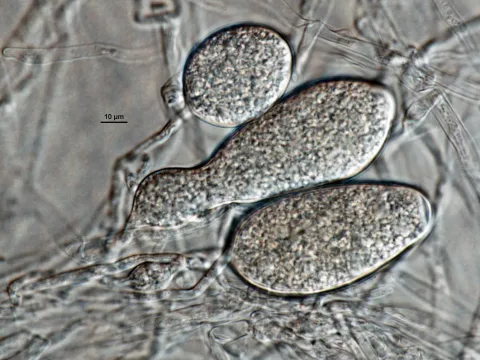
Phytophthora elongata
Phytophthora elongata
Phytophthora elongata is a soil-borne oomycete pathogen known for causing significant damage to woody plants, particularly within the Eucalyptus genus. It belongs to a group of fungus-like organisms notorious for their destructive potential in agricultural and forestry ecosystems.
What the section contains
Phytophthora elongata
The pathogen produces resilient structures such as oospores, which allow it to survive in the soil for several years even in the absence of a host. This persistence makes it a long-term threat to plant health in affected areas.
Its lifecycle is characterized by the production of zoospores, which are motile spores that thrive in water. These zoospores use their flagella to navigate through soil moisture films to locate and infect the root systems of susceptible hosts.
Upon contact with the root, the pathogen penetrates the cortical tissue, utilizing specific enzymes to degrade plant cell walls. This action rapidly compromises the plant's ability to absorb water and essential nutrients.
Due to its high degree of specialization, Phytophthora elongata is often found in specific ecological niches where environmental conditions are favorable for its spread and colonization.
The development of the disease is strictly linked to soil moisture levels. High water content, such as that found in waterlogged soils or over-irrigated containers, is essential for the motility of zoospores and successful infection.
Warm temperatures, typically ranging from 15°C to 25°C, promote the rapid metabolic activity of the pathogen. Under these optimal conditions, the infection cycle can repeat multiple times, leading to severe outbreaks.
Poorly drained, heavy clay soils are particularly problematic as they facilitate water retention and inhibit root aeration. Plants growing in such soils are significantly more susceptible to Phytophthora infections.
Mechanical injuries to the root system, often caused by transplanting or soil-dwelling insects, provide easy entry points for the pathogen. Once introduced, the infection spreads rapidly throughout the root mass.
Human activities, including the movement of contaminated soil, irrigation water, and non-disinfected tools, are the primary drivers of pathogen dispersal within nurseries and forest plantations.
The primary symptom of infection is root rot, which leads to a systemic failure of the plant. As roots decay, the plant can no longer take up water, causing it to wilt even when the soil is visibly moist.
Foliar symptoms typically involve chlorosis, thinning of the canopy, and eventual necrosis. These signs reflect the underlying inability of the damaged root system to sustain the plant's nutritional requirements.
In nursery settings, Phytophthora elongata can cause high mortality rates among young seedlings. This rapid loss of stock presents a serious economic challenge to growers and reforestation projects.
Lesions or cankers may form on the root collar, effectively girdling the tree. This damage disrupts the transport of nutrients between the roots and the crown, often leading to rapid decline and plant death.
The lasting harm caused by this pathogen is the permanent contamination of the soil. Once an area is infested, it remains a reservoir for infection, making the site unsuitable for planting susceptible species for an extended duration.
Strict quarantine protocols and the use of certified pathogen-free planting stock are the first lines of defense. Preventing the introduction of the pathogen into new areas is paramount to managing the disease.
Improving soil drainage is a critical cultural practice. By ensuring that water does not pool around root zones, growers can drastically reduce the conditions required for Phytophthora zoospore activity.
Chemical control measures often involve the use of phosphonate-based fungicides, which can help protect plants by boosting their internal defense mechanisms. These should be applied preventatively rather than curatively.
Biological control agents, such as certain strains of Trichoderma fungi, can be incorporated into potting media to suppress the growth of Phytophthora elongata through competition and direct antagonism.
If an infection is detected, affected plants and surrounding soil must be removed and destroyed immediately. Following this, sanitation of all tools and containers is essential to prevent the spread of the pathogen to healthy areas.