
Tropical corn rust
Physopella zeae
The causal agent of this disease is the fungus Physopella zeae, which belongs to the Basidiomycota phylum. It is an obligate parasite, meaning it requires living host tissue to complete its life cycle.
What the section contains
Tropical corn rust
As a specialized plant pathogen, it primarily infects maize plants. The fungus survives and spreads by producing spores that can travel long distances via air currents.
The life cycle involves the formation of uredinia, which produce masses of urediniospores. These spores are responsible for the rapid spread of the disease during the growing season.
The fungus penetrates the host's leaf tissue through stomata, establishing a parasitic relationship that siphons nutrients away from the corn plant.
Because it is an obligate parasite, the pathogen cannot survive long-term in dead plant material or in the soil without a viable host source, making it highly dependent on the local cropping environment.
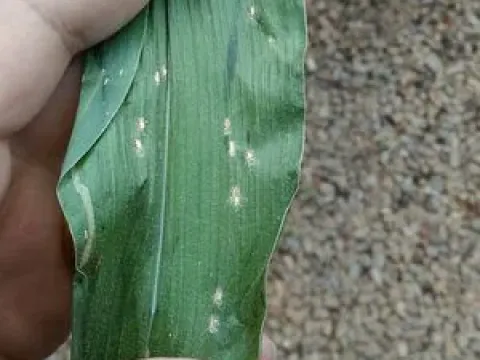
Initial symptoms include the appearance of small, chlorotic flecks on the leaf surface, which eventually develop into distinct, raised pustules.
These pustules typically exhibit a tan, orange, or reddish-brown color, which is characteristic of the rust fungus as it produces spores through the leaf epidermis.
As the infection progresses, leaves may become covered in these pustules, leading to yellowing (chlorosis) and eventual tissue necrosis (death) of the leaf area.
Severe infections can spread from lower leaves to upper foliage and even the husks of the ears, significantly reducing the plant's overall health.
- Small chlorotic spots on leaves.
- Brown, powdery pustules erupting through the leaf surface.
- Premature yellowing and drying of foliage.
Tropical corn rust thrives under conditions of high humidity and warm temperatures, which is why it is more prevalent in tropical and subtropical climate zones.
The fungus requires leaf wetness from rain, dew, or irrigation to allow spores to germinate and infect the leaf tissue effectively.
Temperatures ranging from 22°C to 28°C are considered optimal for the rapid growth and spread of the disease within a corn field.
Dense planting patterns can exacerbate the problem by creating a microclimate with reduced airflow and higher humidity around the leaves.
In regions with mild winters, the fungus may persist on volunteer corn plants, providing a continuous source of inoculum for subsequent seasons.
The primary damage caused by tropical corn rust is the reduction of the photosynthetic leaf area, which limits the plant's ability to produce sugars for grain filling.
Infected plants often produce smaller, shriveled ears with lighter kernel weights, resulting in a significant decrease in total grain yield.
Severe infestations can lead to premature senescence of the entire plant, which increases the risk of lodging (stalk breakage) due to weakened structural integrity.
The disease can negatively impact the quality of the corn, making it more susceptible to secondary infections by saprophytic fungi and molds.
Economic losses are often compounded by the need for repeated fungicide applications to maintain crop health in high-pressure environments.
The most effective strategy for managing tropical corn rust is the selection and planting of resistant or tolerant maize hybrids.
Implementing a proper crop rotation strategy helps to reduce the build-up of inoculum by breaking the host cycle for the pathogen.
Good agricultural practices, such as controlling volunteer corn and managing crop residues, contribute significantly to lowering the initial disease pressure.
Fungicides containing active ingredients from the triazole or strobilurin groups are highly effective when applied at the onset of disease symptoms.
Regular scouting of fields during the critical stages of corn development is essential to time fungicide applications accurately and prevent economic yield loss.