
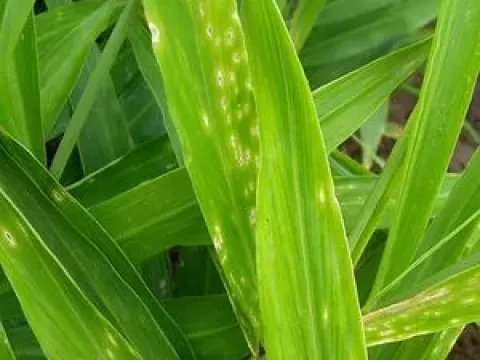
Phyllosticta leaf spot of ginger
Phyllosticta zingiberis
The primary symptom of this disease is the development of small, water-soaked spots on the ginger leaves. These spots gradually expand and transition from light tan to a darker, brownish-grey color as the disease progresses.
What the section contains
Phyllosticta leaf spot of ginger
Each lesion is typically surrounded by a distinct dark margin, serving as a boundary between diseased and healthy tissue. This creates a characteristic spotted appearance on the leaf surface that is easily recognizable.
As the infection matures, minute, black, speck-like structures known as pycnidia form within the center of the necrotic spots. These represent the reproductive bodies of the fungus and are vital for the continued survival of the pathogen.
In cases of high infection pressure, multiple spots may coalesce, covering a large surface area of the leaf. This leads to premature senescence, curling, and eventually the death of the leaf blade, severely impacting the plant.
Under humid conditions, the lesions may appear slightly soft. If the disease is not managed, it can spread to the leaf sheaths and pseudostems, potentially weakening the entire ginger plant structure.
The causal agent of this disease is the fungus Phyllosticta zingiberis. It is a specialized pathogen that primarily targets ginger and other closely related species within the Zingiberaceae family.
The fungus survives during the dormant season in the form of pycnidia located on infected plant debris, in the soil, or on stored rhizomes. These survival structures are highly resilient to environmental stress.
Reproduction occurs via conidia, which are released from the pycnidia in sticky masses. These spores are easily disseminated by splashing rain, overhead irrigation, insects, or contaminated gardening tools.
Infection is initiated when spores land on the leaf surface and enter through natural openings such as stomata or wounds caused by insect damage or handling. Once inside, the fungal mycelium colonizes the inter-cellular spaces.
The biology of the pathogen is intricately tied to the host's vulnerability. Once the mycelium establishes itself, it secretes enzymes that break down the plant cell walls, leading to the characteristic necrosis observed by growers.
Phyllosticta leaf spot thrives in environments characterized by high humidity and warm temperatures. The fungus is most active when conditions provide prolonged periods of moisture on the foliage.
Excessive overhead irrigation or frequent heavy rains create the ideal climate for spore germination and rapid spread. Greenhouse environments without proper airflow are particularly prone to severe outbreaks of the disease.
Crowded planting conditions prevent adequate air circulation around the ginger plants, keeping the foliage damp for extended periods. This moisture accumulation acts as a gateway for the fungus to establish its infection.
The temperature range between 20°C and 28°C is optimal for the fungal life cycle. Within this range, the pathogen can reproduce rapidly, causing secondary cycles of infection within a single growing season.
Poor soil management and the use of contaminated planting materials are critical factors. If the pathogen is already present in the substrate, any minor stress to the plant can lead to an immediate flare-up of the leaf spot symptoms.
The damage caused by this disease is primarily reduction in the plant's photosynthetic capacity. Since the leaves are essential for energy storage in the rhizomes, significant leaf loss directly correlates to a lower harvest yield.
In market environments where the whole ginger plant is sold for its aesthetic appeal, the presence of leaf spots significantly reduces the commercial value and marketability of the crop.
Secondary infections pose a major risk as the necrotic tissues left by the fungus become entry points for opportunistic bacteria and soft-rot pathogens. This can lead to the total loss of rhizomes during the storage phase.
Repeated cycles of infection lead to overall plant debilitation, making the crop more susceptible to environmental stressors like drought or poor nutrient uptake.
Economic losses are compounded by the high costs associated with chemical fungicide applications and the labor required to manage the sanitation of the growing area during the season.
The first line of defense is the selection of healthy, disease-free rhizomes for propagation. Treating rhizomes with a fungicide soak before planting is highly recommended to eliminate any surface-borne inoculum.
Crop rotation is vital; ginger should not be planted in the same area for at least three to four years to allow the soil-borne inoculum to decline. Rigorous field sanitation, including the destruction of plant remains, is crucial.
Improving greenhouse ventilation and adopting drip irrigation methods significantly reduce leaf wetness, thereby suppressing fungal spread. Keeping the foliage as dry as possible is an effective preventive strategy.
If symptoms appear, systemic fungicides, particularly those containing copper or triazole compounds, should be applied. Rotating different chemical classes is essential to manage the risk of fungicide resistance.
- Prompt removal and disposal of infected leaves.
- Sanitizing all tools between operations.
- Maintaining optimal spacing for better airflow.
- Monitoring crops closely for early signs of infection.