
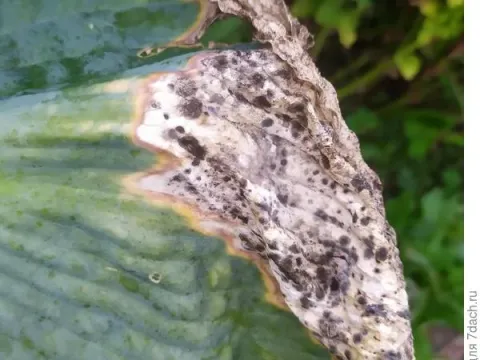
Phyllosticta leaf spot of hosta
Phyllosticta hostae
The causative agent of this disease is the fungus Phyllosticta hostae, a member of the Deuteromycetes group. This pathogen is specifically adapted to parasitize Hosta plants, causing significant damage to the foliage.
What the section contains
Phyllosticta leaf spot of hosta
The fungus overwinters in the form of pycnidia located on infected plant debris, fallen leaves, and within the soil. These structures remain dormant during the cold season and initiate new cycles of infection in the spring.
During the growing season, the fungus spreads via conidia, which are disseminated by raindrops, wind, and irrigation water. Upon landing on hosta leaves, the spores germinate under suitable moisture conditions.
The pathogen thrives in commercial hosta nurseries and private gardens alike, especially where plant density is high and airflow is restricted, facilitating the movement of the fungus between adjacent plants.
Once inside the leaf tissue, the mycelium spreads intercellulary, absorbing nutrients and releasing toxins that cause the characteristic necrosis and cell death observed as leaf spotting.
The primary symptom of Phyllosticta leaf spot is the appearance of small, brown to grayish spots on the leaves. As the disease progresses, these spots expand, often becoming irregular or circular in shape.
A distinctive feature of this infection is a dark, often purplish or blackish margin that outlines each spot. This border helps differentiate this specific fungal infection from other abiotic leaf damages.
Tiny, dark-colored reproductive structures called pycnidia will eventually appear on the surface of the necrotic spots. These appear as pinhead-sized dots and are a key diagnostic indicator for the presence of the pathogen.
As the spots merge, the leaf tissue begins to wither and tear. Badly affected leaves turn yellow and eventually die prematurely, significantly reducing the visual appeal of the entire hosta clump.
Symptoms are most visible during the mid-to-late summer months when warm, humid weather cycles provide optimal conditions for the fungus to multiply and colonize the healthy leaf area.
High humidity and moisture are the most critical factors for the development of Phyllosticta leaf spot. Frequent rainfall, heavy morning dews, and overhead watering are major drivers of disease outbreaks.
The fungus favors warm temperatures ranging from 20°C to 26°C (68°F to 79°F). In this range, the life cycle of the pathogen accelerates, allowing it to infect large portions of the plant within a few weeks.
Poor air circulation, often caused by overcrowding or planting hostas in stagnant, shaded areas, leads to prolonged periods of leaf wetness. This environment is ideal for spore germination and fungal growth.
Leaf damage caused by insects, hail, or physical contact provides easy entry points for the fungal spores to penetrate the leaf cuticle, accelerating the rate of infection across the plant.
Failure to implement autumn cleanup practices leaves a reservoir of inoculum under the plants, ensuring that the disease cycle will repeat itself as soon as the weather warms up the following year.
The most significant impact of Phyllosticta leaf spot is the severe degradation of the hosta’s aesthetic value. Since hostas are primarily grown for their foliage, spotted and dying leaves render them unattractive.
The destruction of chlorophyll-rich tissue impairs the plant's ability to perform photosynthesis efficiently, leading to reduced vigor, stunted growth, and a weakened overall state of the plant.
Chronic infection drains the plant of stored energy, which can lead to a reduction in the size of the leaves in subsequent growing seasons and a decline in the hosta’s ability to bloom.
Plants weakened by the fungus are more susceptible to secondary infections and winter damage. In severe cases, the cumulative stress may result in the death of the crown during harsh winters.
The disease creates a persistent infection source in the garden. If left unmanaged, it can spread to healthy hostas, turning a manageable problem into a chronic garden maintenance issue.
- Thoroughly rake and remove all infected foliage from the garden beds in the autumn to eliminate inoculum.
- Maintain proper spacing between hosta clumps to improve airflow and reduce leaf wetness.
- Apply fungicides containing copper or systemic active ingredients at the first sign of leaf spots.
- Use drip irrigation or soil-level watering instead of overhead sprinklers to keep leaves dry.
- Monitor regularly for insect damage, as pests can create wounds that invite fungal infections.