
Phyllosticta leaf spot of horse chestnut
Phyllosticta paviae
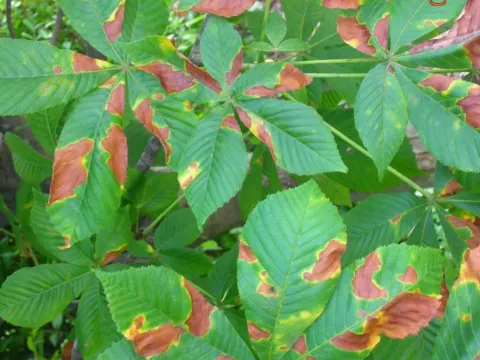
The primary symptom of the disease is the appearance of reddish-brown, circular, or irregular spots on the leaves of the horse chestnut tree.
What the section contains
Phyllosticta leaf spot of horse chestnut
These spots are usually surrounded by a distinct yellow or pale green halo, which serves as a clear diagnostic feature of the infection.
Small, black, dot-like fruiting bodies called pycnidia develop in the center of the spots on both the upper and lower leaf surfaces.
In cases of severe infection, the affected areas of the leaf blade merge, leading to tissue necrosis, leaf curling, and premature leaf drop.
While the disease primarily affects the foliage, it can occasionally spread to the leaf stalks under very humid environmental conditions.
The disease is caused by the fungus Phyllosticta paviae, which is a member of the Ascomycota division of fungi.
The pathogen overwinters primarily in the fallen infected leaves, remaining as mycelium and pycnidia throughout the cold season.
In spring, when conditions become favorable, the pycnidia release conidia that are dispersed by wind, water splashes, or rain to nearby susceptible foliage.
Infection typically occurs through the stomata or small openings in the leaf epidermis when the tree is in its active growth phase.
The fungal biology is highly synchronized with the leaf development of the horse chestnut, ensuring successful annual reinfection cycles.
High humidity, frequent rain, and moderate to warm temperatures are the key requirements for the rapid spread of the Phyllosticta fungus.
Optimal development of the pathogen occurs when ambient temperatures stay consistently between 18 and 25 degrees Celsius during the spring.
Dense planting schemes that prevent proper air circulation allow moisture to remain on the leaves for longer periods, facilitating spore germination.
Trees that are already stressed due to poor soil fertility, water deficit, or urban environmental stressors are more susceptible to this infection.
Early spring warmth can trigger an earlier release of spores, leading to more aggressive outbreaks if moisture levels remain high thereafter.
The most visible impact of the disease is the significant reduction in the aesthetic value of the trees in parks, residential areas, and forests.
Premature loss of leaves impairs the tree’s photosynthetic capacity, resulting in less energy storage for the upcoming winter season.
Chronic infestation weakens the overall physiological health of the tree, making it more prone to secondary pests and various environmental stressors.
Stunted growth is a common consequence for young saplings that are repeatedly subjected to this infection during their early development years.
While mature trees rarely die from this disease alone, the repeated damage reduces their vigor and overall longevity in urban landscapes.
Sanitation is the most effective management strategy; all fallen leaves must be raked and destroyed annually to break the infection cycle.
Preventive fungicide sprays, particularly those containing copper-based active ingredients, should be applied early in the spring season.
If an outbreak occurs, systemic fungicides can be used to control the spread of the fungus within the foliage throughout the growing season.
Maintaining tree vigor through proper irrigation, balanced fertilization, and mulching helps the trees withstand the negative impact of the leaf spot.
Selective pruning of lower or crowded branches can improve airflow through the canopy, reducing the likelihood of moisture-driven fungal infection.