
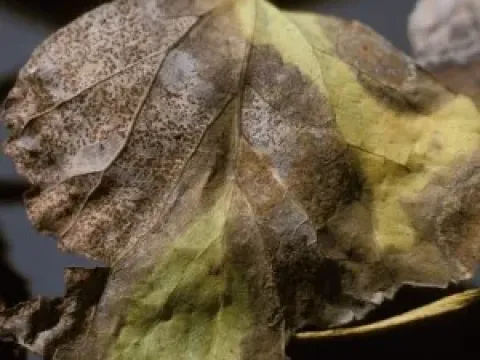
Phyllosticta leaf spot of impatiens
Phyllosticta impatientis
The primary symptom of Phyllosticta infection in impatiens is the appearance of distinct leaf spots. These spots are usually circular or irregular in shape and often feature a dark border surrounding the lesion.
What the section contains
Phyllosticta leaf spot of impatiens
Over time, the center of these spots typically turns light or tan, where small black dots known as pycnidia become visible to the naked eye or under magnification. These structures are the reproductive bodies where the fungus produces spores.
As the disease advances, individual spots may coalesce, covering a significant portion of the leaf surface. This degradation leads to yellowing, premature drying, and dropping of affected leaves, severely impacting the plant's aesthetic value.
In severe cases, the infection spreads to leaf petioles and main stems, resulting in localized tissue necrosis. Under high humidity, a light fungal growth or conidia may be present around the lesion sites.
The disease typically begins on older, lower leaves and gradually progresses upward. Severe stem infections can lead to stunted growth and, in younger plants, potential death.
The pathogen responsible for this disease is the deuteromycete fungus Phyllosticta impatientis. It belongs to the class Coelomycetes, characterized by the production of pycnidia within host tissues.
This fungus parasitizes plants primarily within the Balsaminaceae family, with impatiens (balsam) being the main host for both greenhouse and outdoor plantings.
The life cycle of the pathogen is dependent on moisture, which is required for spore germination and infection of the plant epidermis. The fungus can overwinter in plant debris as dormant mycelium or pycnidia.
Spread within a crop occurs mainly via splashing rain or irrigation water, as well as mechanical transmission through contaminated tools or insects. Secondary cycles can repeat throughout the entire growing season.
The biology of the fungus allows it to adapt to various microclimates, although it is most aggressive in environments with poor air circulation and high plant density.
Phyllosticta leaf spot development is favored by prolonged periods of high relative humidity. Excessive moisture on leaf surfaces is the most critical factor for spore germination and successful infection.
The optimal temperature range for the pathogen's growth and spread is between +18°C and +25°C. Sudden fluctuations in temperature accompanied by heavy rainfall often trigger major disease outbreaks.
Densely planted impatiens, which prevent the rapid evaporation of surface moisture, are at higher risk. Poor ventilation in greenhouse environments further exacerbates the situation by creating a stagnant, humid microclimate.
Imbalanced nutrient management, particularly excess nitrogen fertilization, reduces the plant's natural resistance to fungal invasion. Stressed or weakened plants are the first to show signs of colonization.
The presence of primary inoculum from uncleaned plant debris or infected seeds is a frequent cause of recurring infection when the new growing season begins.
The primary economic and aesthetic damage involves the loss of ornamental value, which is vital for commercial flower production. Excessive defoliation leaves stems bare and ruins the plant's shape.
Photosynthetic disruption caused by extensive leaf damage weakens the plant's overall vigor. Flowering is delayed, and blossoms may be smaller, fewer, or fail to develop entirely.
Heavy infestations can lead to the death of young seedlings, causing significant losses for growers. Necrotic tissue also serves as an entry point for opportunistic pathogens, complicating the disease profile.
Failure to act quickly can result in the entire greenhouse or garden bed becoming infected, necessitating the complete removal and destruction of the plant material and thorough sterilization of the area.
Beyond individual plants, the disease can reduce the overall health and longevity of impatiens in landscaping, requiring costly chemical interventions to restore appearance.
Cultural management is the first line of defense. It is essential to maintain proper spacing between plants to ensure adequate airflow and prevent the accumulation of moisture on foliage.
Sanitation is critical; all infected leaves and plants should be promptly removed and destroyed to reduce the inoculum level. Removing plant debris at the end of the season prevents overwintering.
Chemical control involves the use of broad-spectrum fungicides. Copper-based products, as well as systemic triazoles or strobilurins, are effective at inhibiting mycelial growth if applied early.
Rotating fungicides with different modes of action is highly recommended to prevent the fungus from developing resistance. Applications should be repeated every 10–14 days during high-risk conditions.
Preventative sprays with biological fungicides can boost plant resistance and form a protective film on the leaf surface, which is particularly useful in high-humidity greenhouse settings.