
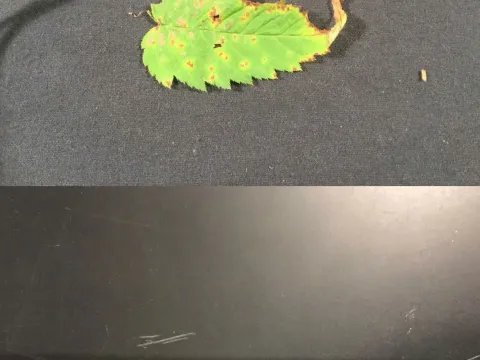
Phyllosticta leaf spot on kerria
Phyllosticta kerriae
The primary symptom of this disease is the appearance of characteristic spots on the leaves of Kerria japonica, typically manifesting as small, round or irregular necrotic areas.
What the section contains
Phyllosticta leaf spot on kerria
As the infection advances, these spots tend to enlarge, with the centers often turning a grayish or tan color while retaining a distinct dark brown border around the edges.
Upon closer inspection, particularly with a hand lens, tiny black specks can be seen within the spotted areas; these are pycnidia, which represent the fruiting bodies of the fungus.
Severe infestations cause multiple spots to merge, covering large sections of the leaf blade, which ultimately leads to leaf curling, premature drying, and significant leaf drop.
Besides leaves, the pathogen can sometimes affect young green shoots, which compromises the overall appearance of the shrub and weakens its structural integrity during the growing season.
The causative agent of this disease is the fungal pathogen Phyllosticta kerriae, a member of the Sphaeropsidales order, which is known for targeting the Kerria genus.
This fungus survives the winter primarily as mycelium or pycnidia located on fallen leaf litter and within the tissues of previously infected stems or twigs.
During the warm spring weather, the pycnidia release spores that are disseminated primarily by splashing rain, wind currents, and occasionally by visiting garden insects.
The incubation period required for the fungus to establish itself and show symptoms can vary depending on environmental temperatures, usually taking about one to two weeks.
Multiple life cycles of the pathogen can occur throughout the summer, allowing the disease to spread rapidly across dense plantings if conditions remain humid and stagnant.
Development of Phyllosticta leaf spot is strongly favored by periods of high humidity, frequent rainfall, and overhead irrigation, as moisture is essential for spore germination.
Poor air circulation, often caused by overly dense shrubbery or lack of proper pruning, creates a humid microclimate that significantly boosts the proliferation of the fungal spores.
Plants that are weakened due to improper fertilization, drought stress, or root damage are significantly more susceptible to successful colonization by the pathogen.
Warm summer days with persistent humidity allow the fungus to complete its reproductive cycle rapidly, leading to major outbreaks if sanitary measures are not implemented.
Prolonged leaf wetness, particularly when leaves are shaded or sheltered from drying winds, allows the spores to penetrate the leaf cuticle much more effectively.
The main impact of this disease is the reduction of the shrub's aesthetic appeal, as premature defoliation leaves the plant looking sparse and unhealthy mid-season.
Persistent infections sap the plant's energy, making it less vigorous, reducing its cold hardiness, and increasing its susceptibility to secondary pests or environmental stressors.
Damage to the leaf tissue reduces the plant's overall photosynthetic capacity, which leads to stunted growth, thinner stems, and a reduction in the number of flower buds formed.
If left unmanaged, chronic infections can lead to the death of smaller branches and an overall decline in the health of the entire plant structure over several years.
Management of the disease requires ongoing monitoring and potential pesticide application, increasing the maintenance burden for garden owners and landscape professionals.
The most critical management practice is the thorough collection and removal of all fallen foliage during the autumn, as this eliminates the primary source of overwintering inoculum.
Regular sanitation, including the careful pruning of infected branches and twigs, helps reduce the fungal population and improves airflow throughout the canopy of the bush.
Protective spraying with copper-based fungicides during the early stages of the growing season can create an effective barrier that prevents spores from infecting healthy tissue.
- Apply systemic fungicides according to the product label when early symptoms appear.
- Improve air circulation through regular pruning to keep the foliage dry.
- Maintain soil health and provide adequate nutrients to boost plant resistance.
For more severe cases, fungicides containing active ingredients like strobilurins or triazoles may be necessary to suppress the pathogen and protect the healthy foliage during peak disease pressure.