
Phleogenaceae
Phleogenaceae
The family Phleogenaceae belongs to the order Atractiellales within the class Pucciniomycetes. These fungi are typically basidiomycetes, often existing as saprotrophs on decaying wood or as opportunistic pathogens on weakened trees.
What the section contains
Phleogenaceae
The pathogen is characterized by the production of distinctive basidiocarps, which are often gelatinous or cartilaginous. These reproductive structures serve as the primary means of dispersal for the fungus within forest and garden environments.
Biologically, these fungi have adapted to utilize complex organic compounds in wood cells as their primary nutrient source, breaking down lignin and cellulose components through enzymatic activity.
Microscopic identification is crucial, as the fungi possess unique basidia with transverse septa, a morphological feature that distinguishes them from many other wood-decaying organisms.
Dissemination is achieved through basidiospores that are spread via air currents or water splash, settling on bark surfaces and infecting tissues through natural openings or mechanical wounds.
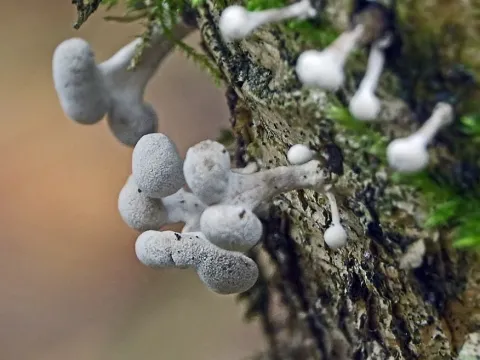
The primary symptom of infection is the emergence of small, often club-shaped or cushion-like growths on the bark of trunks and branches. These fruiting bodies can be easily overlooked in their early stages.
As the infection progresses, the surrounding bark tissue may exhibit abnormal discoloration, often darkening or becoming bleached, indicating colonization by the mycelium beneath the surface.
Cracking and fissuring of the bark are commonly observed around the areas where fungal fruiting bodies erupt, providing an entry point for secondary pathogens, such as bacteria and wood-boring insects.
During dry periods, the fungal structures may dehydrate, appearing as hard, brittle, and crust-like patches that adhere tightly to the bark, sometimes resembling lichen or resin deposits.
Advanced stages of colonization lead to the localized death of the phloem and cambium, resulting in dieback of branches, premature leaf drop, and stunted growth in the affected parts of the tree.
High humidity and consistent moisture on bark surfaces are the most critical environmental drivers for the development and proliferation of Phleogenaceae fungi.
Optimal growth occurs within moderate temperature ranges, making spring and autumn periods, with their typical wet weather, the most dangerous times for new infections.
Weakened trees are significantly more susceptible to colonization. Factors such as frost cracks, sunscald, or insect-related damage create the necessary conditions for the fungus to establish itself.
Dense planting schemes that restrict air circulation prevent bark from drying out after rainfall, creating a favorable microclimate for spore germination and mycelial spread.
Poor orchard or forest management, such as leaving diseased wood in the field, provides a persistent inoculum source that facilitates the spread to healthy neighboring plants.
The primary harm caused by these fungi is the degradation of the bark and cambial layers, which disrupts the transport of water and nutrients throughout the tree's vascular system.
Over time, the infection reduces the tree's vigor, making it increasingly vulnerable to other biotic stresses, including root pathogens and foliage-attacking insects.
Structural integrity may be compromised if the decay spreads deeper into the sapwood, leading to an increased risk of limb breakage during storms or under heavy snow loads.
Infected trees serve as major centers of infection, drastically increasing the risk of widespread disease outbreaks within an orchard or forest plantation.
If left unmanaged, the cumulative damage leads to the senescence of major scaffold branches and, eventually, the potential loss of the entire tree.
Sanitation is the most effective control strategy: promptly removing and destroying infected branches reduces the total amount of inoculum in the environment.
Disinfecting pruning tools between cuts is essential to prevent the mechanical transmission of fungal spores from diseased trees to healthy ones.
Maintaining tree vigor through appropriate fertilization, watering, and protection against mechanical injury helps bolster the plant’s natural defense mechanisms.
Preventative applications of copper-based or sulfur-based fungicides during the dormant season can help reduce the spore load on the bark surface.
Sealing wounds caused by weather damage or pruning with appropriate wound dressings can prevent the colonization of open tissues by spores of the pathogen.