
Phlebiella
Phlebiella
The disease is caused by fungi belonging to the genus Phlebiella (family Corticiaceae), which are basidiomycete fungi known for their wood-decaying capabilities.
What the section contains
Phlebiella
These pathogens function primarily as saprotrophs but can exhibit parasitic behavior when infecting weakened or damaged plant tissues.
The life cycle involves the production of basidiospores on the fruiting bodies, which are typically found on the bark or wood surface of the host plant.
Mycelial growth is often persistent, allowing the fungus to penetrate deep into the woody substrate, breaking down lignin and cellulose structures over time.
The adaptability of Phlebiella species allows them to persist in forest debris and soil, serving as a continuous source of inoculum for susceptible plants.
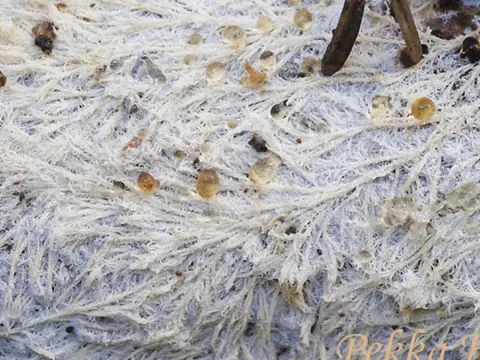
The primary symptom is the presence of thin, crust-like fruiting bodies on the bark, which may appear as flat, spreading patches or irregular growths.
The coloration of these growths often ranges from yellow or ochre to various shades of brown, often depending on humidity levels and maturity.
Tissue decay is a major sign, characterized by softening of the wood, loss of structural integrity, and sometimes the formation of rot in localized areas.
Cracking and peeling of the bark are commonly observed, as the underlying fungal activity disrupts the tissue connections between the bark and the xylem.
In advanced stages, the foliage of the affected tree may show signs of yellowing or wilting, reflecting the disruption of water and nutrient transport.
High relative humidity and persistent dampness are critical environmental factors that promote spore germination and mycelial expansion.
Trees that have suffered physical injury from frost, wind, or improper pruning provide easy access points for the fungus to establish an infection.
Poor ventilation within dense tree canopies prevents rapid drying, creating a microclimate that is highly favorable for the proliferation of Phlebiella.
Plants already stressed by environmental factors, such as drought or nutritional deficiency, are significantly less able to mount an effective defense.
Mild and humid weather conditions typical of spring and autumn encourage the active growth phase of the pathogen, leading to accelerated disease progression.
The structural damage caused by wood decay can render the tree unstable, increasing the risk of branch failure or total tree collapse during storms.
In commercial forestry, Phlebiella infections lead to the degradation of timber quality, resulting in significant economic losses for wood producers.
The infection compromises the plant’s health, making it an easy target for secondary pests, such as wood-boring insects, which further accelerate the tree's decline.
Ornamental trees lose their aesthetic value as branch dieback and bark degradation become visually apparent, often necessitating removal.
The persistence of the fungus in the environment means that untreated infections can lead to localized outbreaks, endangering the health of surrounding vegetation.
Sanitation is the most effective control measure; this involves the prompt removal and proper disposal of infected branches or dead trees.
Proper pruning techniques, including the use of sterilized tools and applying protective wound sealants, help prevent fungal spores from entering healthy tissues.
Maintaining tree vigor through appropriate fertilization and regular watering can help plants maintain their natural defenses against fungal invaders.
Strategic thinning of overgrown areas improves air circulation, which helps keep bark surfaces drier and less hospitable to Phlebiella growth.
In professional arboriculture, the use of targeted fungicide applications may be considered in early stages to limit the spread of the pathogen in high-value trees.