
Phleogena
Phleogena
The disease is caused by the wood-decaying fungus Phleogena faginea, which belongs to the Basidiomycota division. This is a saprotrophic, rarely weakly parasitic organism that specializes in decomposing woody debris.
What the section contains
Phleogena
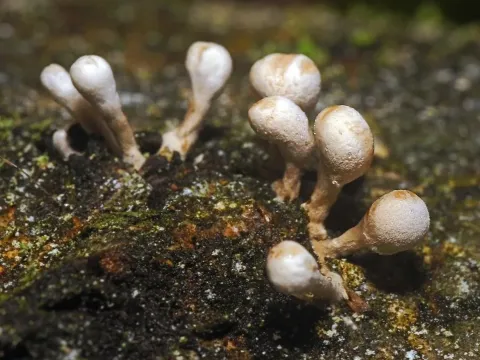
The fungus forms characteristic fruiting bodies that appear as small, rounded, or cushion-like structures on the bark surface. They often have a grayish or brownish hue and possess a distinct fungal odor.
The fungal mycelium actively penetrates deep layers of the bark and the sapwood of the affected tree. The spread of spores occurs mainly via wind, allowing the fungus to quickly colonize new areas in forests or orchards.
Biologically, this species is considered a weakly active parasite, most often developing on weakened or dying parts of plants. It plays an important role in the natural nutrient cycle by breaking down dead organic matter.
Sometimes, the fungus develops in symbiosis or association with other xylotrophic fungi species, which accelerates the process of wood structure degradation.
The primary symptom of infection is the appearance of characteristic fungal sporocarps on trunks and branches. They look like small, dense growths bursting through the bark epidermis.
In areas where fungal bodies cluster, the bark often changes color, becomes looser, and eventually begins to peel off from the wood of the trunk.
Upon inspection of the affected areas, one can notice the gradual drying out of the bark, which can lead to the formation of localized necrosis. If the fungus spreads extensively, a general weakening of the tree's growth is observed.
Affected specimens often show a decrease in the turgor of young shoots due to the disruption of the conductive functions of the bark, which is damaged by the fungal mycelium.
In dry weather, the fruiting bodies may appear as dry crusts; however, when humidity increases, they swell and resume the process of sporulation.
High air humidity is a decisive factor for the active development of Phleogena. The fungus prefers shady and damp locations where evaporation is slow.
The most favorable environment for the pathogen is created on trees weakened by drought, frost, or mechanical damage to the bark.
A temperature range from +15 to +25 degrees Celsius is optimal for the intensive growth of mycelium and the formation of the fungus's fruiting bodies.
Dense plantations with poor air circulation create a microclimate that facilitates the rapid spread of infection among neighboring plants.
An abundance of dead bark or cracks on the trunk significantly facilitates the settlement of fungal spores and the subsequent development of the colony.
The main danger is that the fungus destroys the protective layer of the tree, opening the way for other dangerous pests and secondary infections.
The gradual destruction of the bark leads to the disruption of nutrient transport, which reduces the overall vitality of the tree and can cause premature death.
Economic damage manifests as a decrease in wood quality, as it loses its technical properties due to rot caused by the fungus's activity.
In ornamental gardening, Phleogena infection leads to a loss of the trees' aesthetic appeal, which requires expensive sanitary measures.
In forest areas, a mass spread of the fungus signals an unhealthy state of the ecosystem and requires planned sanitary logging.
The primary preventive measure is to maintain high sanitary standards: timely removal of dead and infected branches in the orchard or forest.
It is important to avoid mechanical damage to the bark during tree maintenance, as any wounds become an entry point for fungal spores.
If infections are detected, damaged areas of the bark should be cleaned down to healthy tissue, followed by disinfection with copper sulfate or specialized fungicides.
Whitewashing tree trunks with lime helps protect the bark from sunburn and reduces the risk of initial colonization by parasitic fungi.
Regular fertilization and providing balanced watering increase the natural immunity of plants, making them less vulnerable to the development of fungal diseases.